
Articles


A Guide to the English Market, Cork: What to Eat, See and Know Before You Go
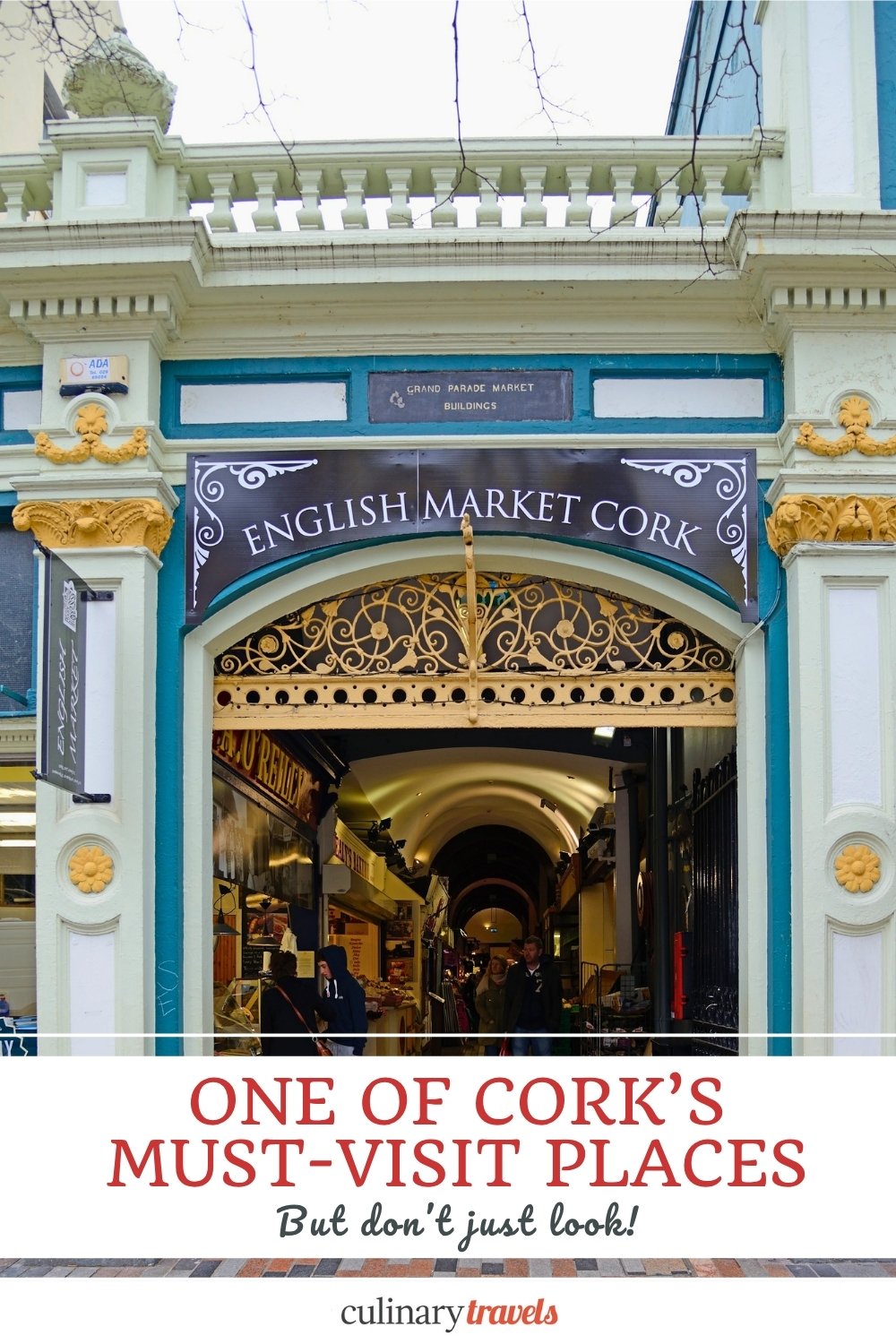
TRAVEL GUIDE
More than two centuries after it opened, Cork’s English Market remains a working food market, social meeting place and living record of the city’s culinary history. From spiced beef and drisheen to artisan produce, vegan food and some of Cork’s longest-established family traders, here’s what to eat, see and understand when you visit.
Some articles on Culinary Travels may contain affiliate links, meaning I may earn a small commission at no extra cost to you. I only recommend places, experiences and products that fit the editorial tone and standards of the site.
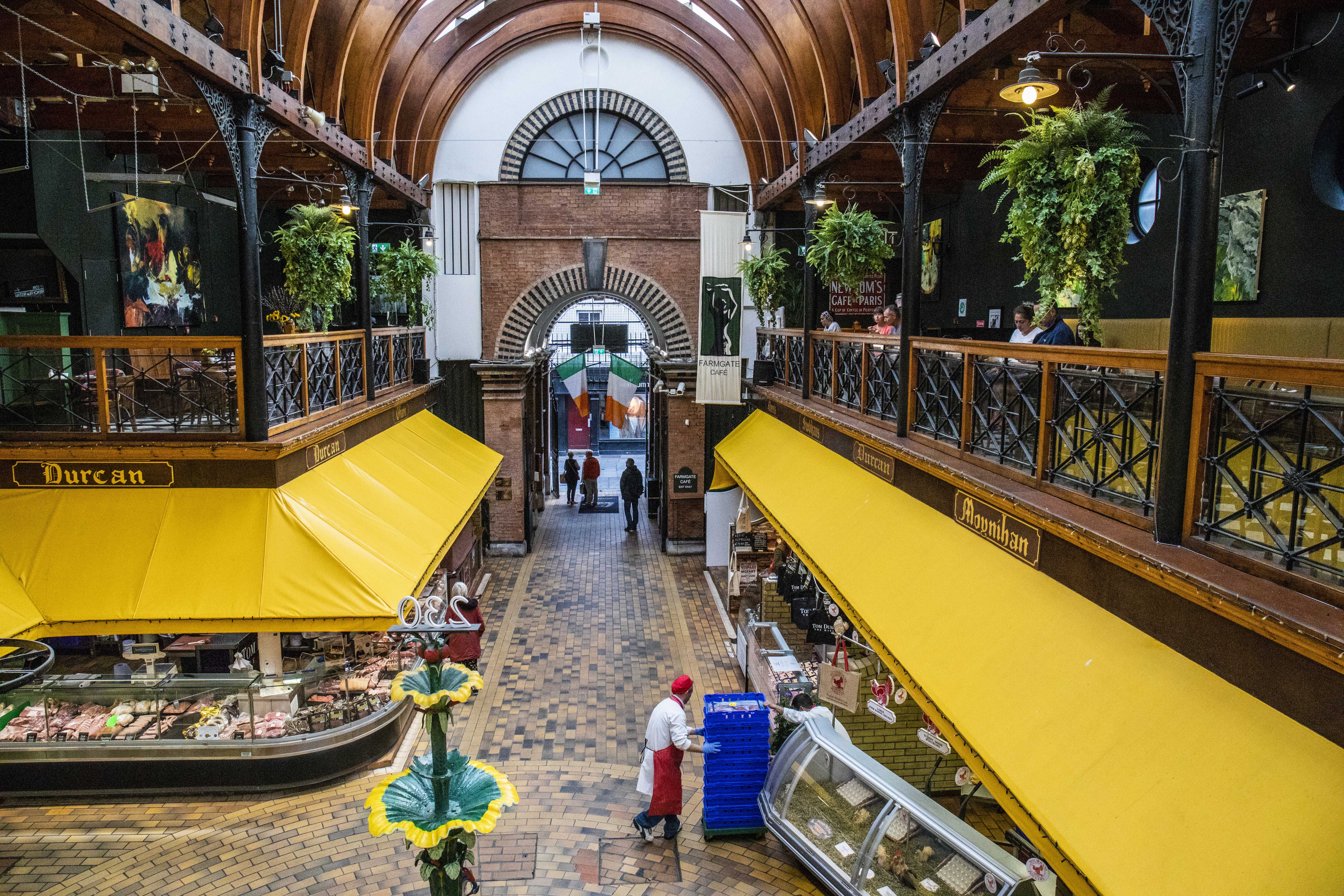
Photograph: Clare Keogh
There are plenty of things to look at in Cork’s English Market. Fish counters piled with the day’s catch, butchers selling cuts increasingly difficult to find elsewhere, fruit and vegetables, breads and bakes, cheese, spices, coffee, prepared food and products from small Irish producers all compete for attention beneath its covered roof.
But if you only look, you miss half of it.
Listen and you’ll hear conversations carrying between stalls, customers greeting traders they have known for years and recommendations being exchanged along with whatever is going into the shopping bag. Cork is a compact, chatty city, and the Market is one of those places where stopping to ask about a piece of fish or an unfamiliar ingredient can quickly turn into a conversation about food, family or where you should go next.
Food historian Dr Regina Sexton describes the English Market as a “very intense, wonderfully concentrated cross section of Cork”. When I interviewed her for this guide, her advice to a first-time visitor was simple: as well as looking, listen.
That is probably the best way to approach it. The English Market is one of Cork’s best-known visitor attractions, but it isn’t a museum of Irish food. It is still somewhere people come to buy dinner, meet friends, drink tea, pick up ingredients and have the chats.
And that distinction matters, because the reason the English Market has survived for more than 200 years is not that it has remained unchanged. Quite the opposite. Again and again, it has adapted to what Cork eats, how Cork shops and who calls the city home, while retaining an extraordinary connection to the foods, families and trading traditions that came before.
If you’re planning more than a Market visit, my long weekend in Cork guide covers more of what to see, eat and do around the city.
In this guide
1. Why the English Market matters to Cork
2. A brief history of Cork’s English Market
3. How food shaped Cork and the Market
4. Traditional Cork foods to try
5. Tradition, adaptation and change
6. The women who fed Cork
7. The English Market as Cork’s meeting place
8. Tourism and the English Market
9. What to eat and buy in the English Market
10. Planning your visit
11. Should you take a food tour?
12. Is the English Market worth visiting?
13. English Market FAQs
Why is the English Market so important to Cork?
Today, the English Market contains 47 traders, according to Cork City Council, ranging from long-established family businesses to much newer food enterprises. Traditional Cork foods sit alongside artisan cheeses, local vegetables, speciality groceries, fermented foods, coffee and grab-and-go dishes.
That range is part of what makes the Market difficult to define simply as either historic or modern.
Sexton remembers visiting with her mother, who chose to shop in the Market even when supermarkets were available. She describes a way of buying food in which shoppers decided what to buy, who to buy it from and how to manage their budget as they moved between individual traders. For her, it represented a degree of choice and self-determination that was quite different from supermarket shopping.
The relationships mattered too, and still do.
“The stallholders do more than sell you things,” Sexton told me. The Market is somewhere people see those they know, stop to talk and build relationships with the people selling their food. Customers arrive for very different reasons and budgets, yet mainstream groceries, speciality foods and artisan products coexist within the same relatively small space.
You see that social function in the Market today. Pauline Mulcahy of Kathleen Noonan’s traditional pork and bacon stall told me that knowing customers personally remains fundamental to the way the family trades.
“I know most customers by name, I know about what’s going on in their lives and their families. They know what’s going on in mine! It’s a brilliant community.”
It is tempting to explain the English Market’s importance simply through age, architecture or famous visitors. Its real significance is more complicated. It has remained part of everyday Cork life while the city around it has repeatedly changed.
A brief history of Cork’s English Market
The story begins in 1788, but the Cork in which the Market opened looked very different from the city we know today.
Historian Dr Donal Ó Drisceoil, co-author with Diarmuid Ó Drisceoil of Serving a City: The Story of Cork’s English Market, explains that Cork had transformed dramatically during the eighteenth century. At the beginning of the century, it was still essentially a small, medieval walled city. By its end, Cork had expanded well beyond those old boundaries to become Ireland’s most significant Atlantic port.
Marshland was reclaimed, new streets were developed and a prosperous new commercial centre emerged. It was here, between Grand Parade, Patrick Street, Princes Street and what is now Oliver Plunkett Street, that Cork’s municipal authorities established purpose-built covered food markets.
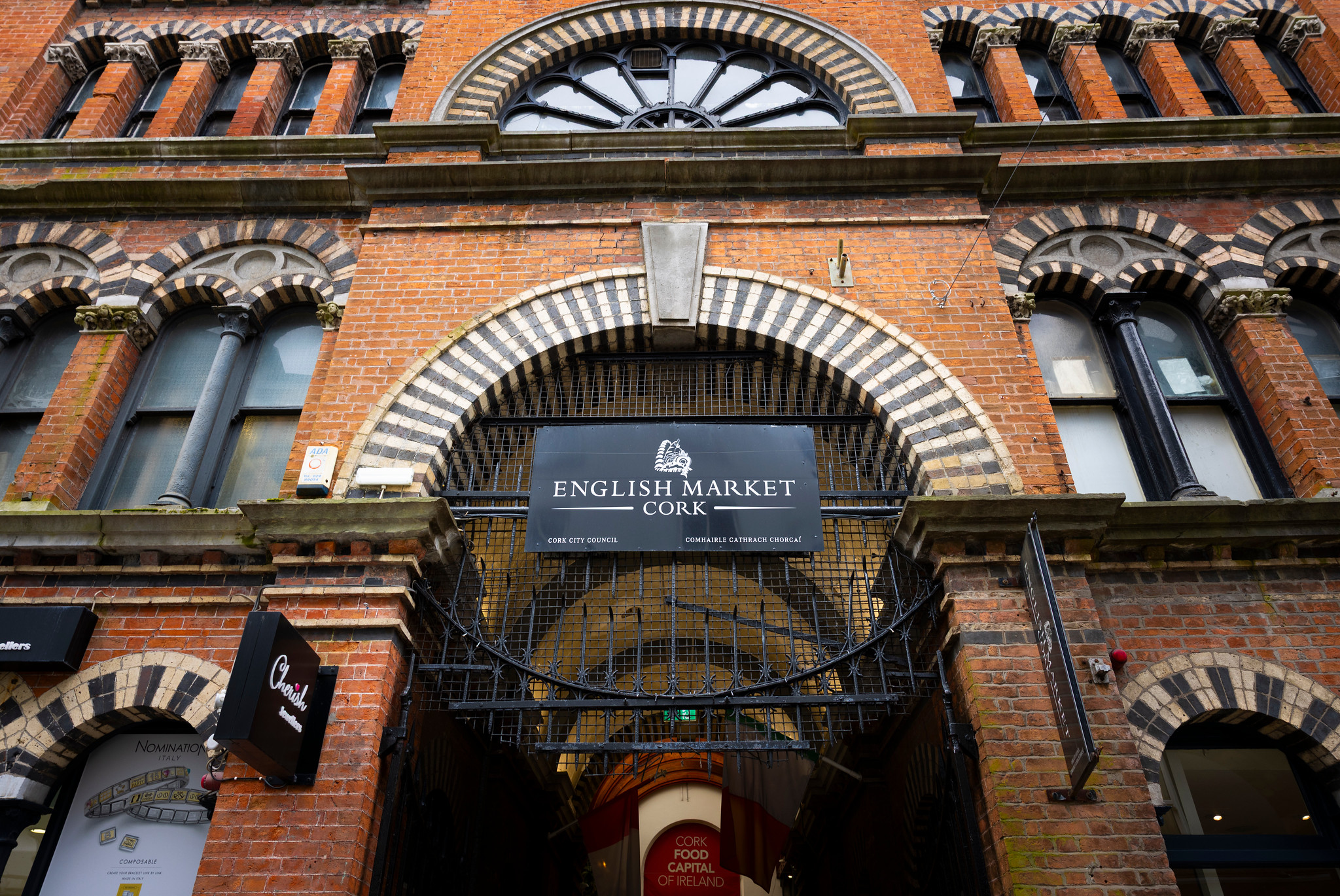
Photograph: Electric Egg (Adobe Stock)
The project reflected both Cork’s growing wealth and the political realities of the period. Although Catholics made up the great majority of the city’s population, municipal power remained concentrated in the hands of a Protestant corporation. The new markets were conceived as prestigious civic facilities for an expanding commercial city and were influenced by the development of modern covered markets in England.
They were also decidedly upmarket.
Ó Drisceoil points out that the new commercial centre was where many of Cork’s affluent merchants and professionals lived, worked and shopped. Variety, specialist produce and luxury distinguished the area from the more basic food retailing found within the older medieval city.
Sexton puts it rather more memorably. She jokes with her students that the Grand Parade Market was something like the “Marks & Spencer of the late eighteenth century”: more regulated, controlled and expensive than the street traders and less formal food markets operating elsewhere in Cork.
Why is it called the English Market?
The name causes plenty of confusion, not least because the Market opened in 1788 but appears not to have been widely known as the English Market until decades later.
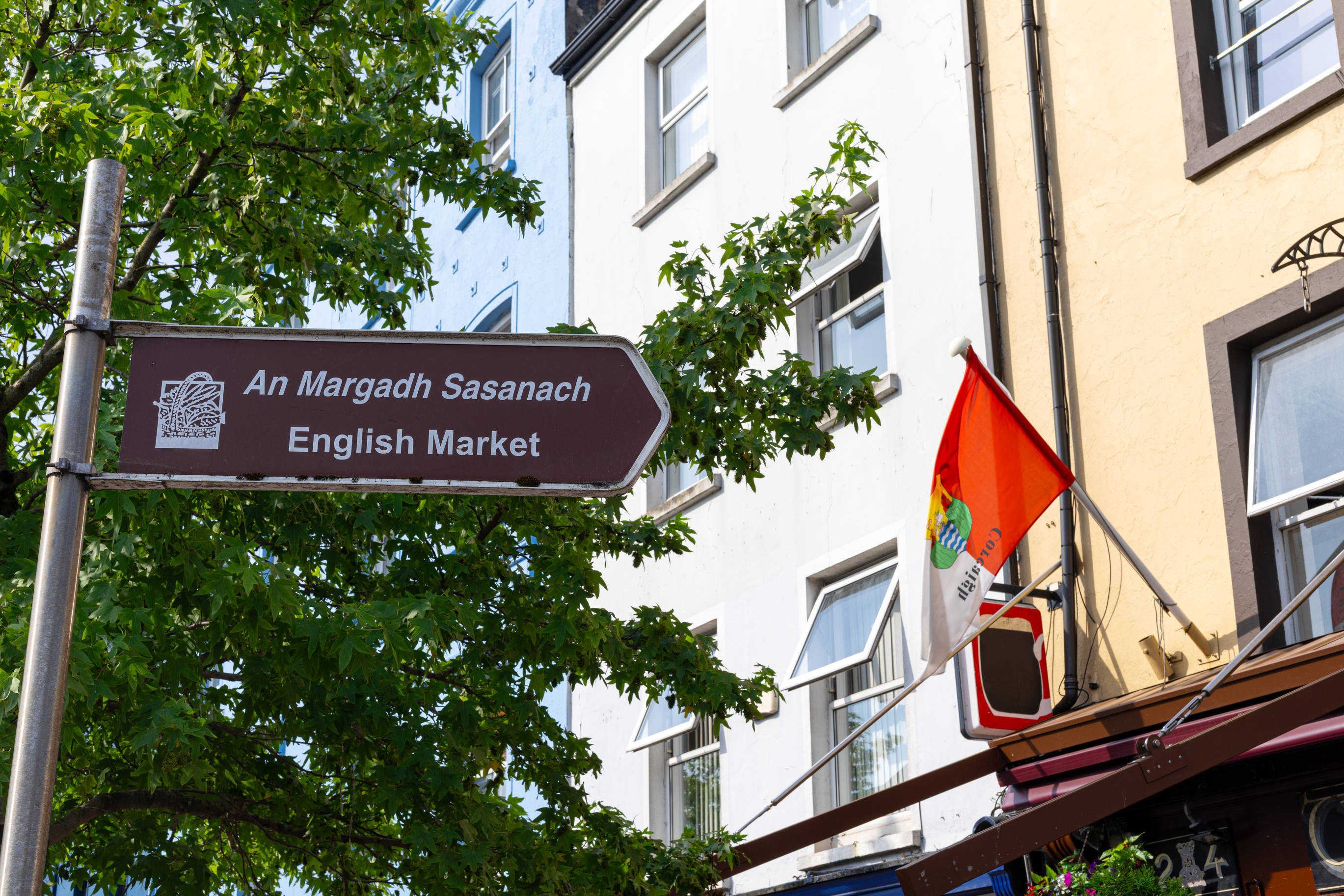
Photograph: Iryna Bazyliev (Dreamstime)
Ó Drisceoil’s research places the emergence of the name in the 1840s. Earlier descriptions included the New Market, Corporation Market and Grand Parade Market.
The political landscape had changed significantly by then. Municipal reform in 1840 replaced the previously Protestant-dominated corporation with one that had a Catholic, liberal and nationalist majority. The reformed corporation subsequently built another large covered food market, St Peter’s Market, which opened in 1843 between North Main Street and Cornmarket Street.
St Peter’s served a much more working-class customer base. Its rents and prices were lower, and it became known as the Irish Market or “poor man’s market”. The older Grand Parade Market appears to have acquired the contrasting English Market name around the same period.
That does not mean the English Market had simply been a market for Protestants. Ó Drisceoil says the surviving evidence suggests wealth was more important than religion in determining who shopped there, with Cork’s increasingly prosperous Catholic middle and upper classes also likely to have used the Market.
The “English” identity was more closely connected to the administration that created and controlled it. That distinction is important because the Market’s name carries layers of Cork’s political, religious and class history that are easily flattened into a much simpler story.
Food built Cork’s wealth — and its history is still on the stalls
The English Market did not emerge in isolation from Cork’s food culture. In many ways, food helped create the prosperous city in which the Market could be built in the first place.
By the late eighteenth century, Cork was one of the major provisioning centres of the British Empire. Vast quantities of preserved food, particularly salted beef and butter, passed through the city for export, including across the Atlantic. The trade generated considerable wealth and helped drive Cork’s physical expansion.
Sexton describes the Market today as a kind of “memory of the provisioning trade”. The evidence is not confined to old documents or architecture: some of it remains edible.
Cork’s large-scale slaughtering and meat-processing industries produced considerable quantities of offal and blood as well as the beef destined for preservation and export. From that economy developed distinctive local foods including tripe, drisheen, skirts, kidneys and bodice. Salted fish, spiced beef and other preserved foods tell different parts of the same story, connecting Cork not only to its agricultural hinterland but to trade routes stretching far beyond Ireland.
These are not simply historical dishes. Some remain on sale in the Market today, sometimes bought by the grandchildren of earlier customers and sometimes finding entirely new audiences.
Traditional Cork foods to try in the English Market
If you want to understand why the English Market matters, some of the most revealing things to look for are not the newest or most photogenic products on the stalls. They are the foods that connect directly to Cork’s history as a provisioning, trading and meat-processing city.
Dr Donal Ó Drisceoil points to a distinctive Cork diet that developed around foods including tripe, drisheen, bodice, skirts and crubeens, alongside preserved foods such as dried salted ling and spiced beef.
Some have become increasingly niche. Others remain surprisingly popular. What is particularly interesting is that they are not simply being preserved for visitors: several are still bought, cooked and passed between generations of Cork families, while also finding new customers and new ways of being eaten.
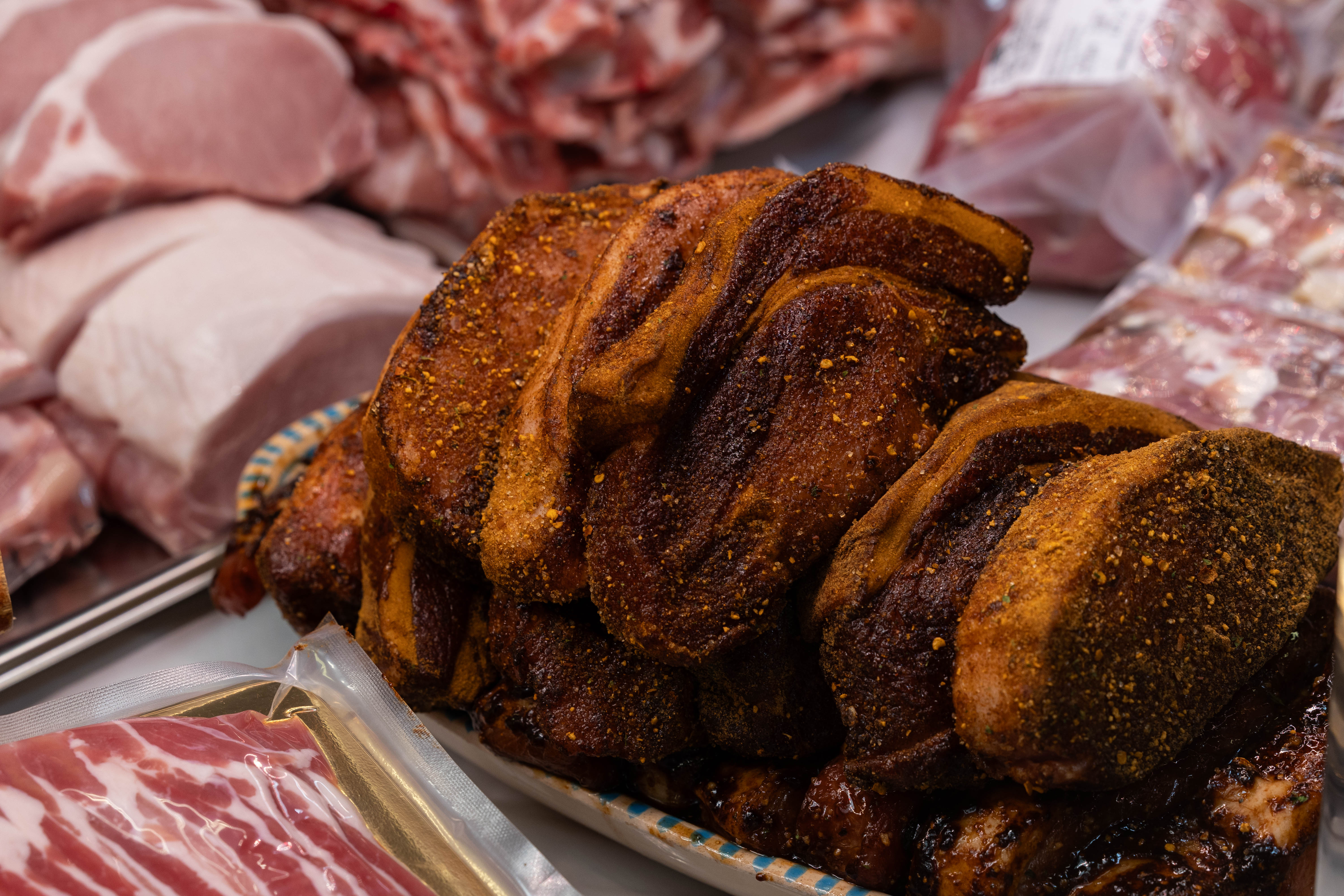
Spiced beef
Few foods are as closely associated with a Cork Christmas as spiced beef.
Its roots stretch back to the late eighteenth century, when Cork’s enormous salted-beef trade coincided with growing access to spices arriving through the city’s international trading networks. Beef that was already being preserved with salt could be flavoured with spices and seasonings, creating a product that became particularly associated with Cork.
Photograph: Darragh Kane
Although traditionally a Christmas food, spiced beef is now available beyond the festive season. Ó Drisceoil credits English Market butcher Tom Durcan with helping to popularise it as a year-round product.
Christmas, though, remains another matter entirely.
Durcan told me his stall sold 7.2 tonnes of spiced beef for Christmas 2025, with preparation for the following festive season beginning months in advance. Orders travel across Europe, while other customers carry it on flights to friends and family overseas.
That loyalty can be fierce. Avril, a regular English Market shopper, told me she once bought her Christmas spiced beef elsewhere when she couldn’t get into the city: “We stupidly got one in Dunnes last Christmas because we couldn't get in to town and I will never ever make the same mistake again.”
“I think it’s an identity of Cork itself and the English Market is the perfect arena to showcase it,” Durcan told me.
That attachment makes sense. Food historian Regina Sexton describes foods such as spiced beef as carrying an embedded food memory for Cork people: something those who have moved away may return to because it represents home as much as dinner.
Tripe and drisheen
Tripe and drisheen take you even deeper into Cork’s meat-processing history.
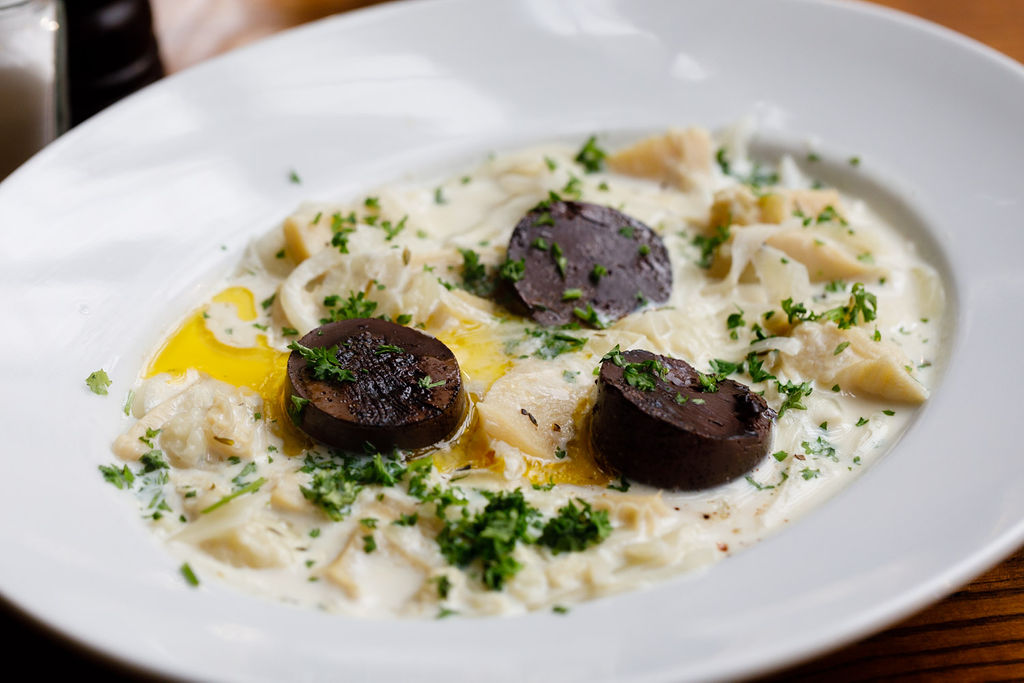
Drisheen is one of Cork’s most distinctive traditional foods, and perhaps one of its hardest to explain neatly. Made using blood serum and traditionally encased in intestine, it is neither quite a conventional sausage nor a black pudding. Sexton, who interviewed drisheen maker Stephen O’Reilly in the 1990s, describes it simply as having an identity of its own.
A. O’Reilly & Sons remains the Market name most closely associated with both tripe and drisheen. Ó Drisceoil says the family business is the last remaining manufacturer of drisheen in Cork city.
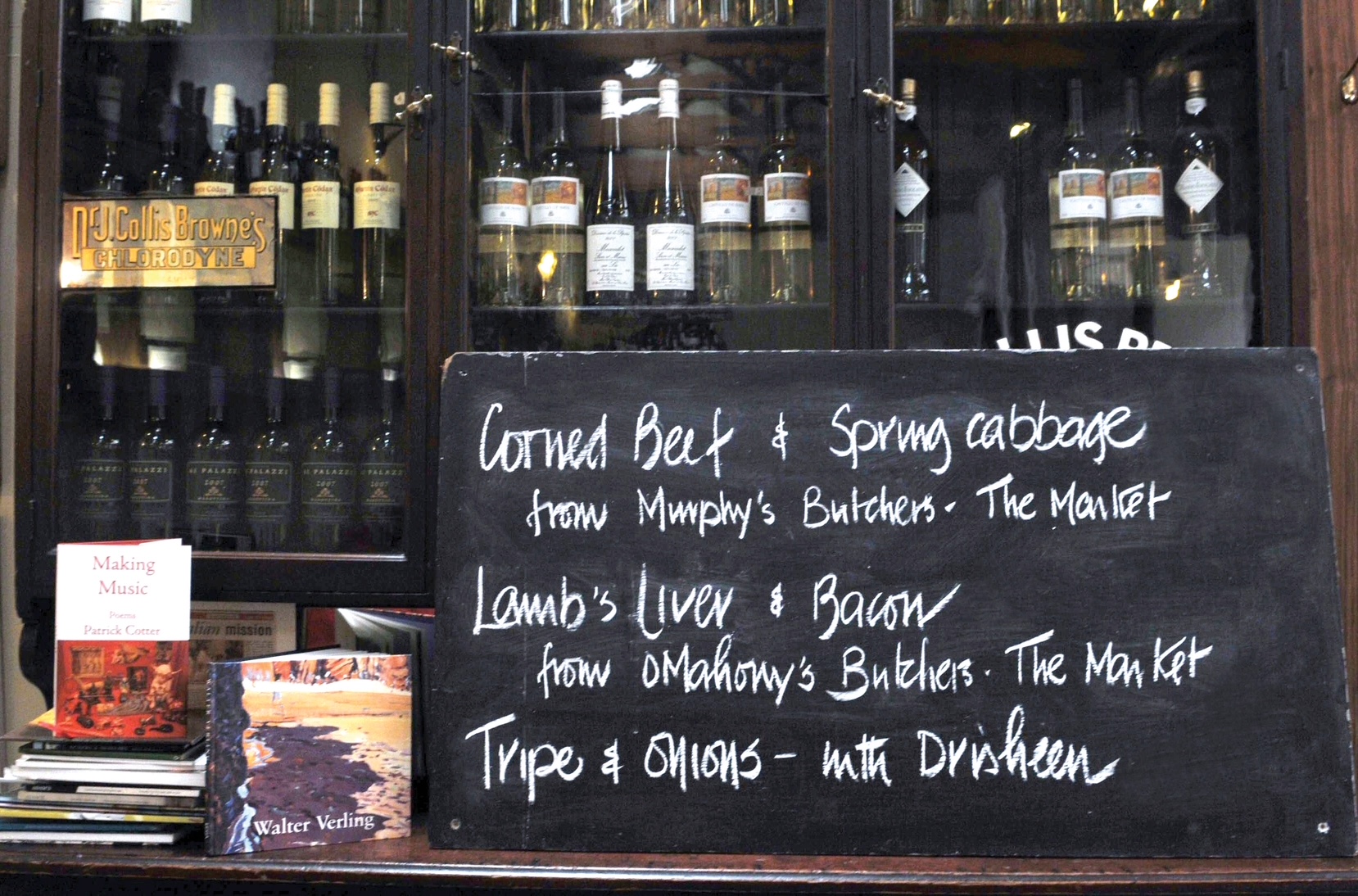
Upstairs at the Farmgate Café, the connection between stall and plate is particularly clear. The café confirmed to me that it sources both tripe and drisheen from A. O’Reilly in the Market for its traditional tripe and onions with drisheen.
Photograph: Claire O'Rourke
I’m firmly of the opinion that it is one of those Cork dishes worth trying at least once. I have. I’m very glad I did. I’m also quite content for once to have been enough.
That reaction probably illustrates part of the challenge facing foods like drisheen. Sexton believes changing tastes put some of Cork’s old offal traditions at risk, even while their survival in the Market keeps an important piece of the city’s food history tangible.
Bodice, skirts and kidneys
It would be easy to assume Cork’s traditional pork and offal dishes survive mainly through older customers. Pauline Mulcahy of Kathleen Noonan’s says the reality is rather more interesting.
Skirts and kidneys are currently the stall’s most popular traditional dish, while bacon ribs, known locally as bodice, can be so popular they are difficult to keep on the counter.
The customers are not confined to one generation either.
“It seems that the recipes are passed down through generations,” Mulcahy told me. “I could have a grandmother and grandson from the same family shopping with me at different times of the week!”
She has also seen customers from different nationalities buying the same cuts and using them in their own traditional recipes.
That is an important distinction. These ingredients are not surviving simply because somebody has decided they ought to be preserved as part of Cork’s culinary heritage. They remain alive because people are still cooking with them. Sometimes the recipes are handed down through Cork families; sometimes the same ingredients become part of entirely different food traditions.
Battleboard
Not all of Cork’s traditional Market foods come from the butcher’s counter.
Battleboard is the Cork name for dried salted ling, a large fish from the cod family which becomes stiff and board-like when preserved. Historically it was an inexpensive food eaten during Lent and on Fridays when Catholics abstained from meat, and it also became associated with Christmas Eve.
Ó Drisceoil says battleboard can still be bought in the fish section of the English Market today.
It is one of the foods Sexton recommends looking out for because, like spiced beef and the Market’s old offal traditions, it gives visitors a route into a much bigger story. These are foods shaped by religion, preservation, trade, poverty, availability and the practical need to make use of what Cork produced.
Yet looking only at the old foods would give a distorted picture of the Market. Tradition here has never meant standing still. The reason many of these businesses, and the Market itself, have survived is because they have repeatedly changed alongside the city.
Tradition in the English Market has never meant standing still
One of the easiest ways to misunderstand the English Market is to imagine that its value lies in keeping everything exactly as it was.
Its history suggests the opposite.
The Market has survived because traders have repeatedly responded to changing tastes, shopping habits and economic realities. Sometimes that has meant preserving foods and ways of trading that might otherwise disappear. Sometimes it has meant evolving an existing family business. At other times, it has meant changing direction almost completely.
That pattern runs through postgraduate researcher Karen Lewis-Jones’s study of women stallholders in the English Market after 1950. Her research found no single model for survival. Some businesses maintained tradition, others evolved gradually, while others made far more substantial changes in response to customer demand.
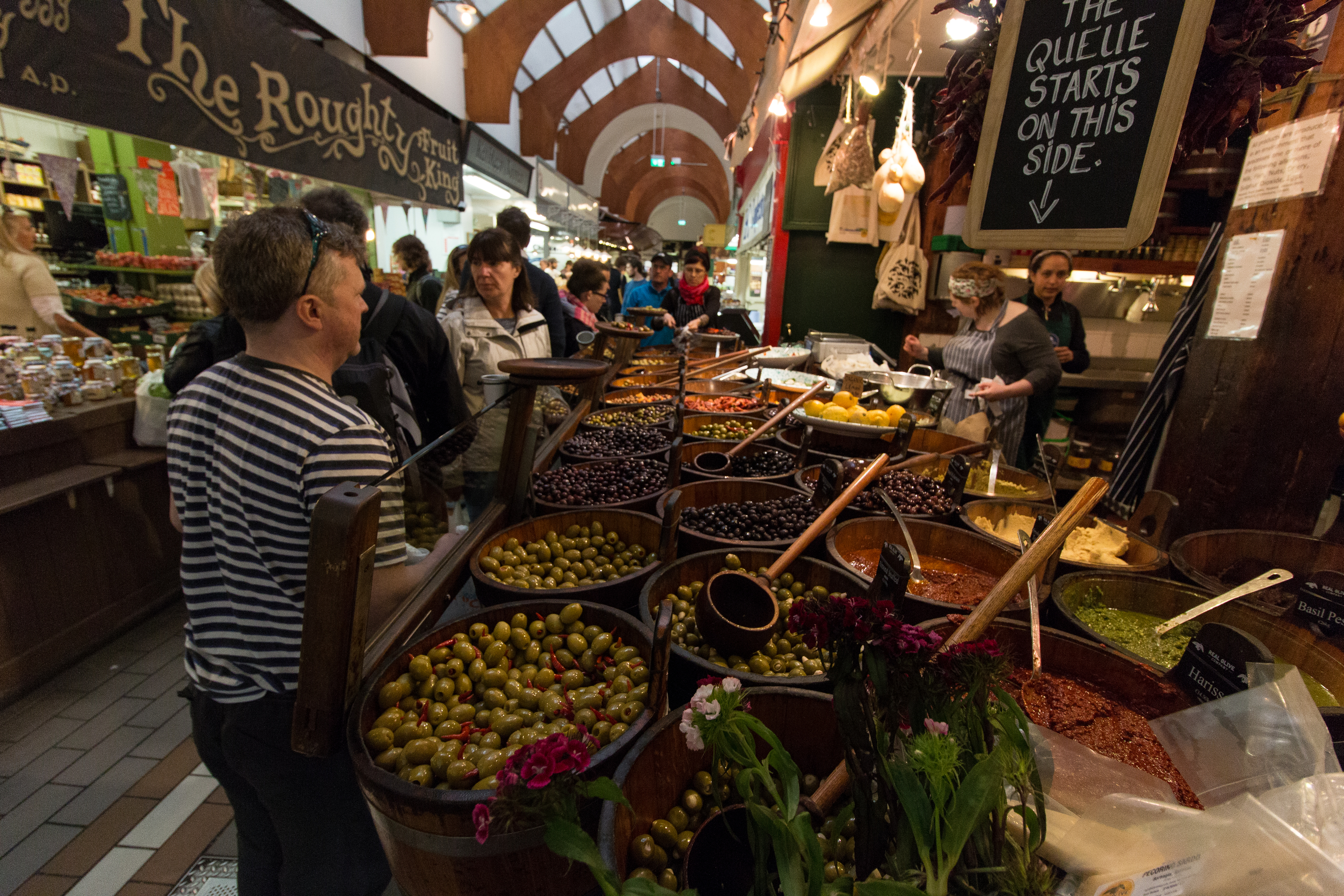
Margot Ann Murphy’s Roughty Foodie is a particularly clear example.
Murphy began working at her family stall from around the age of 10, when the business sold mainly fruit and Irish vegetables. Around 2012, she reinvented it, responding to changing shopping habits, a different clientele and growing interest in where food came from.
“The city changed, how people shopped changed, the clientele changed, the whole dynamics changed and so I had to move with the change,” she told me.
Today, the focus is heavily local and seasonal, with Irish fruit, flowers and products from small-scale producers including beekeepers, jam makers, cheesemakers, chocolatiers and growers.
Yet for Murphy, changing the products did not mean discarding the identity of the old stall.
“It was important to preserve the character and charm of the stall and the shopping experience we always gave the customer.”
That distinction matters. Adaptation in the English Market is not necessarily a choice between old and new. Often, the two are intertwined.
Photograph: David Ribeiro (Dreamstime)
At Kathleen Noonan’s, Pauline Mulcahy describes a much more continuous style of trading. The products remain deeply connected to Cork’s traditional food culture, and the relationships with customers remain central.
“Trading itself is pretty much the same as it always has been,” she says. “Having a good rapport with customers is so important to us and always has been. That is something that will never change.”
Even so, the customers buying those foods are changing. Traditional cuts are being cooked by younger generations and by people from different cultural backgrounds, giving old ingredients new lives without severing their connection to Cork.
At the other end of the spectrum is My Goodness, a much newer presence whose vegan and fermented foods might initially appear worlds away from the Market’s traditional meat and fish stalls.
Virginia O’Gara told me the business was asked to join the English Market to fill a former vegetable stall because, as she puts it, “we are in essence, vegetable vendors.”
The format is contemporary: plant-based food, fermented products, gut-health-focused dishes and a strong zero-waste ethos. The underlying role, however, is remarkably familiar — taking vegetables and turning them into something people want to buy and eat.
O’Gara is clear that being part of the Market means being conscious of the businesses that came before.
“The English Market is iconic. We are always learning from those that have come before us.”
That sentiment is echoed from the other direction by Mulcahy. She does not see the Market’s long-established businesses and its newer stalls as competing versions of what the place ought to be.
“Whether it’s the businesses like myself here for generations or the newer stalls, we all impact each other in a positive light.”
Together, those perspectives explain something important about the English Market. Its continuity does not depend on freezing a particular version of Cork food in time. It depends on retaining enough of its character, knowledge and relationships to remain recognisable while continuing to respond to the city around it.
The women who fed Cork
There is another history running through the English Market that is much easier to miss.
Women have been selling food in Cork for centuries, but their place within the city’s food economy was shaped by class as much as gender. Historical sociologist Dr Susan Marie Martin, whose research focuses on Cork’s women street traders, points out that the orderly, enclosed Grand Parade Market of the late eighteenth century catered to wealthier shoppers, while women selling fruit, vegetables, fish and other food continued to trade on the city’s streets.
Those women, sometimes described in records as “Green Women” or “Fruit Women”, traded with few of the protections or privileges afforded by a formal stall. Cork Corporation records complained about them blocking streets, footpaths and bridges, while the city’s wealthier residents could shop within the cleaner, regulated market nearby.
Even within what developed into today’s English Market, there were important differences. The enclosed Grand Parade Market was joined in the early 1790s by the adjoining Root Market on Princes Street. Rents in the Root Market were lower, and Martin’s research shows that it was dominated by women selling fruit, vegetables, fish and poultry. It was eventually roofed in 1862, becoming the Princes Street Market familiar to visitors today.
One of the most striking reminders of the divide can be found just outside.
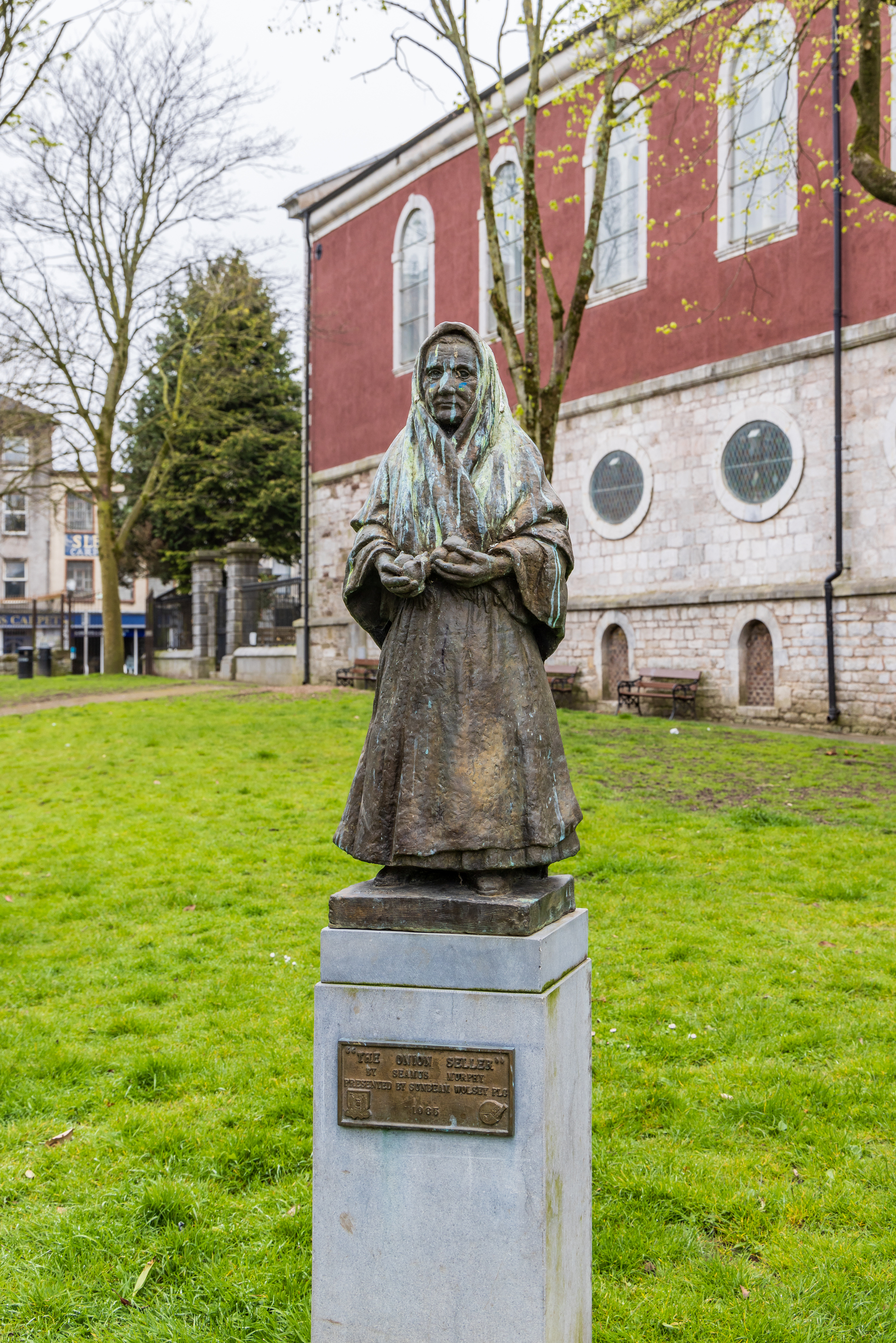
Across Grand Parade in Bishop Lucey Park stands Seamus Murphy’s sculpture of Mary Anne, an onion seller. Martin points out the uncomfortable symbolism: Mary Anne faces a market in which women like her were not welcome. Onion sellers who entered to approach customers could be chased out by market staff and, if caught, prosecuted for trespass.
Photograph: Hilda Weges (Dreamstime)
The scale of women’s informal food trade is easy to underestimate. A Garda register from 1928 recorded more than 200 stall and itinerant traders, all women. Of those, 147 were trading around Cornmarket Street, North Main Street and the surrounding city-centre lanes, with most selling food.
Nor is the story as simple as street trading being regulated and women consequently moving into the English Market. Martin says stalls there remained financially beyond the reach of many poorer women during the tighter street-trading regulation of the 1920s and 1930s. It was only later, as the English Market declined after the 1950s and vacancies appeared, that some women who had previously traded on the streets were able to afford stalls inside.
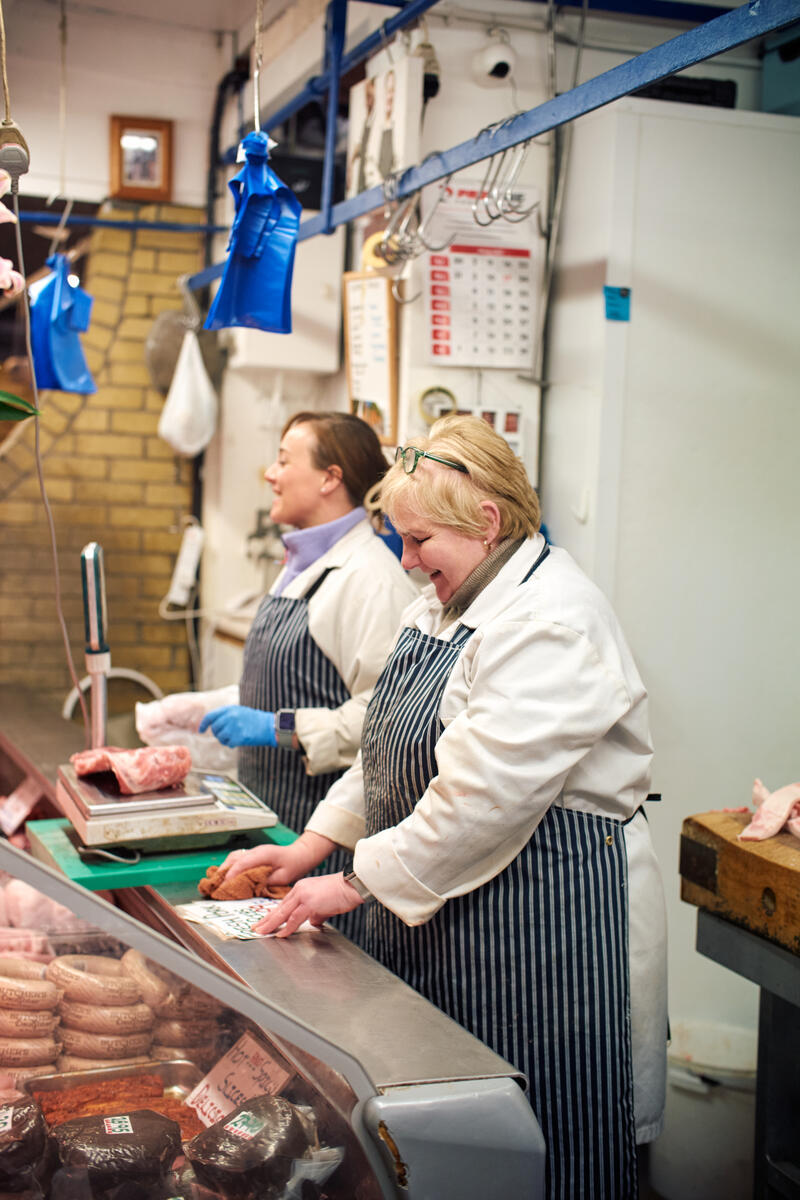
By the mid-twentieth century, however, women had become deeply embedded in the life of the Market itself.
Photograph: Islander (Fáilte Ireland)
Researcher Karen Lewis-Jones explored that later history in her 2023 postgraduate study, The Evolving Role of Women Stall Holders in Cork’s English Market After 1950. Through interviews with Pauline Mulcahy of Kathleen Noonan’s, Daphne Roche of O’Sullivan’s Poultry, Margot Ann Murphy of Roughty Foodie and Mary Rose Daly of Coffee Central, she documented businesses passed down through families and very different approaches to surviving decades of social and economic change.
The recollections gathered in her research bring an earlier generation of Market women back into view too: women selling vegetables, offal, eggs, butter, poultry and other foods, running businesses and serving generations of Cork customers.
It would be tempting to turn that history into a straightforward story of women gradually gaining a larger share of the Market. Lewis-Jones’s research does not support such a neat progression. Her analysis of available stallholder records from 1950 to 2005 found no clear growth in female ownership; in fact, the available data show a downward trend, even when women are considered as a proportion of all stallholders.
There are limitations to those records. They were compiled from sources including newspaper material and personal recollections, and a registered stall owner was not necessarily the person actually running the business day to day. That distinction matters particularly when women’s work has so often been poorly recorded.
The women Lewis-Jones interviewed were also negotiating the expectations placed on women outside the Market. Family businesses could offer independence and the ability to shape their own working lives, but childcare and family responsibilities remained a constant pressure. As self-employed business owners, they did not necessarily benefit from employment protections introduced for other working women.
Yet their stories are not simply stories of endurance. They are stories of business judgement: recognising which traditions customers valued, when tastes were changing, when to diversify and when not to.
That thread continues today.
Pauline Mulcahy grew up watching her mother Kathleen serve generations of customers from the family stall. “Growing up seeing my mother feed the people of Cork and the impact she had on their lives was unreal,” she told me. “It’s something now that I get to do.”
That might be one of the simplest ways to understand the role women have played in Cork’s food history. Their work has not always been formally recorded, celebrated or even welcomed, but for generations they have bought, sold, prepared and understood the food that fed the city.
The English Market as Cork’s meeting place
For all its history, the English Market still makes most sense when it is busy doing the ordinary things markets do.
People come in with shopping lists. Traders call across counters. Someone stops because they have spotted a neighbour, a friend or a face they know from somewhere. A question about what to cook can become a recipe recommendation; a quick purchase can become a ten-minute chat.
That social role is one of the things Regina Sexton believes distinguishes the English Market from other places where food is sold.
“I think it’s kind of a cross section through Cork,” she told me. Customers come for mainstream foods, budget ingredients and artisan products, all within the same relatively small space, while the relationships between shoppers and stallholders add another layer entirely.
“The stallholders do more than sell you things,” she says. They talk, remember customers, share jokes and commiserate when life calls for it.
Pauline Mulcahy’s experience at Kathleen Noonan’s makes that idea tangible. For her, knowing what is happening in customers’ lives and families is simply part of trading, just as customers know what is happening in hers.
That familiarity is not an accidental extra. In a market built around individual businesses, the person behind the counter remains part of the transaction in a way that is increasingly easy to lose elsewhere.
Sexton remembers that same sense of choice from shopping in the Market with her mother. Rather than buying everything from one retailer, shoppers could decide which butcher, fishmonger, greengrocer or other trader they wanted to buy from, making choices according to quality, preference and budget as they moved around the stalls.
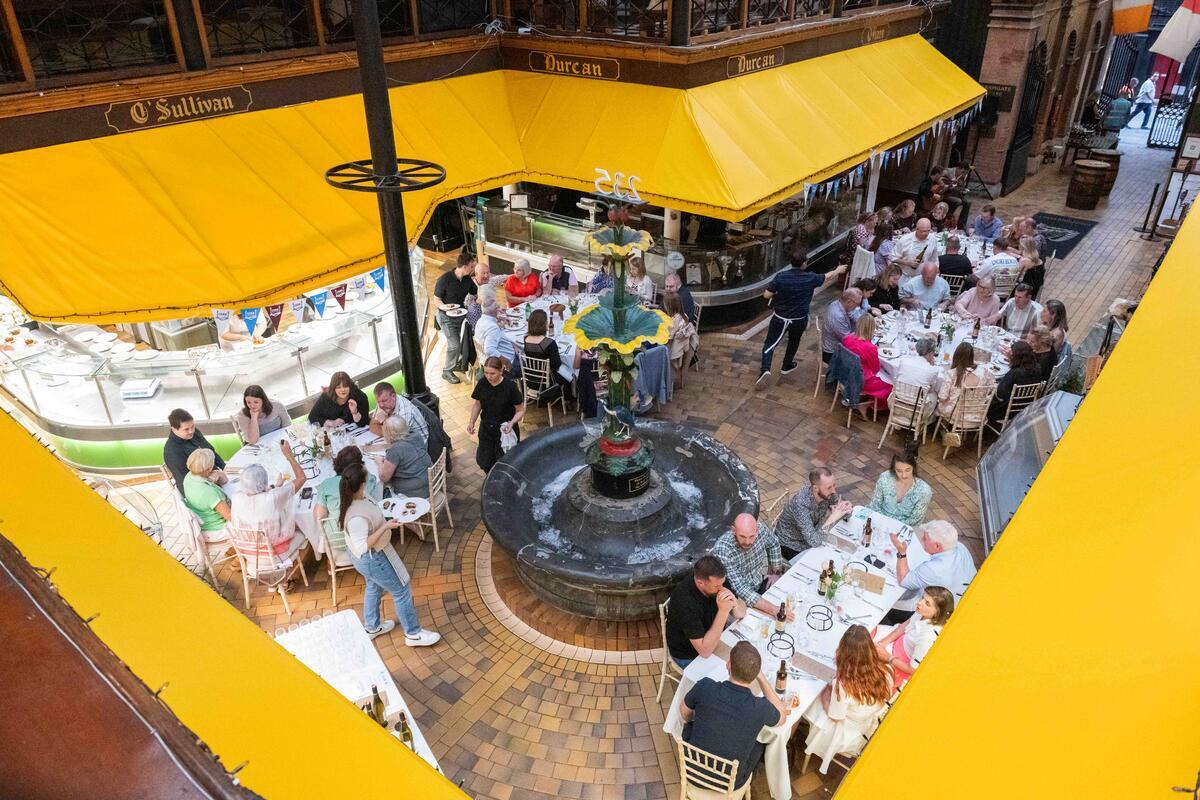
There is a different rhythm to visiting as a traveller, of course, but you can still become part of that atmosphere rather than simply observing it. Ask about a local ingredient. Find out how something is cooked. Buy from the stalls rather than treating them as displays. And, particularly when the Market is busy, remember that the person trying to squeeze past you may simply be there to buy their dinner.
Photograph: Cork City Council by Joleen Cronin
Farmgate Café: a view over the Market
The Farmgate Café adds another dimension to the Market’s social life.
Upstairs, overlooking the stalls below, it offers one of the best places to sit and watch the Market in motion while eating food closely connected to what is sold downstairs.
Photograph: Joleen Cronin
Sexton sees the café as part of the same human ecosystem: another place to meet, talk and eat Market produce without leaving the atmosphere of the building.
It is worth allowing time for that if your visit permits. The English Market changes when you stop moving through it. From above, the flow of shoppers, traders and deliveries becomes easier to see, and what might initially appear to be a collection of individual food businesses starts to look much more like a community.
That community now has to accommodate another increasingly important group too: visitors. The English Market’s international profile has helped make it one of Cork’s best-known attractions, but popularity also raises a difficult question. How does a working food market continue serving the people who use it every week while also welcoming those who have come specifically to see it?
Tourism and the English Market: blessing, burden or both?
The English Market’s appeal to visitors is hardly surprising. It offers something increasingly difficult to manufacture for tourism: a place that is historic, distinctive and still genuinely used by the city around it.
Its international profile grew significantly after Queen Elizabeth II visited during her state visit to Ireland in 2011. Today, the Market appears prominently in Cork’s tourism promotion and is a regular stop for independent travellers, food tours and organised groups.
That visibility can help protect the Market by reinforcing its cultural value. It can also create tension with the very thing visitors have come to experience: a functioning food market.
Historian Dr Donal Ó Drisceoil is particularly concerned about the impact of large organised groups on the narrow walkways and access to stalls. He describes reports of groups obstructing shoppers and traders, while questioning how much some of those visits contribute directly to the businesses themselves.
His point is not that visitors do not belong in the Market. Rather, he argues that its role as an attraction has to be balanced against its primary function as somewhere people buy and sell food.
There are now formal measures intended to manage that pressure. Organised tours must be registered with Market Management in advance, and tour groups are limited to eight people at a time inside the Market. Larger parties must divide into smaller groups as they move through the building.
For an independent visitor, the same principle can be applied much more simply: be aware of the space you are occupying.
The aisles can become extremely busy, particularly around lunchtime and on Fridays and Saturdays. Avoid stopping in the middle of a narrow passage for photographs, give shoppers access to the counters and remember that the stalls are businesses rather than exhibits.
Most importantly, buy something if you can. A coffee, some bread, cheese for a picnic, fruit, chocolates, spices or ingredients for dinner all turn a visit from simply looking at the Market into participating in it.
Who runs the English Market?
The English Market is owned and operated by Cork City Council. The Council currently contracts property company Lisney to provide day-to-day management services, with a designated market manager working with both traders and the local authority.
When stalls become available, businesses are selected through a tender process assessed by a Council-appointed panel. Cork City Council says the criteria are designed to help sustain the Market’s traditional trading environment.
There is also a Traders Committee representing businesses within the Market, which liaises with Lisney and Cork City Council on issues affecting traders.
That relationship matters because the future of the English Market is not simply a question of preserving a historic building. It is also about preserving the conditions in which independent traders can continue to operate within it.
Ó Drisceoil argues that traders, customers and Cork citizens have a form of cultural ownership of the Market that needs to remain part of decisions about its future, particularly alongside commercial management priorities.
Investment in the Market’s future
The building itself will also require significant investment.
Cork City Council told me it is planning essential structural and substructural works, including a proposed restoration of the Market roof and upgrades to associated buildings. The work will require detailed design, planning and procurement, and the Council says any programme would need to be phased to minimise disruption and keep the Market operating.
There is not yet a fixed timetable or confirmed overall investment figure, with funding options still being explored.
The Council is also working with Fáilte Ireland on research into the economic value of the English Market from a tourism perspective, which it says will help inform future restoration, refurbishment and investment decisions.
One indication of just how heavily the space is used came from a pilot footfall project in December 2025, when footfall of 93,111 was recorded during the month. Cork City Council plans to introduce permanent footfall counters towards the end of 2026, so there is not yet a reliable annual figure.
That leaves the English Market in an interesting position. Its popularity is part of the reason there is such strong interest in protecting it, but protecting it also means ensuring it remains more than somewhere visitors come to photograph.
The best way to experience it is therefore much the same as it has always been: come to look, certainly, but also come to shop, eat, talk and pay attention to the ordinary life carrying on around you.
What to eat and buy in the English Market
With dozens of traders under one roof, trying to turn the English Market into a checklist rather misses the point. What you buy will depend on whether you are stopping for lunch, stocking a self-catering kitchen, putting together a picnic or simply following whatever smells good as you walk past.
Nor do you need to experience everything in a single visit. If I am spending a few days in Cork, I would rather come back to the Market several times: once for a proper meal, another time for coffee or something quick to eat, and again to get ingredients if I am cooking.
For a taste of traditional Cork
If food history is what brought you here, start with the products we have already met: spiced beef from Tom Durcan, traditional pork and offal from Kathleen Noonan’s, and tripe and drisheen from A. O’Reilly & Sons.
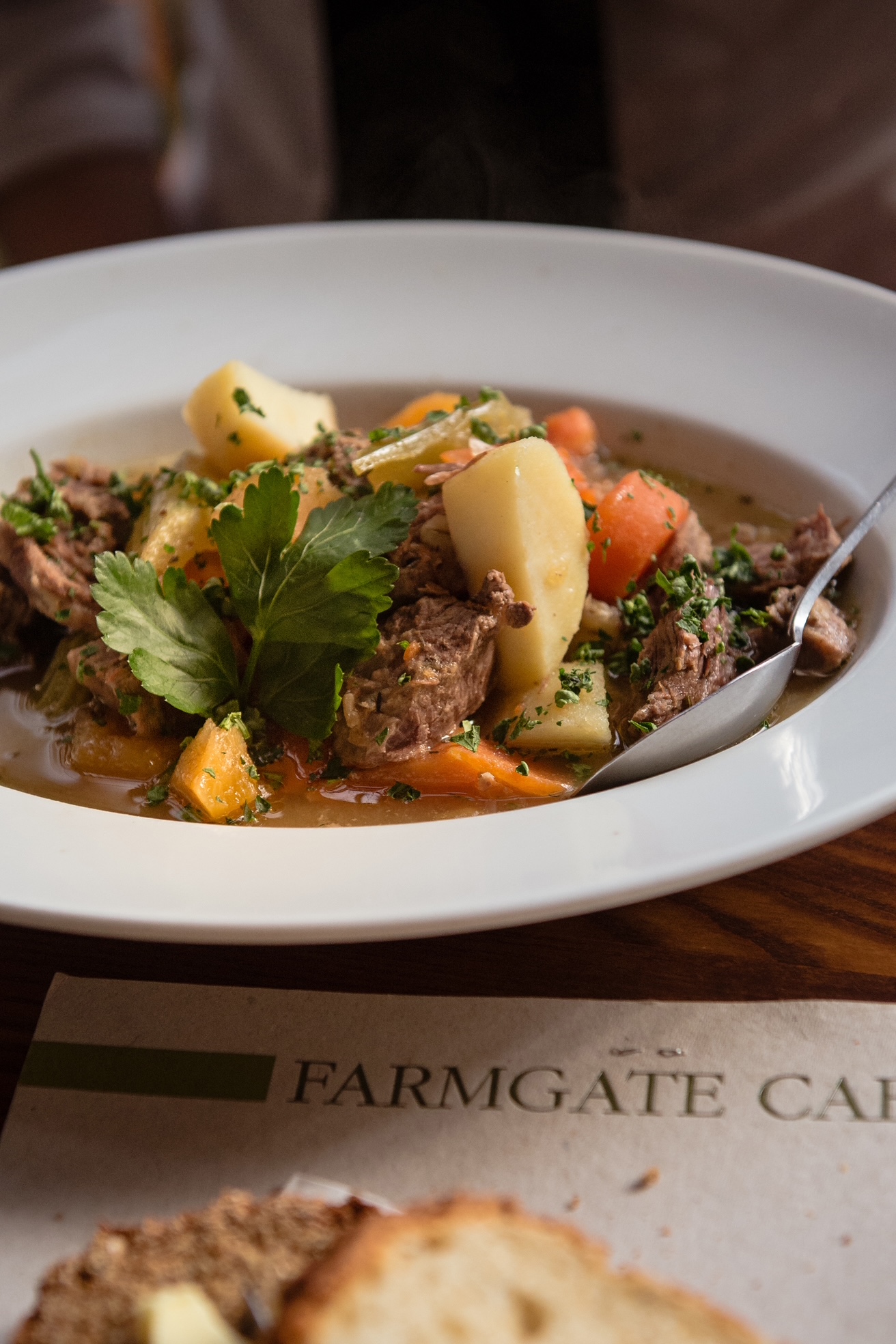
You do not necessarily have to cook them yourself. The Farmgate Café serves traditional Cork dishes using ingredients sourced from the Market, making it one of the easiest places for a visitor to taste foods that might otherwise be unfamiliar.
Photograph: Joleen Cronin
Do not feel obliged to turn the traditional foods into an endurance test, though. Trying something because it tells you about Cork is one thing; pretending you adore every bite for the sake of authenticity is quite another.
For lunch or something to eat now
The Market has become increasingly good at feeding people who want to eat straight away, whether that means sitting down for a meal or grabbing something to take with you.
Farmgate now offers two options within the Market. The Farmgate Café upstairs is the obvious choice if you want to linger, while its newer Market Stall downstairs offers another option for food within the trading floor itself. The café’s position above the Market gives you both a meal and a view of the activity below, and Farmgate’s long relationship with Market suppliers makes it particularly relevant to the story of the place.
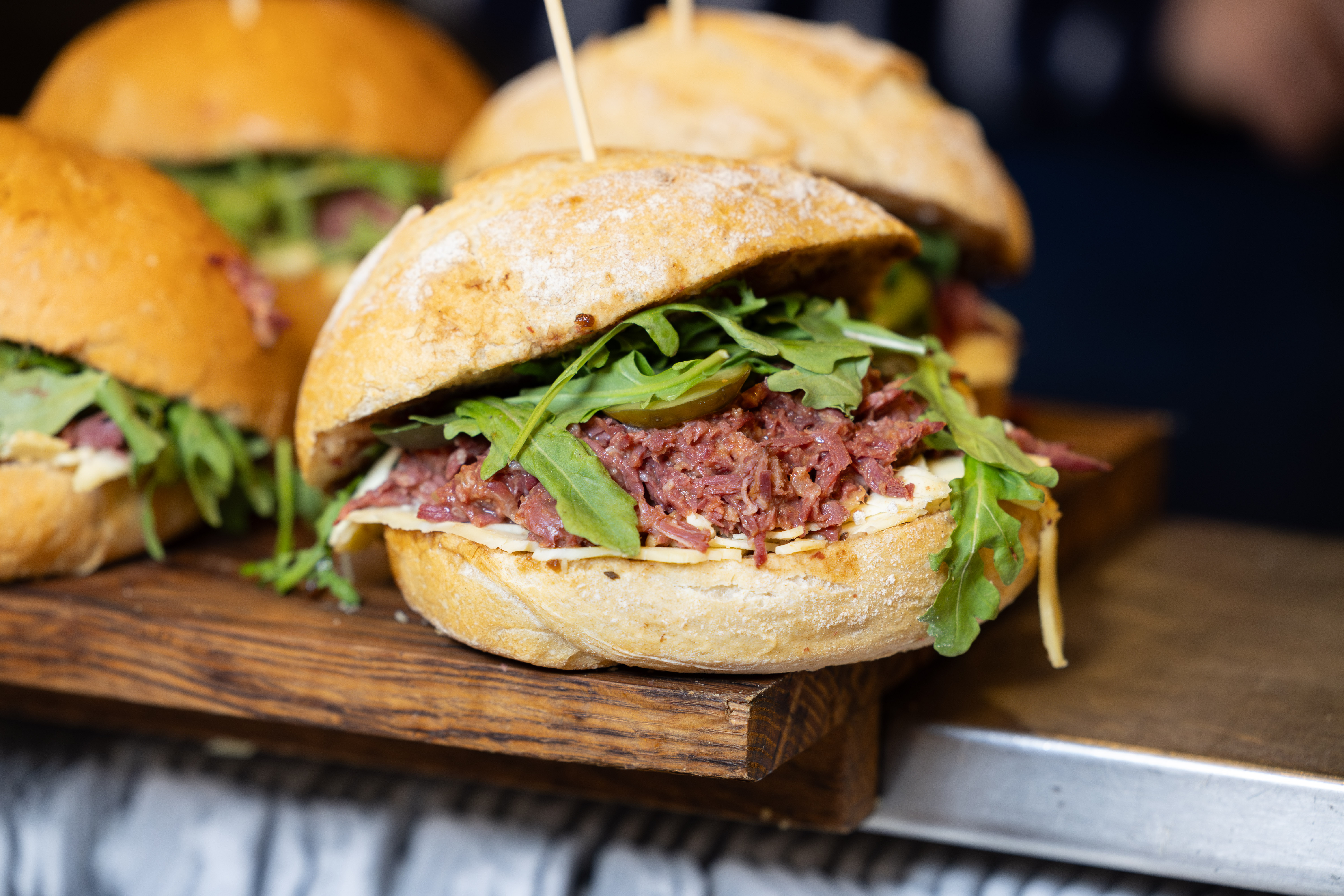
For something quicker, My Goodness offers plant-based food alongside fermented products, while On The Hoof, owned by Tom Bradley of the Market’s Tom Bradley Bacon & Pork Specialists stall, serves soups, salads and sandwiches built around locally sourced ingredients.
The Sandwich Stall is another useful stop for food to go, including grilled cheese made with cheese from its sister business, Toonsbridge Dairy.
My preference on a dry day is often to gather something from the Market and take it across Grand Parade to Bishop Lucey Park. It gives you lunch without necessarily giving up half the day to lunch.
If the Market is only one stop on your food plans, I’ve also put together a guide to where to eat in Cork, covering restaurants, cafés and casual places to eat across the city.
Photograph: Darragh Kane
For a Cork picnic
This is where browsing becomes dangerous to the appetite.
Toonsbridge Dairy makes Irish versions of Mediterranean-style cheeses in West Cork, including mozzarella, burrata, ricotta and smoked scamorza. Pair those with olives and antipasti from The Real Olive Company, good bread, fruit and something sweet and you are most of the way towards an excellent picnic.
Hederman’s Smoke House is worth knowing about too, particularly if you like smoked fish. Its range includes smoked salmon and other seafood products prepared at its traditional smokehouse in County Cork.
Then wander. Some of the best Market lunches are assembled rather than ordered: cheese from one stall, bread from another, fruit somewhere else and whatever else caught your eye along the way.
For self-catering in Cork
If you have access to a kitchen, the English Market becomes far more than somewhere to pick up lunch.
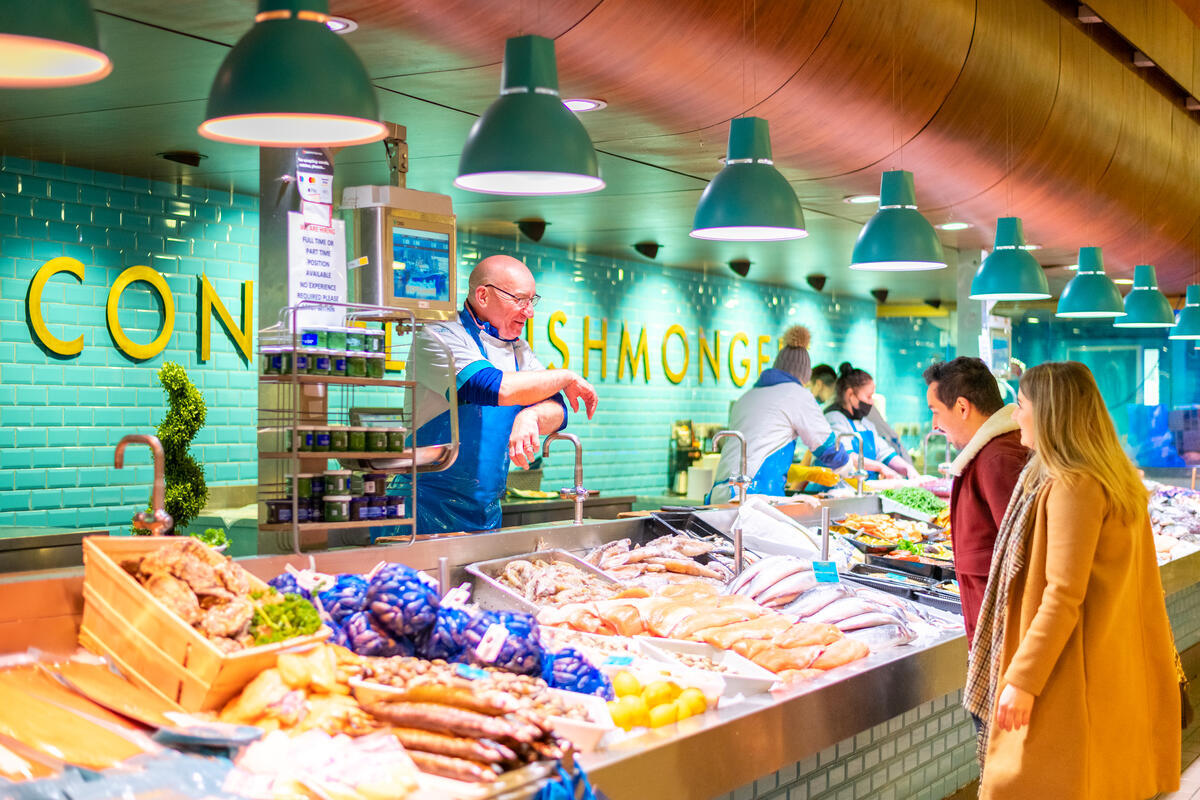
The fish section alone is worth taking time over, with established fishmongers including K. O’Connell and Ballycotton Seafood. There are traditional butchers and poultry stalls, fresh fruit and vegetables, artisan dairy products, spices, condiments and speciality groceries, making it entirely possible to build dinner around what looks best that day.
Photograph: Resolute Photography (Fáilte Ireland)
Roughty Foodie is particularly useful if you want to explore smaller Irish producers. Margot Ann Murphy’s emphasis on local and seasonal food extends across fruit, flowers and products from Irish cheesemakers, chocolatiers, jam makers and beekeepers.
The Good Food Shop is another useful option for fruit and vegetables, with an emphasis on organic produce and a broad range catering for different dietary needs.
If you are staying somewhere with a kitchen, I would leave at least one meal unplanned until you have walked around the Market. Decide what to cook after you have seen what is actually on the counters rather than arriving determined to find ingredients for a recipe you chose three weeks earlier.
For something to take home
Not everything worth buying needs to be eaten before you leave Cork.
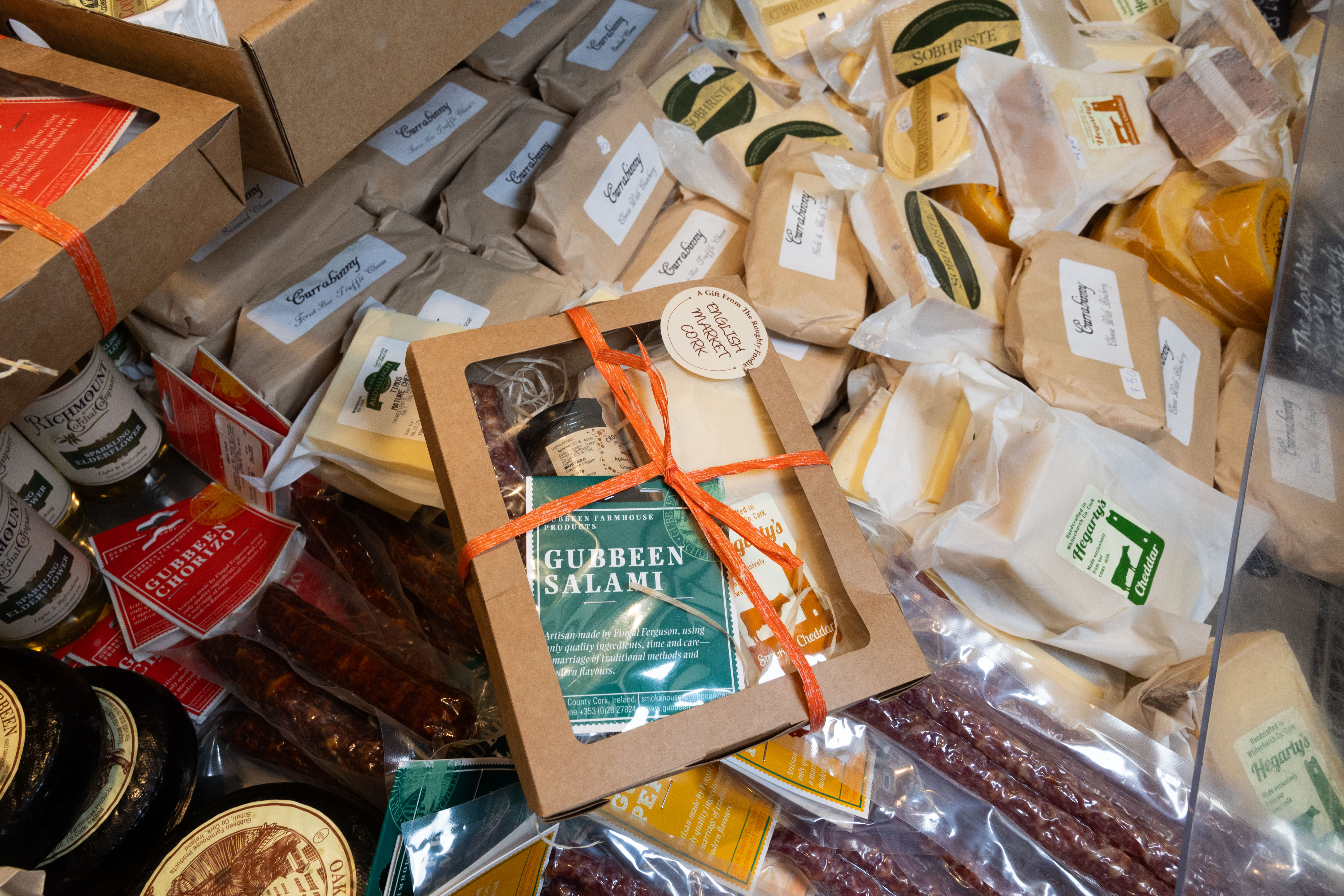
Chocolates, preserves, spices, local honey and other Irish-made products make easy food souvenirs, while cheese and smoked fish may also work if your journey home and storage arrangements allow.
Photograph: Darragh Kane
Spiced beef also travels remarkably well. I rarely return home without a decent supply of Tom Durcan’s, and I have picked up packs at Cork Airport as well as from the Market. If you are travelling later in the day, it is worth speaking to Tom in advance about collection; I have found him very helpful about arranging a morning pick-up before an afternoon journey.
Whatever you choose, I would buy from a few individual stalls rather than attempting to identify one definitive “best” trader. Part of the pleasure of the English Market is that each counter has its own speciality, personality and regular customers. Browse first, ask questions and let what is good that day decide what goes into the bag.
Planning your visit to the English Market
The English Market is right in the centre of Cork, so you do not need to build an entire day around getting there. It is an easy place to weave into a day exploring the city, although I would allow more time than you think you need if food is a major reason for your visit.
If you’re still deciding where to base yourself, my guide to where to stay in Cork covers some of my recommended hotels around the city.
What are the English Market opening hours?
The English Market building is open Monday to Saturday, from 8am to 6pm, and is closed on Sundays and Bank Holidays.
Individual traders keep their own hours, however, and many begin trading from around 8.30am rather than as soon as the doors open. If there is a particular stall you want to visit, check its opening hours before making a special journey.
If you are specifically visiting Farmgate, the Farmgate Market Stall downstairs is open Monday to Thursday 9.30am–4pm, and Friday and Saturday 8.30am–4.30pm. It is also closed on the Tuesday after Bank Holiday weekends.
The upstairs Farmgate Café opens Monday noon–3pm, Tuesday to Friday 9am–3.30pm, and Saturday 8.30am–4pm. It is closed on Sundays and Bank Holiday Mondays.
What is the best time to visit the English Market?
For a first visit, I would aim for between 9am and 11am. The stalls are well stocked, there is usually more room to browse and it is easier to stop and talk to traders without getting in the way of the lunchtime rush.
The Market gets considerably busier from late morning into the afternoon. Cork City Council identifies roughly 11am to 4.30pm as the busiest trading period and notes that Fridays and Saturdays can be particularly hectic.
That does not mean you should avoid those times completely. If you want the Market at its most energetic, Friday or Saturday around lunchtime certainly delivers. If you want to look closely, ask questions and take your time, go earlier.
Late afternoon can be quieter again and is pleasant for a slower wander, although some popular fresh and prepared foods may have sold out by then.
How long do you need at the English Market?
You can walk through the English Market surprisingly quickly. I would allow at least 30 minutes to explore the stalls without rushing, and closer to an hour if you want to shop, stop for something to eat or actually talk to the people behind the counters.
If you are having breakfast or lunch at Farmgate Café, naturally allow longer.
Personally, I prefer several shorter visits over the course of a Cork stay rather than attempting to do everything at once. Have breakfast or lunch, pop back for a coffee another day, buy something for a picnic, then return to get the messages if you are cooking. It is a working market, and repeated visits let you experience it like one.
Where are the entrances?
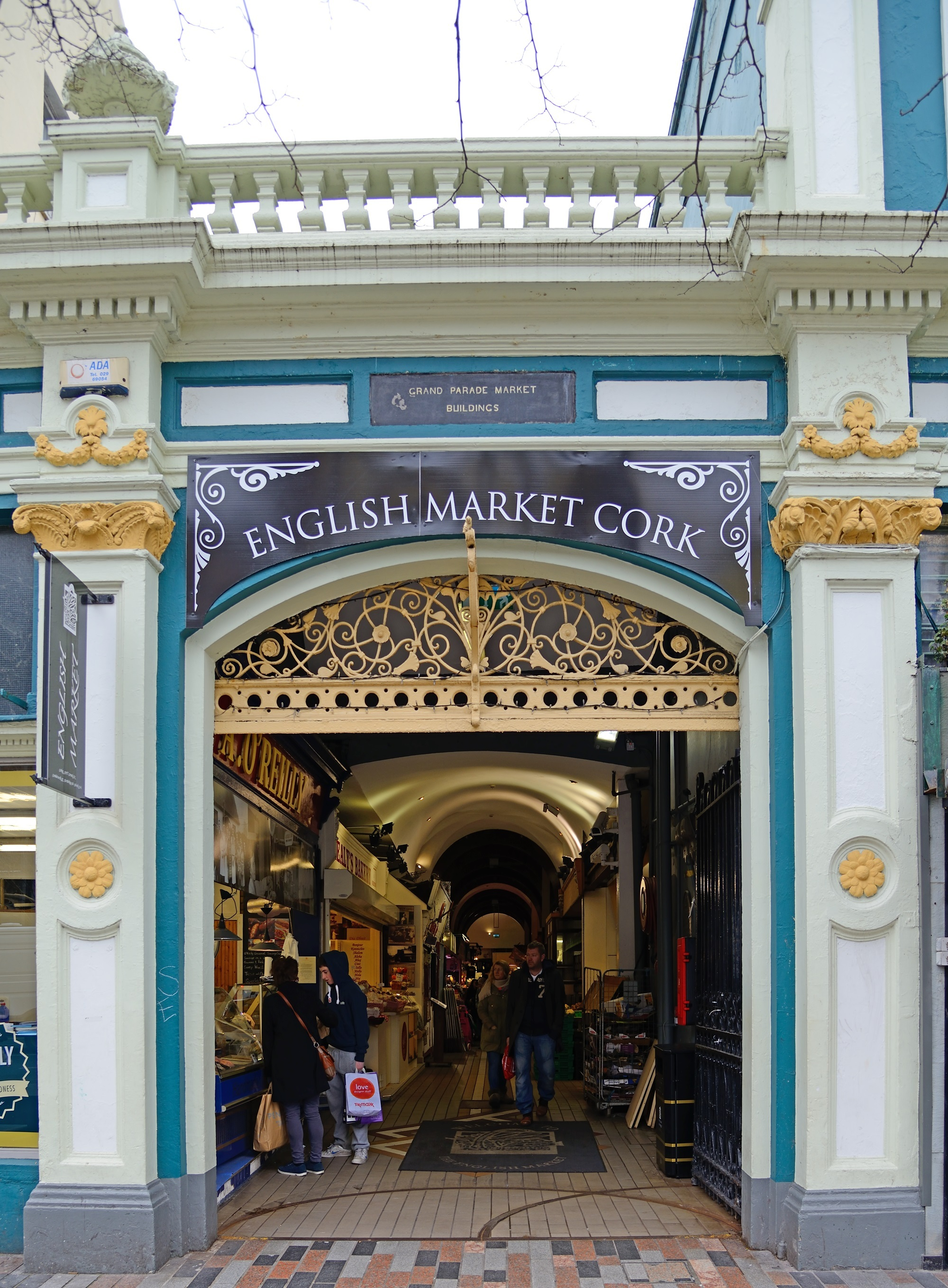
The two main entrances are on Grand Parade and Princes Street. There are also smaller entrances from Oliver Plunkett Street and Patrick Street.
If you are wandering around central Cork, you are unlikely to be far away. The Market sits between some of the city centre’s principal shopping streets and is easily reached on foot from most central attractions.
Photograph: Wirestock (Dreamstime)
Is the English Market accessible?
The main Market trading floor is at ground level and is largely step-free, although some individual stalls are small and the aisles can become difficult to negotiate when the Market is particularly crowded.
If you use a wheelchair or mobility aid, I would choose a quieter morning visit where possible rather than the Friday or Saturday lunchtime rush.
One important exception is Farmgate Café, which is upstairs and accessed by stairs rather than from the Market’s ground-floor trading area.
Are there toilets in the English Market?
Yes, but facilities are limited. There is one public toilet on the ground floor near the fish aisle, close to the Market Alley entrance. Cork City Council currently advises that it is coin-operated.
Can you pay by card?
Payment methods vary between traders. Many accept cards, but the Market’s own visitor information still advises that some businesses operate on a cash-only basis.
I would therefore carry a little cash rather than assume every stall will take a card. There are ATMs elsewhere in the city centre, including around Patrick Street and South Mall.
Where can you park?
If you are driving into Cork, the nearest public multi-storey car parks are at Grand Parade and Paul Street. Cork City Council also operates the Black Ash Park & Ride on Kinsale Road, which connects with the city centre.
Unless you specifically need the car, though, this is one Cork attraction where walking makes far more sense once you are in the centre.
Can you take photographs in the English Market?
For an ordinary visitor, the important thing is courtesy. The Market is wonderfully photogenic, but it is also somebody’s workplace and somebody else’s weekly shop. Avoid blocking aisles or counters for photographs, and ask before taking close-up pictures of traders or customers.
Commercial photography or filming is different and requires prior permission from Cork City Council and Market Management.
A little English Market etiquette
The simplest rule is to remember that you are visiting a working market rather than an attraction created for tourists.
Keep narrow aisles clear, let customers reach the counters, avoid gathering in large groups and do not hold up a busy trader indefinitely for photographs or questions when there is a queue behind you.
But do engage. Ask what is good that day. Ask how to cook something unfamiliar. Buy from the stalls. Have a chat.
That simple shift — from looking to participating — makes for a much better Market experience.
Should you take a food tour of the English Market?
You certainly do not need a tour to enjoy the English Market. It is compact, free to enter and particularly rewarding when you give yourself permission to browse, ask questions and follow your appetite.
That said, a guided food tour can be worthwhile if you want somebody to put the Market into the wider context of Cork’s food culture, introduce you to traders and take some of the guesswork out of deciding what to taste.
One option is the Cork Culinary Tour, a three-hour food-focused walk through Cork city. The current itinerary includes around 40 minutes in the English Market, with opportunities to meet traders and sample local food, alongside other Cork food and drink stops.
I would choose it if you want a broader introduction to Cork’s food scene rather than a tour devoted exclusively to the Market. If the English Market itself is your main interest, use this guide, arrive early and explore independently at your own pace.
Is the English Market worth visiting?
Absolutely. But the English Market is worth visiting for reasons that go far beyond its age or its place on Cork’s sightseeing lists.
You can come for the architecture, the history and the photographs. You can come hungry for spiced beef, cheese, smoked fish, good bread or lunch upstairs at Farmgate. You can trace centuries of Cork food history through tripe, drisheen and bodice, then turn a corner and find fermented vegetables, vegan food and products from a new generation of Irish makers.
What makes the Market exceptional, though, is that none of those things exists separately.
The traditional foods survive because people still buy them. Family businesses endure because they have learned when to preserve something and when to change it. Newer traders become part of a place shaped by those who came before them. And behind the food are relationships between traders and customers that can span years, families and generations.
The English Market has survived fire, economic decline, redevelopment threats and enormous changes in the way we shop and eat. Its endurance does not come from remaining frozen in 1788. It comes from continuing to be useful to Cork.
So give yourself time when you visit. Buy something. Ask a question. Have lunch, pick up the makings of a picnic or get the messages for dinner. If it is busy, move out of the way of the person who actually needs to reach the fish counter.
And take Regina Sexton’s advice: do not only look. Listen.
You will hear traders and regular customers, snippets of Cork conversation and, increasingly, languages from much further afield. You will hear a city that has changed enormously while continuing to use the same market.
Sexton calls it a “very intense, wonderfully concentrated cross section of Cork”. After spending time properly looking into the English Market — its food, its history and, most importantly, its people — I cannot think of a better description.
The Market is at its best when visitors become customers rather than spectators.
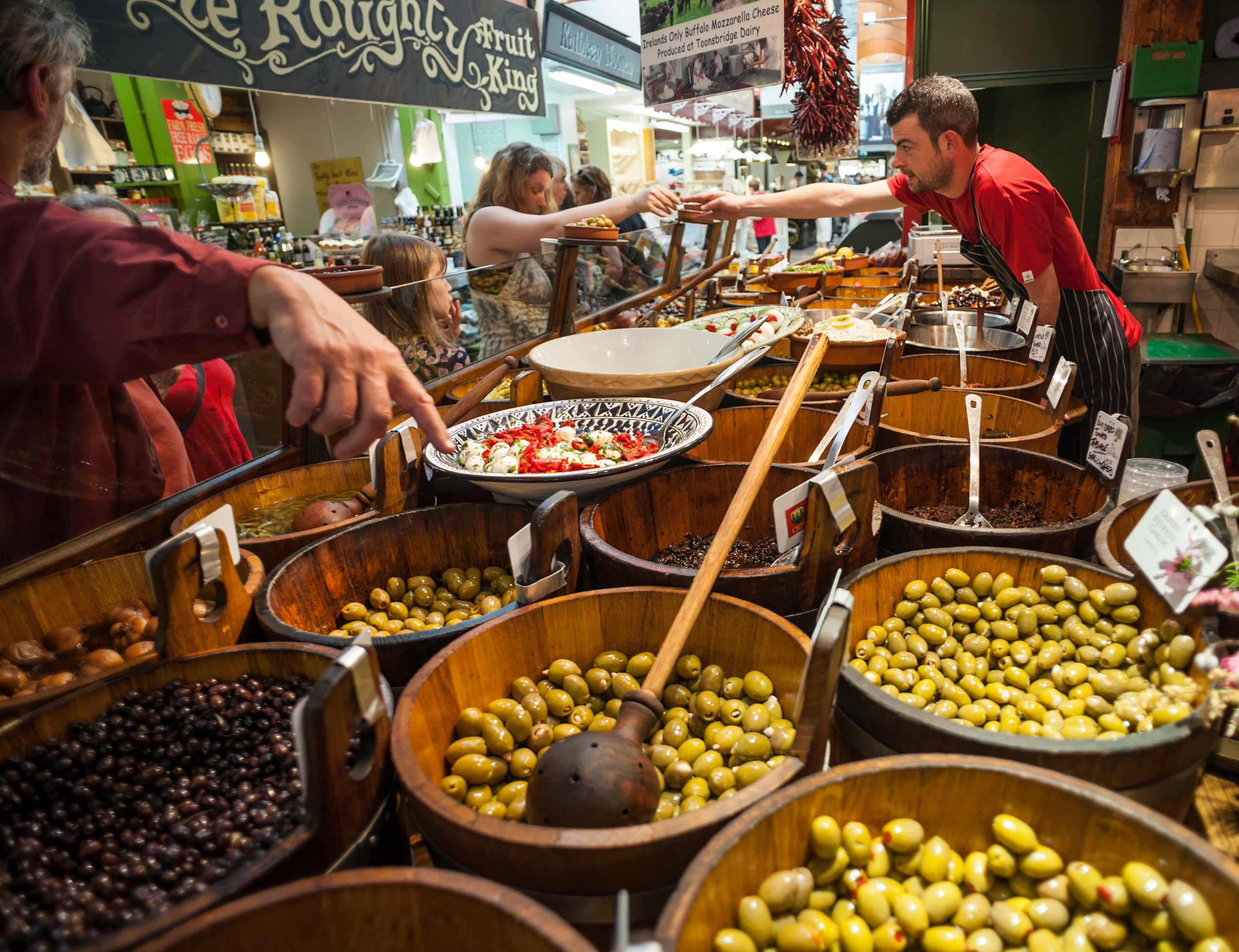
Photograph: Gabe9000c (Dreamstime)
English Market FAQs
What is the English Market in Cork?
The English Market is a historic covered food market in Cork city centre. It opened in 1788 and today remains a working market with 47 traders selling everything from traditional Cork foods and fresh produce to artisan groceries, coffee and prepared food.
Why is Cork’s English Market famous?
It is known for its long history, distinctive Cork food traditions and mix of established family businesses and newer traders. Foods including spiced beef, tripe, drisheen, bodice and battleboard connect the Market directly to Cork’s culinary past.
Why is it called the English Market?
The name appears to have emerged in the 1840s, decades after the Market opened. It helped distinguish the older Grand Parade Market from St Peter’s Market, which became known as the Irish Market, and also reflected the political history of the corporation that had originally established it.
Is the English Market free to visit?
Yes. The English Market is free to enter and you can browse the stalls without buying anything, although the best way to experience it is to shop, eat or drink there and engage with the traders.
How long should you spend at the English Market?
Allow at least 30 minutes for a first look around and around an hour if you want to browse properly, shop or stop for food. If you are staying in Cork for several days, it is worth returning more than once.
Is the English Market worth visiting?
Yes. It is one of the best places to understand Cork through its food, but its appeal goes beyond history. The English Market is still part of everyday city life, where traditional foods, newer businesses, traders and regular customers all share the same space.
Final thoughts on the English Market
I have been visiting the English Market for years, and I still never treat it as somewhere to simply tick off a Cork itinerary.
I go back for the food, certainly — for spiced beef to bring home, something good for lunch, ingredients for dinner or whatever catches my eye that day. But I also go back because the Market feels so completely woven into Cork itself.
So go hungry, leave yourself time and do not worry about seeing every stall. Buy something that looks good, ask a question and listen to what is happening around you.
Chances are, you will want to come back.
Plan the rest of your time in Cork
Once you have explored the English Market, continue planning your visit with my Cork long weekend guide, which brings together food, pubs, culture, walkable city-centre planning and realistic day trip ideas. You can also use my guides to where to eat in Cork and where to stay in Cork to plan meals and choose the right base for your trip.
Future Cork guides will go deeper into the city’s old pubs and local stout, as well as nearby trips to Cobh, Kinsale, Blarney, Fota, Midleton, West Cork and the coast. For a first visit, though, keep enough time unplanned for a recommendation picked up over coffee, a return trip to the Market or somewhere you discover simply by wandering.
Stay in Touch
Culinary Travels publishes destination guides, seasonal recipes, and food-led travel features from the UK and beyond.
Follow for new articles and updated travel resources:
Instagram | X | Facebook | Pinterest
Newsletter
Receive new guides, recipes, and occasional travel planning notes by email: Subscribe here
Reader feedback and local recommendations are always welcome via the contact page.
©2026 Culinary Travels. Culinary Travels is written and edited by Georgina Ingham | Website designed by The Smarter Web Company
What Our Followers Say
"A highly complimentary article ... showcasing why the English Market remains one of Ireland's premier food destinations"
Cork City Council via Facebook
"Our list of things to do in Cork has just expanded hugely thanks to Culinary Travels."
Triskel Art Centre Cork, via Twitter
“Tried this last night and it was delicious!”
Reader feedback via Pinterest, Yangzhou Fried Rice Recipe
"Oh yum!!! I could eat one or two right now!"
Sami Tamimi, via Instagram, on Ma’amoul Cookies
"Georgina was great to work with, quick to respond, and is a excellent content writer - would highly recommend"
Nick S - Get Blogged
“A simple no-knead dough transformed into beautiful, rustic rolls.”
Reader feedback via Pinterest, No-Knead Ciabatta Rolls Recipe