
Articles


Sbriciolata di Pesche: Italian Peach Crumble Cake
Some posts on Culinary Travels may contain affiliate links, meaning I may earn a small commission at no extra cost to you. I only recommend products, places and experiences that fit the editorial tone and standards of the site.
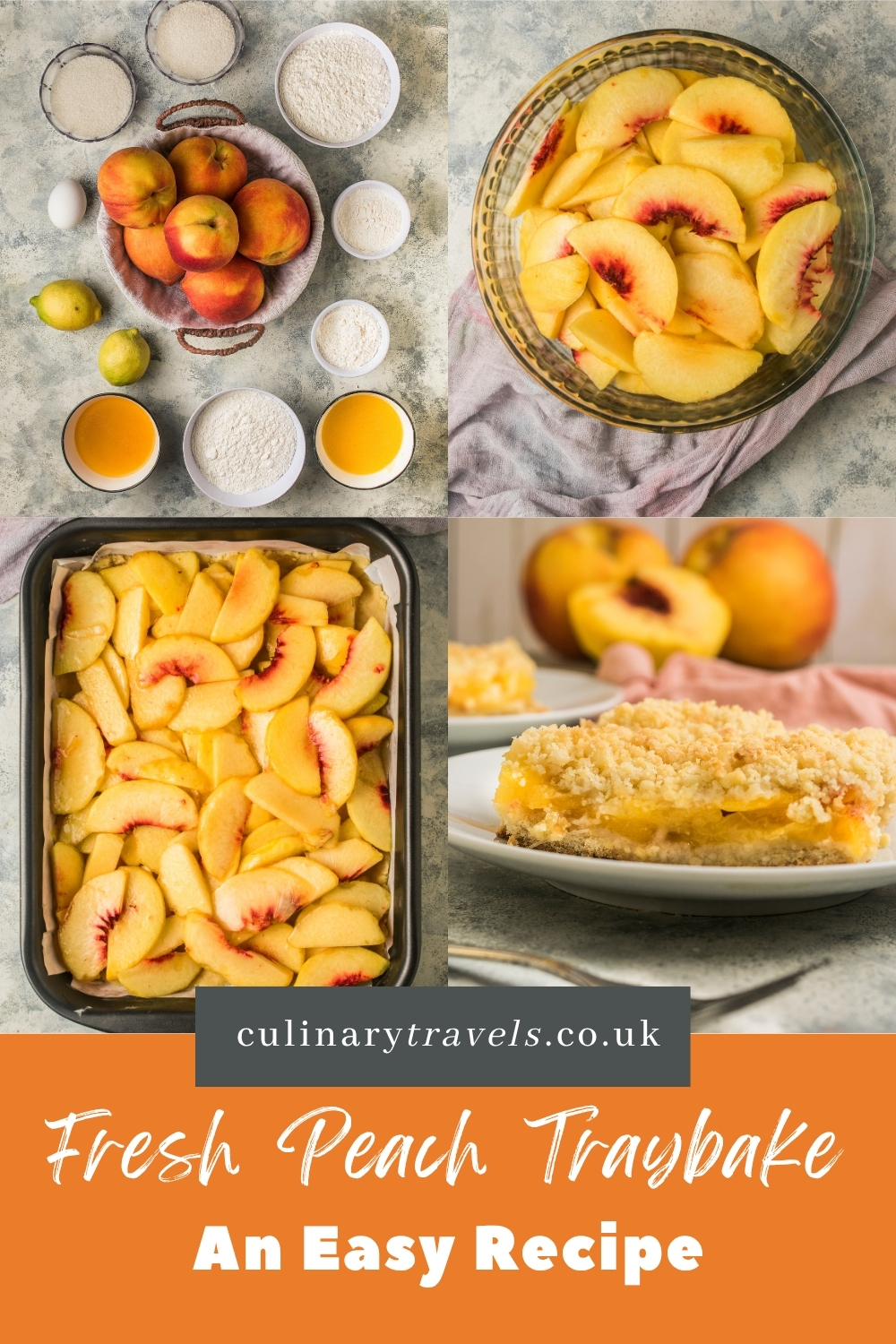
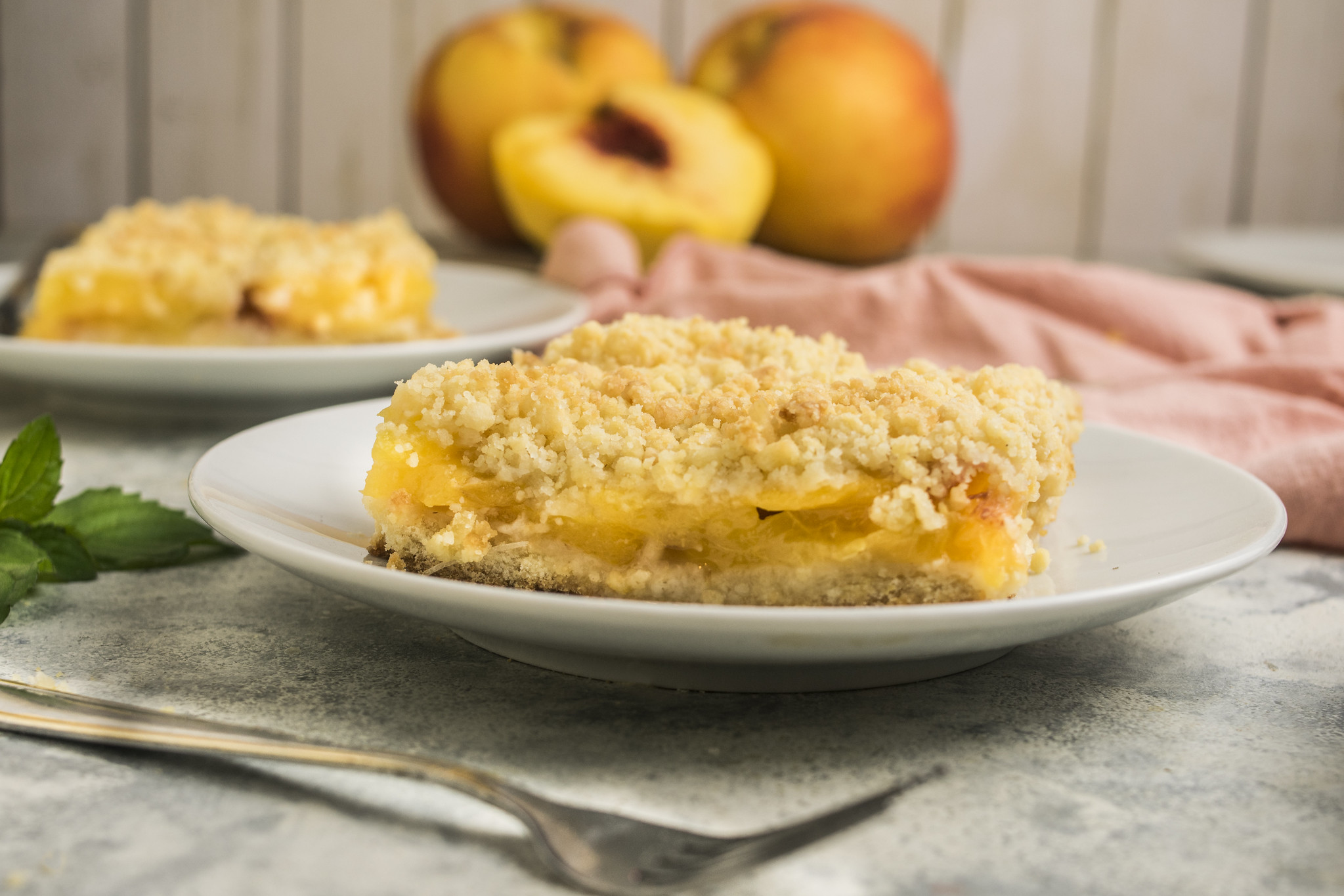
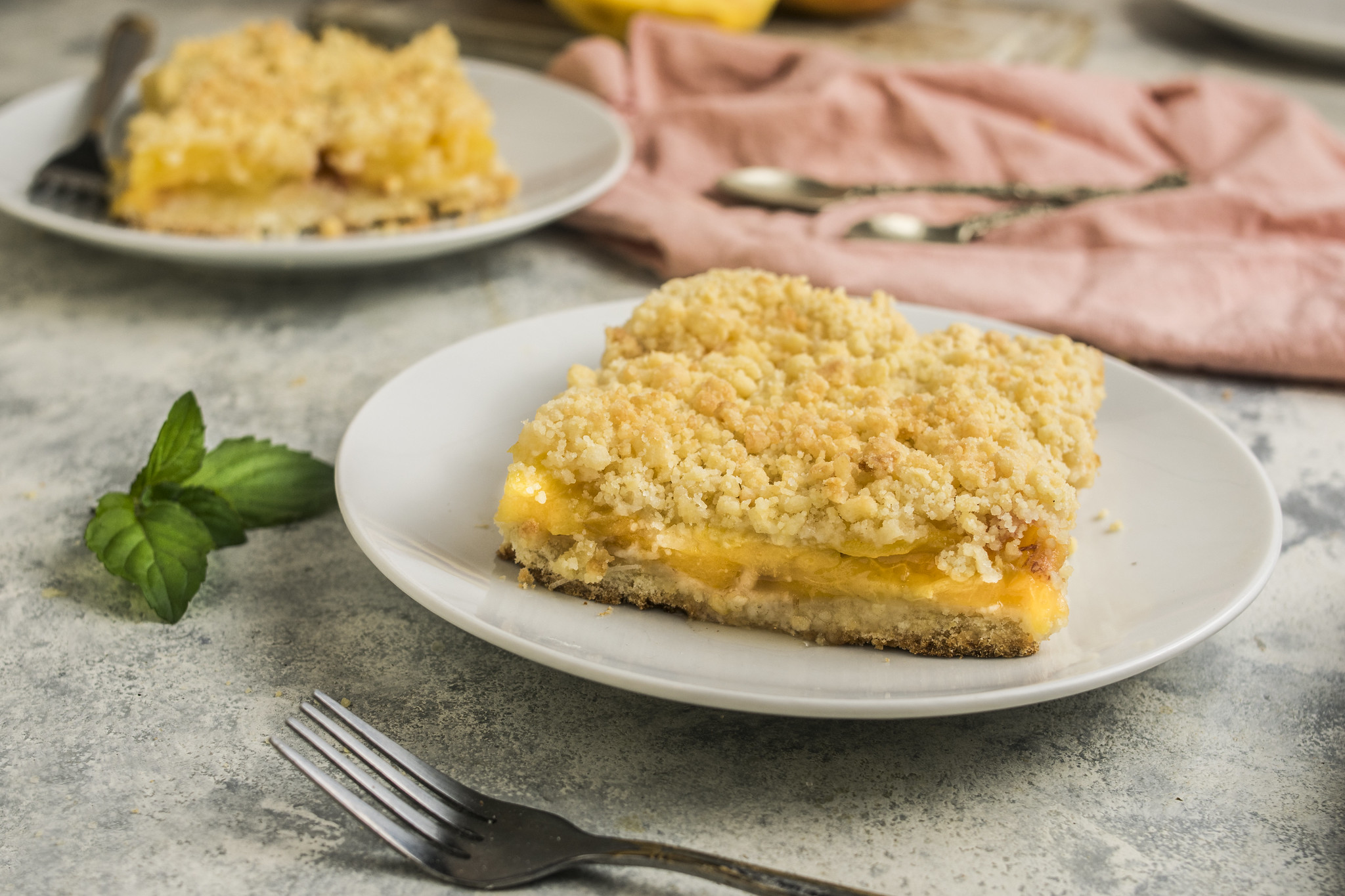
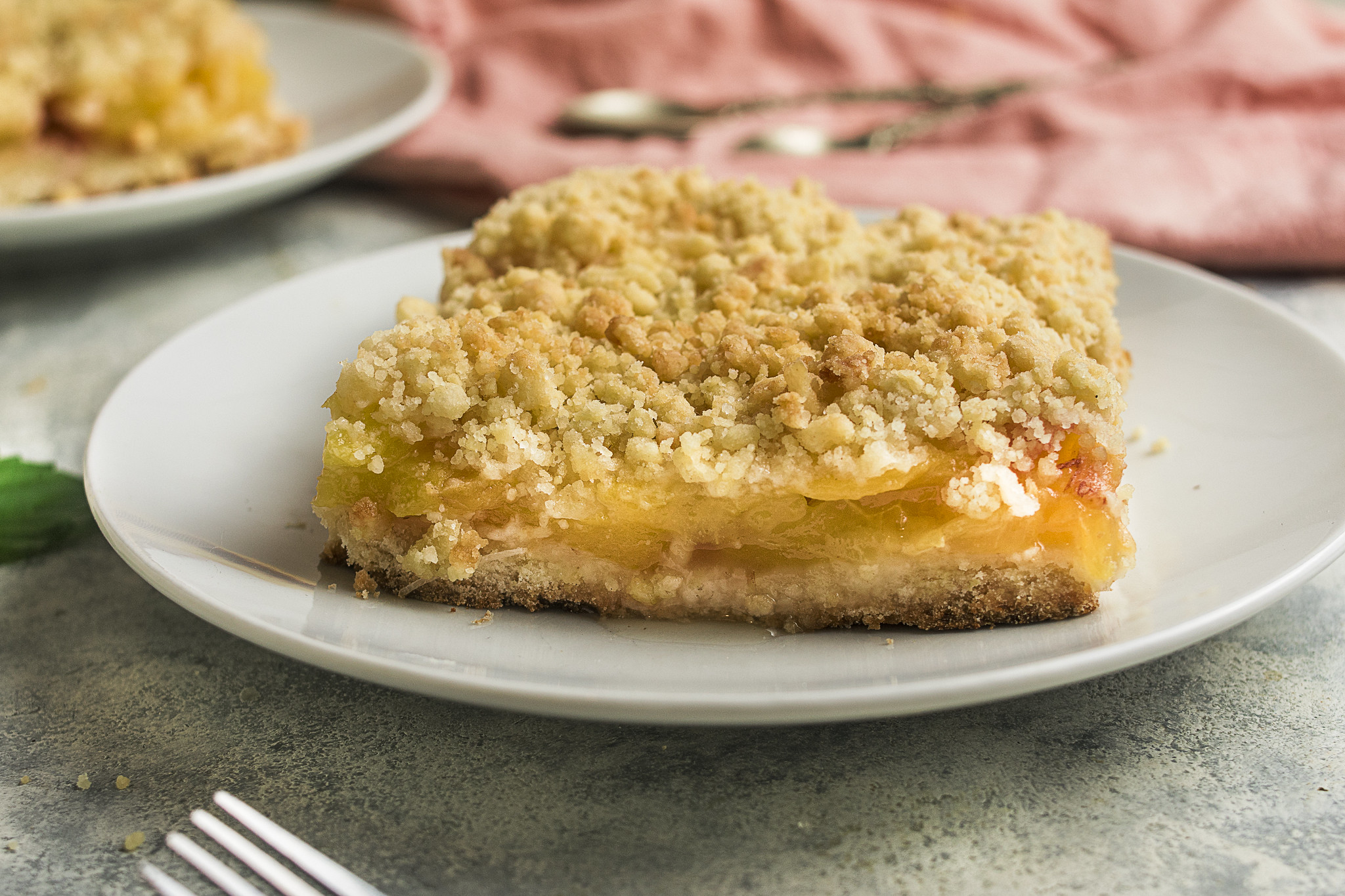
Sbriciolata di pesche is a rustic Italian peach crumble cake made with a crumbly lemon-scented base, a layer of juicy peaches, and a golden topping that bakes into soft, buttery rubble. In Italy, bakes like this are often enjoyed not only as dessert, but also for breakfast or with coffee later in the day, which adds to their easy, unfussy appeal.
It sits somewhere between a traybake, a crumble, and a fruit tart, which is part of what makes it so lovely. It does not need fussy decoration or elaborate finishing. Served plain or with a spoonful of Greek yoghurt or crème fraîche, it is exactly the sort of relaxed seasonal bake that feels generous on the table.
If you are looking for an easy peach bake for summer, this is a lovely one to keep in your repertoire.
Why you’ll love this Italian peach crumble cake
This is the sort of bake that looks impressive on the plate but is very straightforward to make. The method is simple, the ingredients are familiar, and the crumbly texture means there is no pressure to create a perfect finish. It is also a particularly good recipe for peach season, when ripe fruit does most of the heavy lifting for you.
The lemon keeps everything tasting fresh, while the traybake format makes it ideal for slicing and sharing. If you enjoy fruit crumbles, crostate, or simple European-style bakes that are more about flavour than showiness, this one is likely to become a favourite.
Ingredient notes
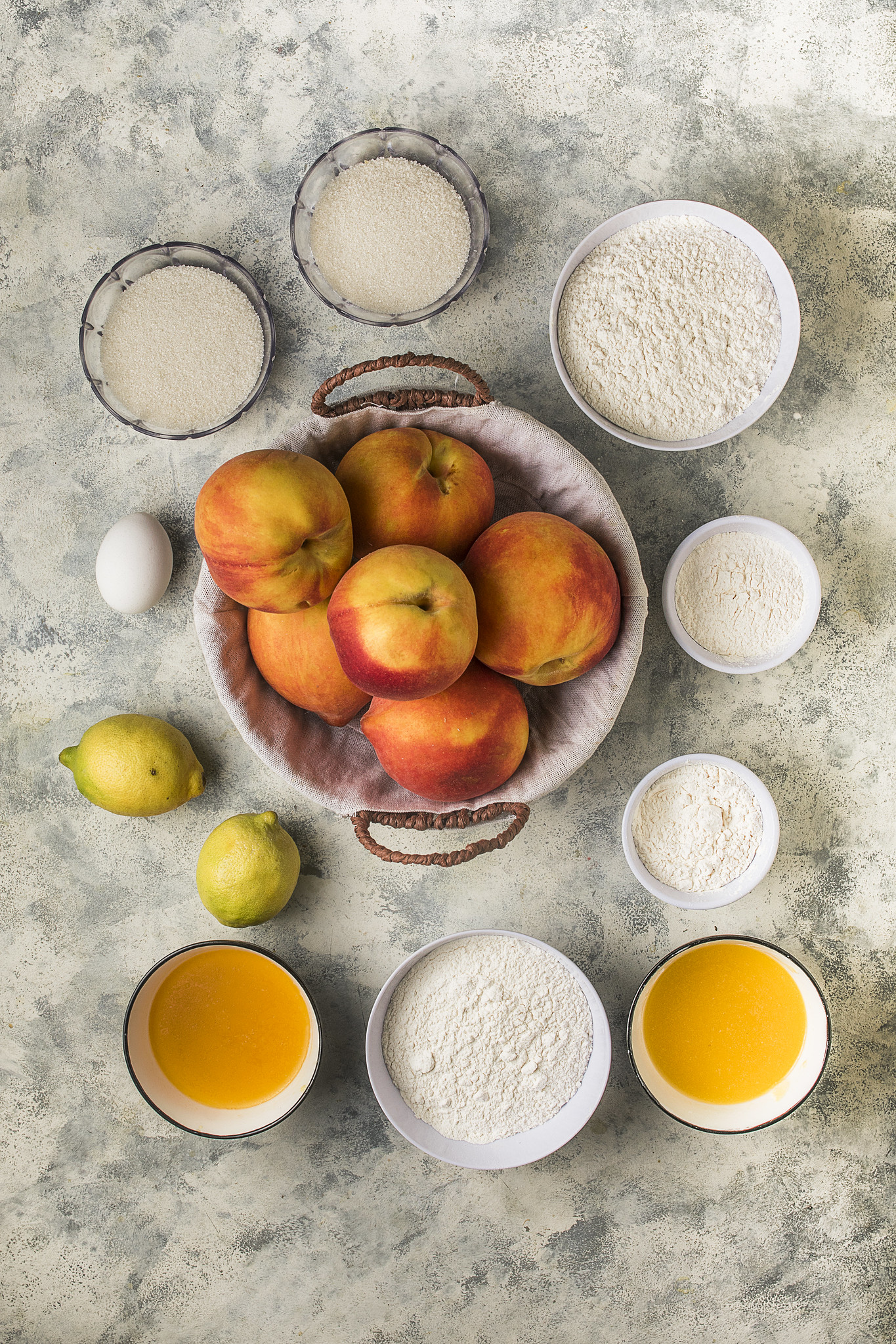
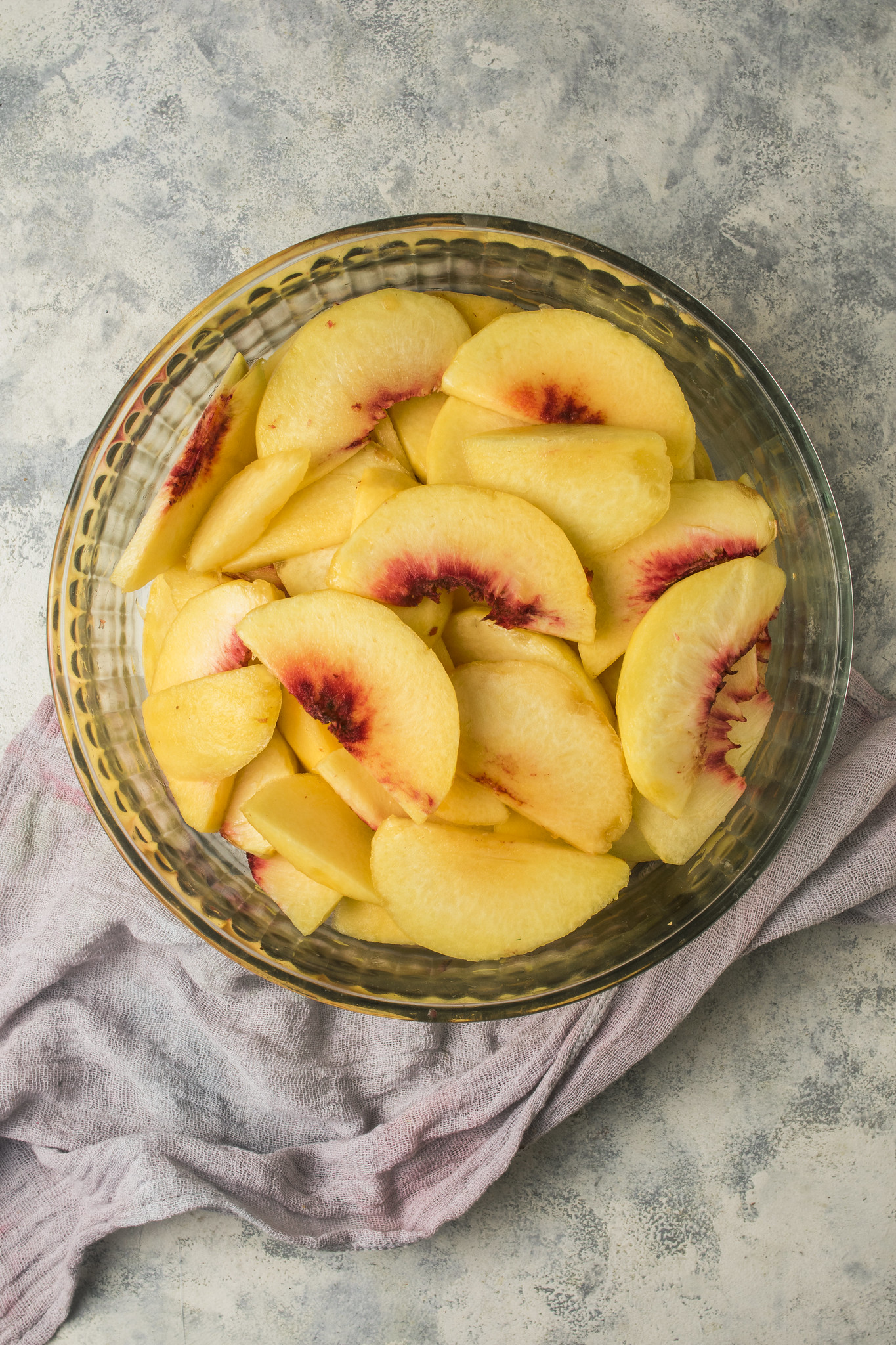
Peaches are the heart of the recipe, so ripe but still fairly firm fruit is ideal. You want them sweet and fragrant, but not so soft that they collapse completely before baking. If they are very juicy, reserving the liquid as you assemble the cake helps you keep control of the texture. If needed, peaches can be ripened at room temperature for a short while before baking.
Cornflour gives both the base and topping a more delicate, tender crumb. Lemon zest in the base and lemon juice in the filling bring brightness and stop the sweetness from feeling flat. Melted butter helps bind the crumb mixtures together while keeping the method simple.
How to make sbriciolata di pesche
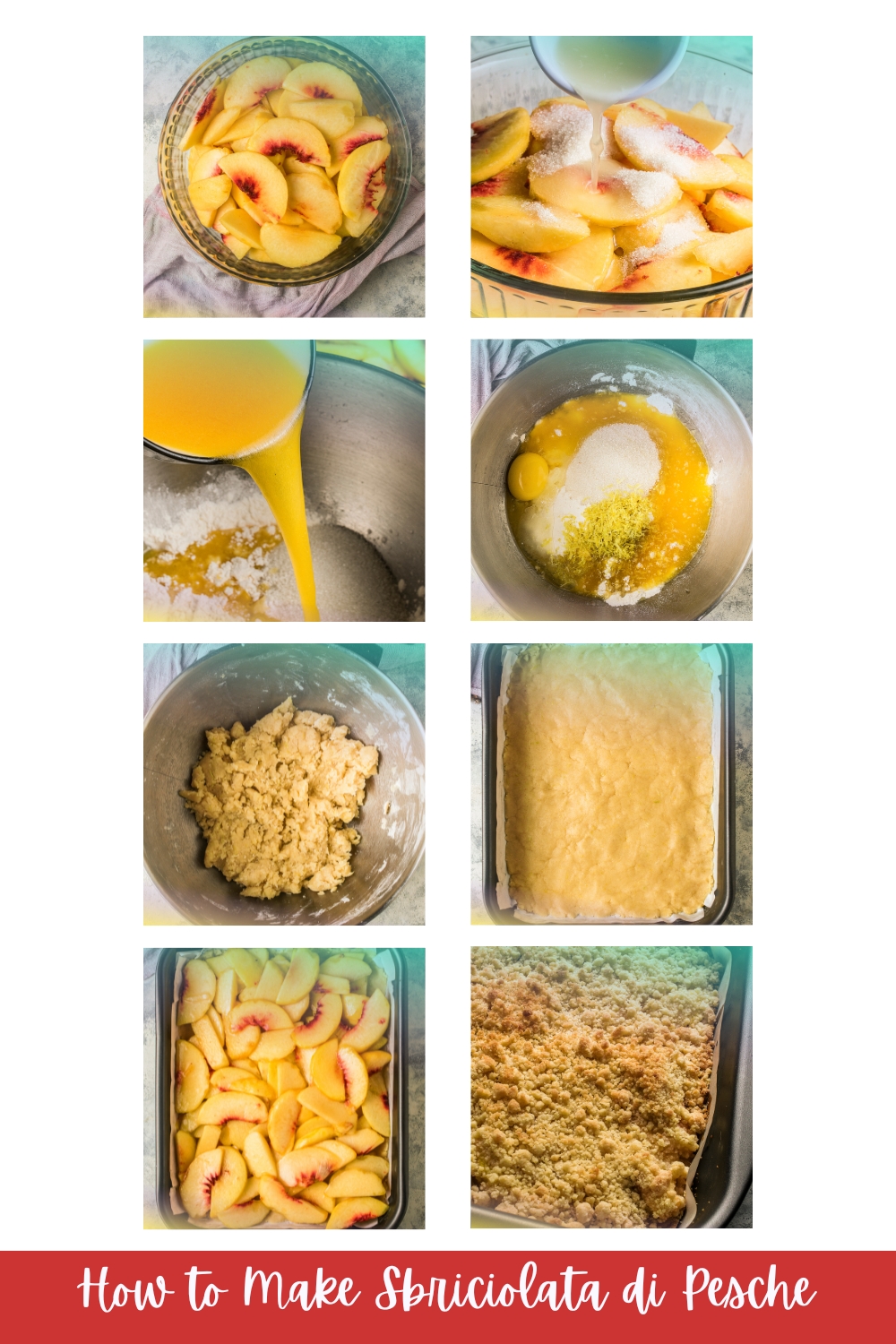
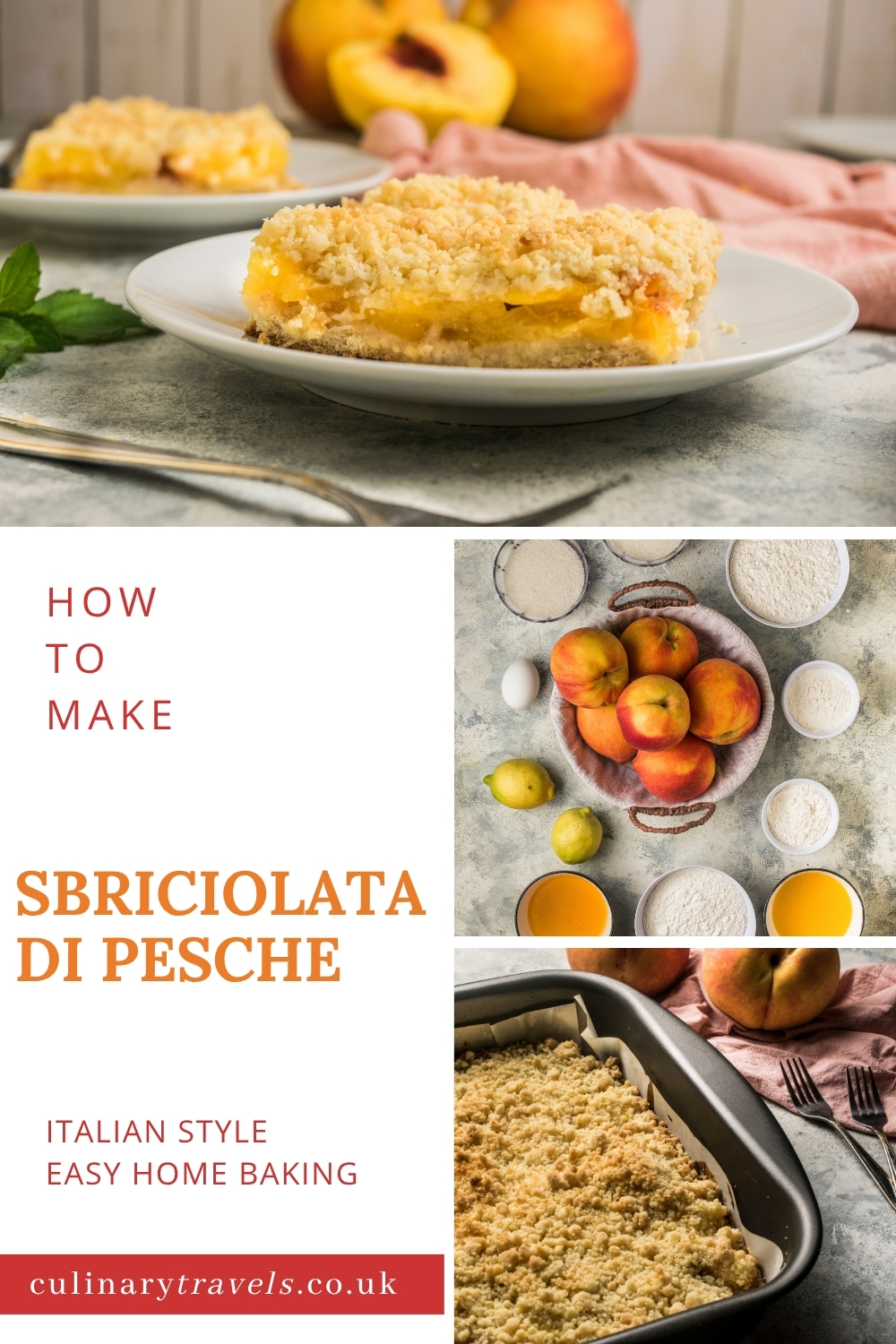
You begin by slicing the peaches and tossing them with caster sugar and lemon juice, then setting them aside while you prepare the base. The base mixture is made by combining the dry ingredients with the egg and melted butter until you have a soft, crumbly dough. This is then pressed into a lined tray.
The peaches are spooned over the base in an even layer, and any juices can be kept back to help loosen the topping if needed. The topping is another simple crumb mixture, made by rubbing the melted butter into the flour, cornflour and sugar until you have coarse crumbs. This is then scattered over the peaches before baking until golden.
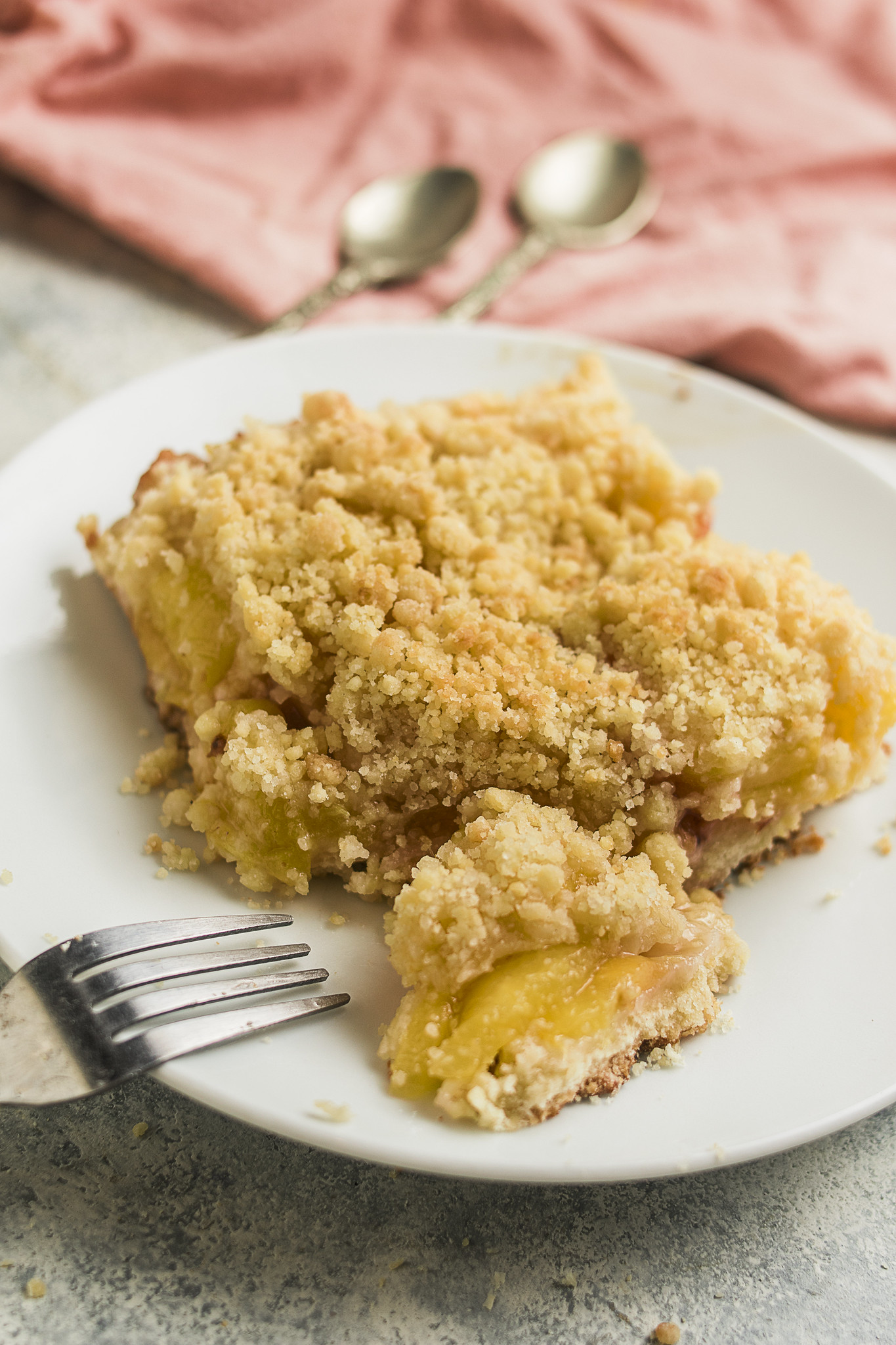
Once cooled, the cake slices neatly into squares and can be served as it is or with something cool and creamy alongside.
Tips for success
Use peaches that are ripe enough to taste good but still firm enough to hold their shape when sliced. Very soft peaches can become overly wet in the tin. When making both the base and the topping, think crumbly rather than smooth dough. The mixture should look rustic and slightly uneven.
Do not worry if the topping feels rich and loose. That is exactly what gives the finished cake its characteristic texture. The bake also needs time to settle after it comes out of the oven, so leave it to cool for at least an hour before slicing if you want neat squares rather than a softer, dessert-style spoonful.
Using tinned peaches when fresh peaches are out of season
Fresh peaches are lovely here in summer, but this is also a useful recipe to keep in mind when they are out of season. Tinned peaches can work well, especially if you are after a reliable year-round version.
For the best result, choose tinned peach halves or slices in juice rather than heavy syrup, then drain them very well before using. If they still seem quite wet, pat them lightly with kitchen paper so the filling does not become too loose in the tin. Because tinned peaches are usually softer and sweeter than fresh ones, you may find you need a little less sugar in the filling.
The finished bake will be slightly softer and less vibrant than one made with fresh peaches, but it is still delicious and a very practical option when ripe peaches are hard to find.
Serving suggestions
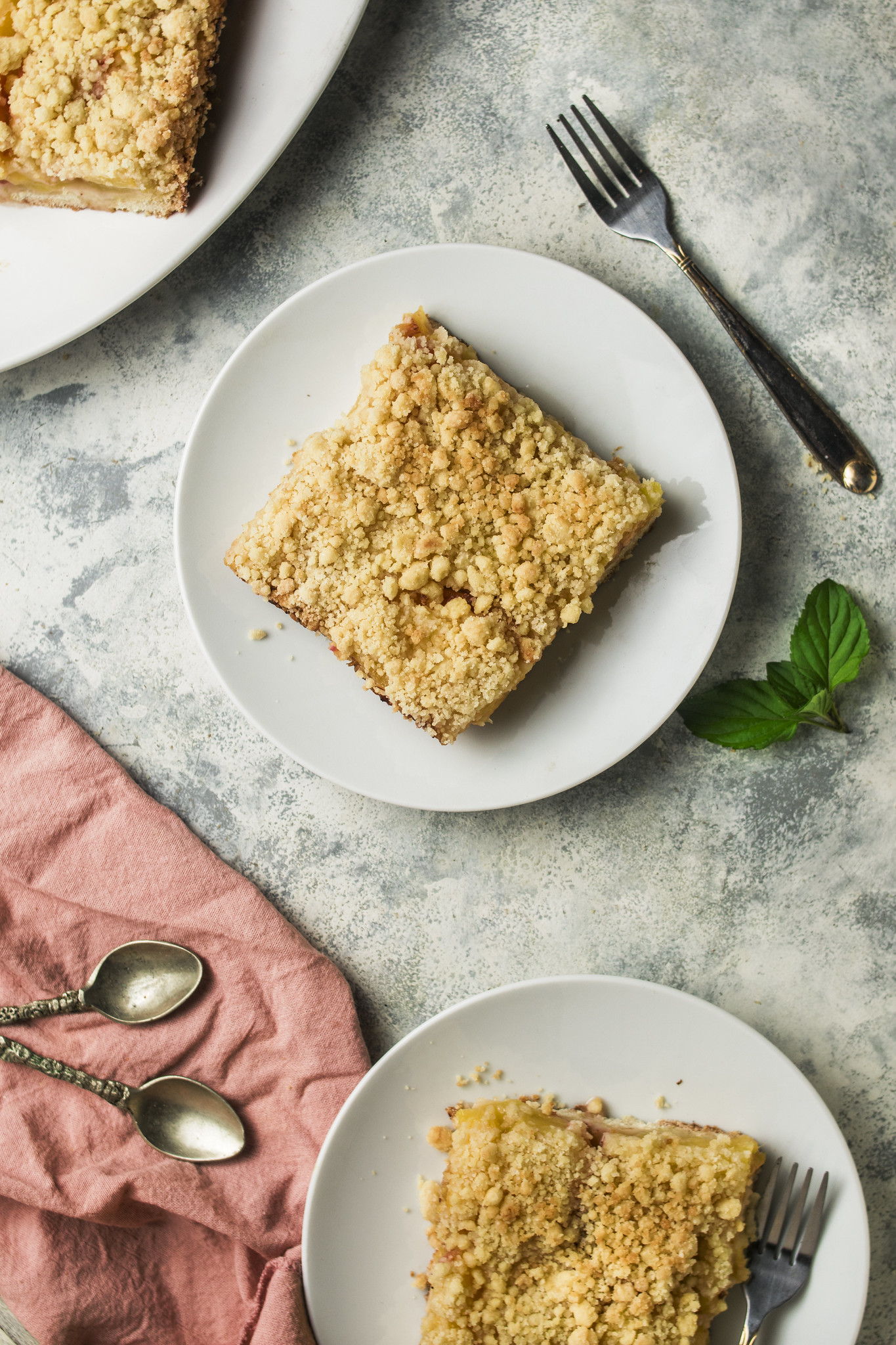
This peach crumble cake is lovely slightly warm or at room temperature. For a simple finish, serve it plain with coffee. For dessert, add Greek yoghurt, crème fraîche, or even softly whipped cream. If you are serving it for a summer lunch or outdoor gathering, it works especially well as part of a relaxed pudding table alongside other fruit-led bakes.
Sbriciolata di Pesche
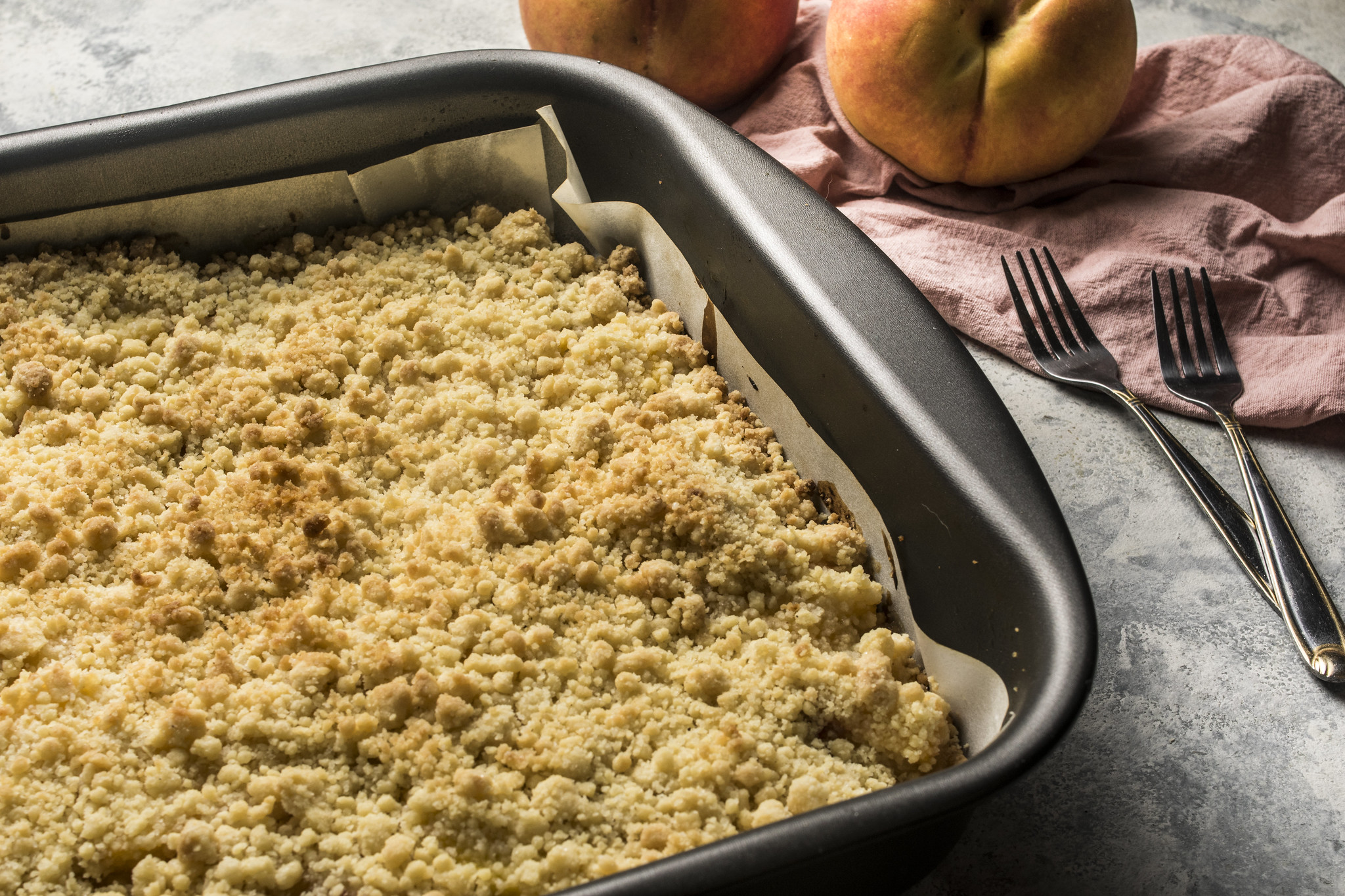
This rustic Italian peach crumble cake has a crumbly lemon-scented base, juicy peaches and a buttery golden topping. It is easy to make, ideal for summer, and delicious served plain or with Greek yoghurt or crème fraîche.
Prep time: 20 minutes
Cook time: 25–30 minutes
Cooling time: 1 hour
Serves: 12 slices, depending on portion size
Ingredients
For the base
250 g plain flour
50 g cornflour
120 g caster sugar
Zest of 1 lemon
1 egg
125 g butter, melted
For the filling
6 peaches
3 tbsp caster sugar
Juice of 1 lemon
For the topping
200 g plain flour
50 g cornflour
100 g caster sugar
125 g butter, melted
Method
1. Wash the peaches, then slice them. Place them in a bowl with the caster sugar and lemon juice, toss well, and set aside while you make the base.
2. In a large bowl, mix together the plain flour, cornflour, caster sugar and lemon zest. Add the egg and melted butter, then rub and crumble everything together quickly with your hands until you have a soft, crumbly mixture.
3. Line a 35 x 25 cm brownie tray or baking tin. Tip the base mixture into the tin and press it gently into an even layer.
4. Spoon the sliced peaches evenly over the base, reserving any juices left in the bowl.
5. In another bowl, mix together the plain flour, cornflour and caster sugar for the topping. Add the melted butter and rub together with your fingertips until the mixture forms coarse crumbs. If it feels a little too dry, add a little of the reserved peach juice to help it come together slightly.
6. Scatter the crumble topping evenly over the peaches.
7. Bake in a preheated oven at 180°C, or 160°C fan, on the middle shelf for 25–30 minutes, until golden.
8. Remove from the oven and leave to cool for at least 1 hour before slicing. Serve plain or with Greek yoghurt or crème fraîche.
Recipe notes
The topping is meant to feel rich and crumbly rather than like a firm dough. That loose texture is what gives the finished bake its rustic character. For the best result, use ripe but still fairly firm peaches so the filling stays juicy without becoming too wet.
Tinned peaches can also be used when fresh peaches are out of season. Drain them very well before using, and reduce the sugar slightly if they seem especially sweet.
FAQs
Can I make this with other stone fruit?
Yes. Nectarines work especially well, and apricots may also work, though they will give a slightly different texture and level of sweetness.
Do I need to peel the peaches?
No, not unless you prefer to. The skins soften as the cake bakes and add colour to the filling.
Can I make this in advance?
Yes. This is a good make-ahead bake and keeps well for a day or two in an airtight container.
How should I store it?
Once cool, keep it covered in a cool place if serving the same day, or refrigerate it if keeping it for longer, especially in warm weather. You can also freeze it in slices for up to 2 months, though the texture may be a little softer once thawed.
Can I serve it as a dessert rather than a cake?
Absolutely. It is one of those bakes that moves easily between dessert and everyday cake. Serve it with Greek yoghurt, crème fraîche or softly whipped cream for pudding, or slice it up for picnics, packed lunches and easy summer snacking.
Final thoughts
There is something especially appealing about a bake like this: unfussy, seasonal, and quietly beautiful on the table. With its crumbly lemon-scented base, juicy peaches, and golden topping, sbriciolata di pesche is a lovely recipe to return to whenever you want an easy summer bake that still feels a little special.
Stay in Touch
Culinary Travels publishes destination guides, seasonal recipes, and food-led travel features from the UK and beyond.
Follow for new articles and updated travel resources:
Facebook | Instagram | Pinterest
Newsletter
Receive new guides, recipes, and occasional travel planning notes by email: Subscribe here
Reader feedback and local recommendations are always welcome via the contact page.


©2026 Culinary Travels. Culinary Travels is written and edited by Georgina Ingham | Website designed by The Smarter Web Company
What Our Followers Say
"A highly complimentary article ... showcasing why the English Market remains one of Ireland's premier food destinations"
Cork City Council via Facebook
"Our list of things to do in Cork has just expanded hugely thanks to Culinary Travels."
Triskel Art Centre Cork, via Twitter
“Tried this last night and it was delicious!”
Reader feedback via Pinterest, Yangzhou Fried Rice Recipe
"Oh yum!!! I could eat one or two right now!"
Sami Tamimi, via Instagram, on Ma’amoul Cookies
"Georgina was great to work with, quick to respond, and is a excellent content writer - would highly recommend"
Nick S - Get Blogged
“A simple no-knead dough transformed into beautiful, rustic rolls.”
Reader feedback via Pinterest, No-Knead Ciabatta Rolls Recipe