
Articles


How to Get to Wimbledon: The Easiest Routes by Tube, Train, Car or Air

Wimbledon has a way of feeling further from central London than it really is. One minute you are on the District line or a train out of Waterloo; the next you are somewhere greener, leafier and noticeably calmer, with the Common stretching out beyond the Village and the tennis grounds tucked into the residential streets below.
Getting here is not difficult, but the best route depends on why you are visiting. Wimbledon station works well for the town centre, restaurants and onward links. Southfields is often the more practical choice for the Championships. Driving can be useful outside peak times, but during major events it is usually more trouble than it is worth.
Some articles on Culinary Travels may contain affiliate links, meaning I may earn a small commission at no extra cost to you. I only recommend places, experiences and products that fit the editorial tone and standards of the site.
This guide explains how to get to Wimbledon by Tube, train, car or air, with notes on walkability, airports, traffic, and what changes during the Championships and other busy event periods.
If your visit is built around lunch, drinks, a theatre trip, a picnic on the Common or a pre-tennis meal, see the guide to where to eat and drink in Wimbledon alongside this transport guide. For pub gardens, real-ale locals, Common-side stops and cosy places for a pint, the dedicated guide to the best pubs in Wimbledon is useful once you know which part of the area you are arriving into.
In this guide
1) Where is Wimbledon?
2) Getting to Wimbledon by Tube
3) Getting to Wimbledon by train
4) Driving to Wimbledon
5) The best airports for Wimbledon
6) Is Wimbledon walkable?
7) Getting to Wimbledon during the Championships and major events
8) Useful official resources
9) Where to stay in Wimbledon
10) FAQs
Where is Wimbledon?
Wimbledon sits in southwest London, in the London Borough of Merton, but it is not quite as compact as first-time visitors often imagine. The name covers several subtly different areas: the town centre around Wimbledon station, Wimbledon Village up the hill, the open green stretch of Wimbledon Common, and the tennis grounds closer to Church Road, Southfields and Wimbledon Park.
That geography matters. Arriving at “Wimbledon” is not always the same thing as arriving exactly where you need to be. Wimbledon station is useful for the town centre, shops, restaurants, theatre, rail connections and onward travel. Wimbledon Village has a leafier, more settled feel, with pubs, cafés and access towards the Common. The All England Lawn Tennis Club, meanwhile, sits slightly apart from both, which is why visitors heading to the Championships often need to think carefully about which station, entrance and walking route makes most sense.
This is one of the reasons Wimbledon can feel pleasantly removed from central London without being awkward to reach. You can travel in from Waterloo, Earl’s Court, South Kensington or other well-connected parts of the city and still arrive somewhere that feels greener, calmer and more residential than the London most visitors picture first.
For planning purposes, it helps to think of Wimbledon less as a single pin on a map and more as a small cluster of connected places. Where you arrive should depend on what you are coming for: tennis, theatre, lunch, a walk on the Common, a village wander, or a slower southwest London day out.
For more local ideas once you are there, see the full guide to Wimbledon, the food-led guide to where to eat and drink in Wimbledon, and the guide to Wimbledon during the Championships.
If it helps to see how Wimbledon fits together on the ground, this map highlights the area’s main arrival points, stations and landmarks, including the tennis grounds, Wimbledon Village, the Common and a few practical parking options.
Getting to Wimbledon by Tube
For most visitors, the Tube is the simplest way to get to Wimbledon. Wimbledon station is on the District line in Zone 3, with connections to National Rail, Tramlink and local buses, so it works well if you are heading for the town centre, New Wimbledon Theatre, restaurants, shops or onward travel around southwest London.
The journey has a different feel depending on where you start. From parts of central and west London, the District line can be pleasingly direct, especially if you are travelling from areas such as Earl’s Court, South Kensington or Victoria. From north, east or southeast London, you may need to change lines, but the route is still usually straightforward if you use TfL’s Journey Planner before setting off.
The thing to remember is that Wimbledon station is not always the best stop for every Wimbledon visit. It is excellent for the town centre and useful for Wimbledon Village, although the Village sits uphill from the station. If you are travelling to the tennis grounds, Southfields and Wimbledon Park are often more relevant, particularly during the Championships, when walking routes, crowds and event arrangements all come into play.
Local buses can also be useful once you are in the area, particularly if you are moving between Wimbledon station, Wimbledon Village, Southfields, Wimbledon Park or nearby neighbourhoods. London’s bus network is extensive, but routes and timings vary, so it is best to use TfL’s Journey Planner for the most practical live option rather than relying on a fixed route number from an older article.
The District line is not glamorous, but it is practical, familiar and, for many visitors, the least complicated way to arrive. It also gives you the useful option of deciding your route by mood as much as geography: Wimbledon station for the town centre and a slower wander towards the Village, Southfields for the tennis, or Wimbledon Park if that suits your approach to the grounds.
Before travelling, check the official TfL Wimbledon station page for live service information, accessibility details and station facilities. During busy periods, it is also worth checking the District line status before you leave, especially if you are travelling with timed tickets, restaurant bookings or event plans.
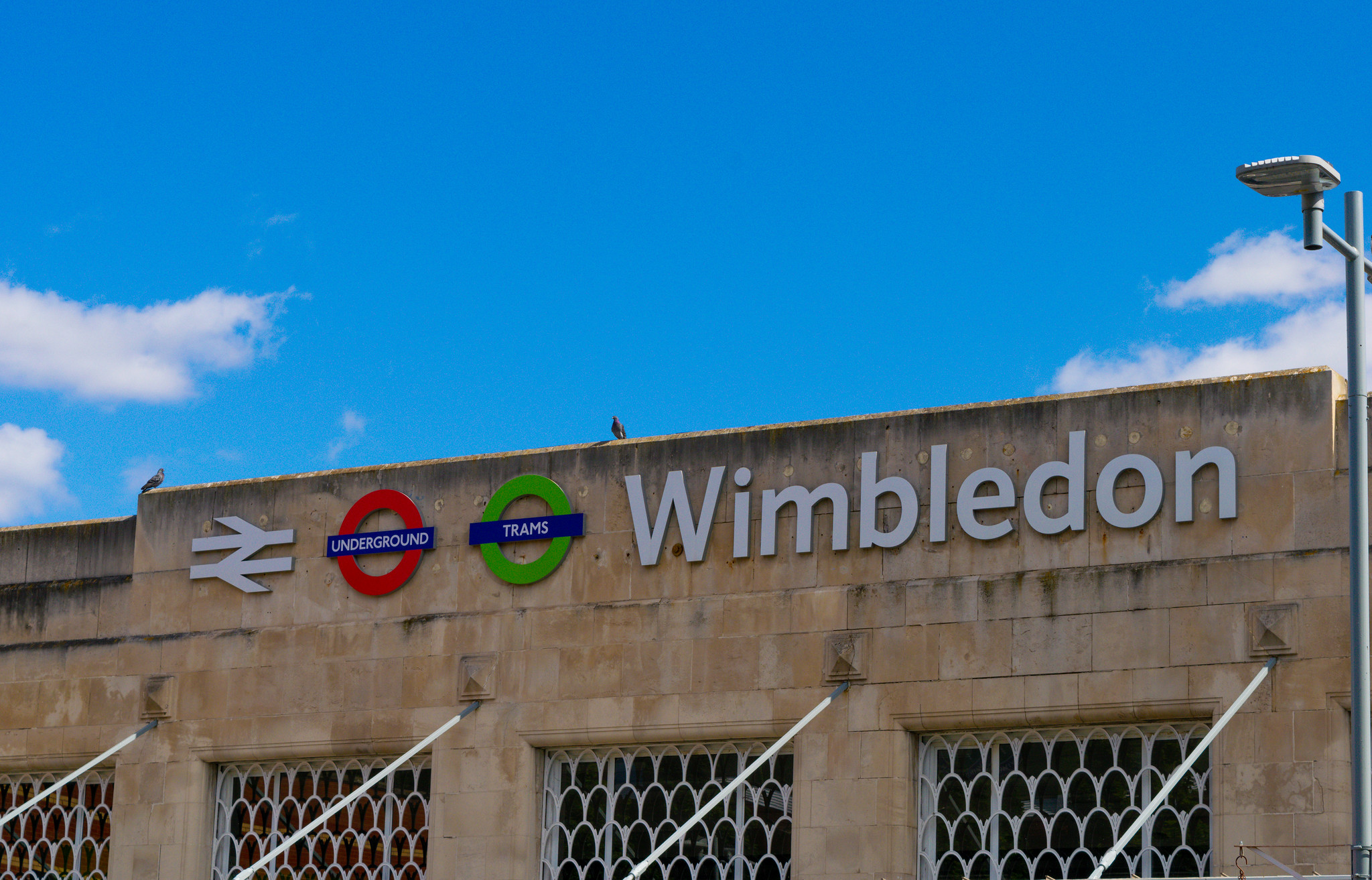
Photograph: Wael (Adobe Stock)
Getting to Wimbledon by train
Travelling to Wimbledon by train can be easier than taking the Tube, especially if you are starting from Waterloo, Vauxhall, Clapham Junction or elsewhere in southwest London. Wimbledon station is served by National Rail as well as the District line and Tramlink, which makes it one of the more useful arrival points if you want to keep your journey simple.
From London Waterloo, trains to Wimbledon are frequent and direct, making this a particularly good option if you are staying near the South Bank, Westminster, Covent Garden, Victoria via a quick connection, or anywhere with easy access to Waterloo. The journey is short enough that it can feel more like slipping out of central London than making a complicated cross-city trip.

Photograph: Smartin69 (Adobe Stock)
The train is especially useful if you are heading for Wimbledon town centre, New Wimbledon Theatre, nearby restaurants, or onward connections towards Wimbledon Village. It also works well for visitors coming in from places such as Clapham Junction, Richmond, Kingston, Surbiton and other parts of southwest London and Surrey.
As with the Tube, the only real caution is destination creep. Wimbledon station brings you into the town centre, not directly to the tennis grounds or the Common. If you are visiting the Championships, you may still need to walk, take an event shuttle, use local buses, or choose a different station depending on your ticket, gate and walking route.
For visitors who dislike navigating the Underground, the train can be the calmer option. Waterloo to Wimbledon is a straightforward route, and arriving by rail puts you close to cafés, shops, restaurants, taxis, buses and the climb up towards the Village. It is a practical choice, but it also gives the journey a little more breathing room than a series of Tube changes.
Before travelling, check the National Rail Wimbledon station page for station facilities, accessibility information and onward travel details. For live services, use National Rail live departures from London Waterloo to Wimbledon or check directly with South Western Railway.

Photograph: Mehmood Yousafzai (Pexels)
Driving to Wimbledon
Driving to Wimbledon is possible, but it is rarely the easiest option if you are visiting during a busy period. On paper, the route can look straightforward enough. In practice, southwest London traffic, residential streets, controlled parking zones and event restrictions can quickly make the journey feel more complicated than it needs to be.
Outside the Championships and major event days, driving may still make sense if you are travelling as a family, visiting someone locally, carrying luggage, or combining Wimbledon with other parts of southwest London, Surrey or the wider area. There are public car parks in and around Wimbledon town centre, including council-run options such as Broadway Car Park, Hartfield Road Car Park and Queens Road Car Park, but spaces, prices and restrictions should always be checked before you set off.
The bigger caution is parking. Wimbledon has controlled parking zones, residential restrictions and busy shopping streets, so it is not the kind of place where you can assume you will simply find an easy space near where you want to be. If you are heading for Wimbledon Village, the Common, restaurants, pubs or the theatre, it is worth checking parking carefully and allowing extra time for the last part of the journey.
During the Wimbledon Championships, I would avoid driving unless you have a specific reason to do so. Merton Council usually introduces additional parking restrictions across Wimbledon Village, Wimbledon Park and parts of the town centre, and road access around the Championships can change. Taxis, minicabs and private hire vehicles can also be affected by restrictions, so being dropped nearby is not always as simple as it sounds.
If you do need to come by car during the Championships or another major event, check the official travel advice before travelling and consider whether parking further out and using public transport for the final leg, or staying locally, would make the day less stressful. A car can be useful in the right circumstances, but for most visitors, Wimbledon is far easier when you let the train, Tube or your own two feet do the final stretch.
For current parking information, check Merton Council’s Wimbledon car parks page, its main parking information, and any specific Wimbledon Championships parking restrictions before you travel.
The best airports for Wimbledon
If you are flying into London for Wimbledon, the easiest airport depends less on distance alone and more on how awkward the onward journey feels once you have luggage, jet lag, event tickets or a hotel check-in time to think about. London has several airports, and all of them can work, but some make far more sense for Wimbledon than others.
Heathrow is usually the most convenient airport for Wimbledon, particularly if you are staying locally in Wimbledon, Southfields, Putney, Richmond or elsewhere in west or southwest London. It sits on the western side of the city, which means you avoid some of the longer cross-London journeys that come with airports further north or east. Depending on your exact arrival terminal and final destination, you may use the Tube, Elizabeth line, rail connections, taxi or private transfer, so it is worth checking both Heathrow’s journey planner and TfL before you travel.

Photograph: Naida Marin (Unsplash)
Gatwick can also work well, especially if flights are better priced or better timed. The airport sits south of London and has strong rail connections into the city, but reaching Wimbledon usually involves changing trains or crossing part of south London rather than gliding directly to the door. It is still a perfectly sensible option, especially for visitors who are comfortable with rail travel and are not arriving at a difficult hour.
London City Airport is possible, but less obvious. It is useful for some short-haul and business routes, and it has good Docklands and central London connections, but Wimbledon is on the opposite side of the city. If your flight lands there, the journey is manageable, but it may involve more changes than you want after a long travel day.
Stansted and Luton are workable, but they are not the easiest airports for Wimbledon. They can be useful if you find a particularly good fare or route, but both usually turn the journey into a longer cross-London transfer. That may be fine if you are staying in central London first, but it is worth being realistic if you are heading straight to Wimbledon with bags.
If you are arriving with luggage, travelling as a group, landing late, or heading straight to accommodation near Wimbledon during the Championships, a pre-booked airport transfer may be worth considering. It will rarely be the cheapest option, but it can make sense if comfort, timing and a smoother arrival matter more than saving every pound.
For official route planning, use Heathrow’s journey planner, the official Gatwick Airport website, London City Airport’s transport information and TfL’s Journey Planner. If you are travelling during tennis fortnight, check the official Wimbledon travel advice as well as your airport route.
Is Wimbledon walkable?
Wimbledon is walkable, but it is not flat, and that small detail matters more than visitors often expect. The area has several distinct parts, and while they sit close enough together on a map, the experience of walking between them changes depending on hills, crowds, bags, weather and whether you are trying to reach somewhere at a specific time.
Wimbledon town centre, around the station, is the easiest place to navigate on foot. From there, you can walk to shops, cafés, restaurants, New Wimbledon Theatre and local transport connections without much difficulty. Wimbledon Village is also walkable from the station, but it sits uphill, so the route feels more noticeable than the distance might suggest, especially if you are carrying luggage or dressed for a day at the tennis rather than a casual wander.

Photograph: Dragan Jovanovic (Dreamstime)
The walk up towards Wimbledon Village is part of the appeal if you are not in a rush. The streets become leafier, the pace shifts, and the area starts to feel less like a busy London town centre and more like a settled southwest London neighbourhood. Once you are in the Village, Wimbledon Common opens up the whole visit: a proper green escape with space to walk, pause, and remember that London is not always as hard-edged as people imagine.
The tennis grounds are a separate consideration. The All England Lawn Tennis Club is not directly beside Wimbledon station, so visitors heading to the Championships should check their route before assuming they can simply step off the train and arrive at the gates. Depending on your ticket, entrance, mobility and the day’s crowd arrangements, Southfields or Wimbledon Park may make more sense than Wimbledon station.
If you are visiting Wimbledon for food, pubs, the theatre, the Village or the Common, walking can be one of the nicest ways to understand the area. If you are visiting during the Championships or another major event, walking is still useful, but it becomes more tactical. Comfortable shoes, a checked route and a little extra time will make the day far more pleasant.
For a more detailed look at planning the area on foot, see the guide to Wimbledon walks and green spaces, which covers Wimbledon Common, The Wimbledon Way, Wimbledon Park, Cannizaro Park and longer green routes nearby.
If food is part of the plan, use the guide to where to eat and drink in Wimbledon to match restaurants, cafés and picnic stops to the route you are actually taking. If your walk is likely to end with a pint, the guide to the best pubs in Wimbledon covers Village pubs, Common-side beer gardens and quieter local options.
Getting to Wimbledon during the Championships and major events
Wimbledon changes during the Championships. For most of the year, it is a leafy southwest London neighbourhood with busy stations, village roads and a steady local rhythm. During tennis fortnight, it becomes something else entirely: a major international sporting event layered over residential streets, narrow pavements, parkland, local shops, pubs, restaurants and everyday London life.
If you are travelling to the All England Lawn Tennis Club, do not assume that Wimbledon station is automatically the best arrival point. Southfields is often the most practical Tube station for the tennis grounds, with the official Wimbledon travel guidance describing it as around a 15-minute walk to the Grounds. Wimbledon Park is also mentioned in official travel information, while Wimbledon station can be useful if you are using rail services, arriving from elsewhere in southwest London, or planning to use event transport onwards.

Photograph: William (Adobe Stock)
For the Championships, the most important thing is to check the official travel advice before you leave. Walking routes, shuttle arrangements, road restrictions, taxi ranks and crowd-control measures can change, and they may also vary depending on where you are entering or leaving the Grounds. If you are queueing, check the official Queue information before travelling too; arriving at the wrong place, or at the wrong time, can make the day feel much harder than it needs to be.
Public transport is usually the most sensible option, but it is still worth building in extra time. The District line, local rail services, buses and pavements can all be much busier than usual during the Championships, especially in the morning, late afternoon and after play ends. A route that looks simple on a normal weekday may feel slower when thousands of people are all trying to reach the same patch of southwest London.
Driving during the Championships is best avoided unless you have a specific reason, such as mobility needs, local accommodation with confirmed parking, or an arranged accessible route. Parking restrictions are tighter, roads around the Grounds can be affected, and taxis or private hire cars may not be able to get as close as you expect. Being dropped off nearby can sound like the easy option, but in practice it may still involve walking, waiting and navigating crowds.
The same broad advice applies to other major events in and around Wimbledon, whether you are heading to New Wimbledon Theatre, AFC Wimbledon, a busy summer weekend on the Common, a concert, a local festival, or a wider southwest London event that puts pressure on transport. Check live travel updates, allow more time than you think you need, and avoid treating Wimbledon like a simple door-to-door car journey.
For most event days, the best approach is simple: decide which part of Wimbledon you actually need, choose your arrival station around that, and leave room for the final walk. Wimbledon rewards a slower pace, but it is much less charming when you are sprinting uphill, fighting traffic, or trying to find a parking space ten minutes before a booking.
That is especially true if you are planning food around the day. Wimbledon Village, Wimbledon town centre, Southfields and nearby areas all solve different problems, so the guide to where to eat and drink in Wimbledon can help you choose somewhere that fits your arrival route rather than working against it.
Before travelling during tennis fortnight, check the official Wimbledon Getting Here page, the official Queue information, TfL Journey Planner and TfL live service updates. For parking and road restrictions, use Merton Council’s Championships parking information before setting off.
Useful official resources for planning your Wimbledon journey
Transport in London can change quickly, especially during the Championships, major events, engineering works or busy summer weekends. Before travelling, it is worth checking the official sources below rather than relying only on old route screenshots or out-of-date directions.
Transport for London: Use the TfL Wimbledon station page for Tube, Tramlink, station facilities and live service information, and TfL’s Journey Planner for bus routes and onward local travel.
National Rail: Check the National Rail Wimbledon station page for rail facilities, accessibility, onward travel and live train information.
The Championships: If you are visiting during tennis fortnight, check the official Wimbledon Getting Here page before you travel.
Merton Council parking: For parking, controlled parking zones and event restrictions, use Merton Council’s parking information and the specific Wimbledon car parks page.

Photograph: Laura Chouette (Unsplash)
Where to stay in Wimbledon
Where you stay in Wimbledon depends on the kind of visit you are planning. For the easiest transport links, Wimbledon town centre is the most practical base, with rail, Tube, Tramlink, buses, restaurants, shops and theatre access close together. It is not the prettiest part of Wimbledon, but it is useful, and sometimes usefulness matters more than charm. If transport is your main priority, you can compare places to stay near Wimbledon town centre.
Wimbledon Village feels more atmospheric, with leafy streets, pubs, cafés, independent shops and easy access towards Wimbledon Common. It suits slower weekend stays, food-led visits and anyone who wants the greener, more village-like version of southwest London. The trade-off is that it sits uphill from the station, so journeys with luggage, late-night returns or daily trips into central London may need a little more thought. For a more characterful base, you can compare places to stay around Wimbledon Village.

Photograph: Ericlaudonien (Dreamstime)
If you are visiting for the Championships, it is worth looking carefully at accommodation close to the All England Lawn Tennis Club. Being within walking distance of the grounds can make the day feel much easier, especially if you are attending with timed tickets, planning a long day on site, or hoping to avoid the worst of event traffic. For tennis-focused trips, you can check current rates close to the All England Lawn Tennis Club.
Southfields is also worth considering if you are visiting for the Championships, especially if being within walking distance of the tennis grounds matters more than being in the heart of Wimbledon itself. It is residential, practical and well placed for the All England Lawn Tennis Club, but accommodation can book quickly and prices can rise sharply around major events. For this area, you can browse places to stay around Southfields before finalising your route.
Central London can also work perfectly well if you are happy to travel in for the day. Areas with straightforward connections to Wimbledon, such as Waterloo, Victoria, Earl’s Court, South Kensington or Clapham Junction, may offer a wider choice of hotels and make sense if Wimbledon is only one part of a longer London trip. If you prefer a central base, you can compare stays near Waterloo or look at hotels around Earl’s Court and South Kensington.
If you are travelling during the Championships, a theatre weekend, football match, concert or another busy event period, book earlier than you think you need to. Wimbledon is not a vast hotel district, and the best-located stays can disappear quickly once event dates are confirmed.
For more detail, see the full guide to where to stay in Wimbledon, including the best areas to consider, who each one suits, and practical notes on transport, atmosphere and event-season planning.
FAQs about getting to Wimbledon
What is the easiest way to get to Wimbledon?
For most visitors, the easiest way to get to Wimbledon is by Tube or train. Wimbledon station works well for the town centre, restaurants, shops, New Wimbledon Theatre and onward links towards the Village. If you are heading specifically to the Championships, Southfields or Wimbledon Park may be more practical depending on your route, ticket and entrance.
Which Tube line goes to Wimbledon?
Wimbledon is on the District line in Zone 3. The District line is usually the most straightforward Tube option if you are travelling from parts of central or west London, including Earl’s Court, South Kensington and Victoria. Before travelling, check TfL Journey Planner for live routes and any service changes.
Is Wimbledon station the closest station to the tennis?
Not always. Wimbledon station is useful for the town centre and rail connections, but the All England Lawn Tennis Club is not directly beside the station. During the Championships, many visitors use Southfields, Wimbledon Park or official event transport depending on the day’s arrangements. Check the official Wimbledon Getting Here page before travelling.
Can you get to Wimbledon by train from central London?
Yes. Trains run between London Waterloo and Wimbledon, making rail a very practical option if you are staying near Waterloo, the South Bank, Westminster, Vauxhall, Clapham Junction or other well-connected parts of London. It can be calmer than changing between several Tube lines, especially if you are travelling with luggage.
Is Wimbledon easy to reach from Heathrow?
Heathrow is usually one of the more convenient London airports for Wimbledon because it sits to the west of the city. The best route will depend on your terminal, luggage and final destination, but you can travel onwards by Tube, Elizabeth line connections, taxi or private transfer. Use Heathrow’s journey planner and TfL Journey Planner before setting off.
Is it worth driving to Wimbledon?
Driving to Wimbledon can make sense outside busy periods if you are travelling as a family, carrying luggage, visiting someone locally or combining Wimbledon with other parts of southwest London or Surrey. During the Championships and major event days, it is usually more trouble than it is worth unless you have a specific reason, confirmed parking or accessibility needs.
Is Wimbledon Village near Wimbledon station?
Wimbledon Village is walkable from Wimbledon station, but it sits uphill. The distance may not look dramatic on a map, but the climb is noticeable, especially with luggage, small children, uncomfortable shoes or a tight booking time. If you are visiting for a slow wander, the walk can be part of the appeal.
Can you walk from Wimbledon station to the tennis grounds?
You can walk from Wimbledon station to the tennis grounds, but it is not a quick step-off-the-train arrival. The route takes time, and during the Championships crowds, queueing arrangements and event routes can affect how straightforward it feels. For many visitors, Southfields may be the more practical Tube station for the Grounds.
Is Wimbledon good for a London day trip?
Yes. Wimbledon works well as a London day trip if you want a slower southwest London visit built around the Village, Wimbledon Common, pubs, cafés, theatre, green spaces or the Championships. It is close enough to central London for an easy journey, but different enough in atmosphere to feel like a proper change of scene.
Do I need to book accommodation in Wimbledon early for the Championships?
Yes, if you want to stay locally during the Championships, it is sensible to book early. Wimbledon is not a huge hotel district, and nearby accommodation can become expensive or limited once tennis fortnight approaches. Southfields, Wimbledon town centre, Wimbledon Village, Putney, Clapham Junction and central London can all work, depending on your budget and travel plans.

Photograph: Vasile Jechiu (Dreamstime)
Final thoughts on getting to Wimbledon
Wimbledon is not difficult to reach, but it is worth choosing your route with the actual shape of the area in mind. The town centre, Village, Common and tennis grounds all sit close enough to feel connected, yet far enough apart that the right station, walking route or parking decision can make a real difference to the day.
For most visitors, public transport is the easiest choice. The Tube works well if you are coming from central or west London, the train is often simpler from Waterloo and southwest London, and walking is part of Wimbledon’s appeal once you arrive. Driving has its place, especially outside peak periods, but it becomes far less attractive during the Championships, major events or busy weekends.
The best advice is to plan the final stretch rather than just the journey into London. Check where you actually need to be, whether that is Wimbledon station, Wimbledon Village, Southfields, Wimbledon Park or the All England Lawn Tennis Club, and allow enough time for the area to be busy, hilly or slower than expected.
That little bit of planning pays off. Arrive the right way, and Wimbledon feels less like a logistical puzzle and more like what it does best: a greener, calmer corner of southwest London with enough tennis, theatre, pubs, cafés, walks and village charm to make the journey worthwhile.

Plan the rest of your Wimbledon visit
To build out a slower south-west London day, see the guide to where to eat and drink in Wimbledon for restaurants, cafés, picnic stops and nearby alternatives, or use the dedicated guide to the best pubs in Wimbledon for Village pubs, Common-side beer gardens, real-ale locals and cosy winter pints. For slower, place-led visits, the guide to Wimbledon walks and green spaces covers Wimbledon Common, The Wimbledon Way, Wimbledon Park, Cannizaro Park and longer green routes nearby.
Stay in Touch
Culinary Travels publishes destination guides, seasonal recipes, and food-led travel features from the UK and beyond.
Follow for new articles and updated travel resources:
Instagram | X | Facebook | Pinterest
Newsletter
Receive new guides, recipes, and occasional travel planning notes by email: Subscribe here
Reader feedback and local recommendations are always welcome via the contact page.



©2026 Culinary Travels. Culinary Travels is written and edited by Georgina Ingham | Website designed by The Smarter Web Company
What Our Followers Say
"A highly complimentary article ... showcasing why the English Market remains one of Ireland's premier food destinations"
Cork City Council via Facebook
"Our list of things to do in Cork has just expanded hugely thanks to Culinary Travels."
Triskel Art Centre Cork, via Twitter
“Tried this last night and it was delicious!”
Reader feedback via Pinterest, Yangzhou Fried Rice Recipe
"Oh yum!!! I could eat one or two right now!"
Sami Tamimi, via Instagram, on Ma’amoul Cookies
"Georgina was great to work with, quick to respond, and is a excellent content writer - would highly recommend"
Nick S - Get Blogged
“A simple no-knead dough transformed into beautiful, rustic rolls.”
Reader feedback via Pinterest, No-Knead Ciabatta Rolls Recipe