
Blog


Blood Orange Cupcakes with a Curd Filling

Some posts on Culinary Travels may contain affiliate links, meaning I may earn a small commission at no extra cost to you. I only recommend products, places and experiences that fit the editorial tone and standards of the site.
These blood orange cupcakes are baked with a spoonful of blood orange curd inside each one, so the filling sets gently in the oven rather than needing to be piped afterwards. The method keeps the cupcakes soft and light while giving a sharp citrus centre, and the article explains how to prevent the curd sinking or splitting during baking.
Blood oranges cut through winter’s grey with a bittersweet perfume that feels both lively and refined. These iced blood orange cupcakes turn that citrus character into something elegant on the plate: a soft crumb designed to cradle a hidden curd centre, finished with a thin glossy icing.
This isn’t a casual grab-out-of-bed bake but a quieter kind of celebration — citrus-bright, lightly sweet and layered rather than excessive. The curd stays tucked inside, only revealing itself at the first bite.
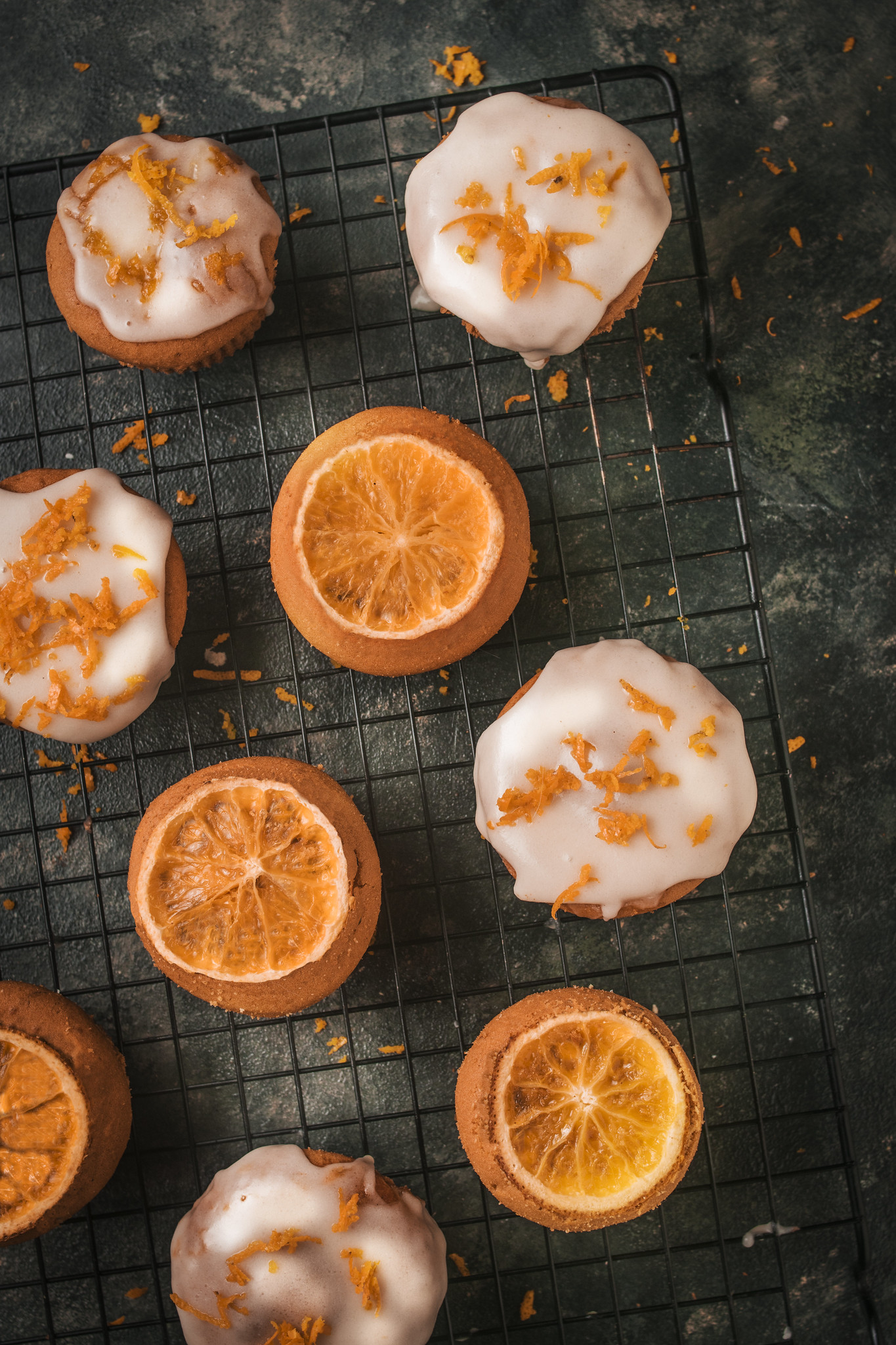
The appeal of blood oranges in baking
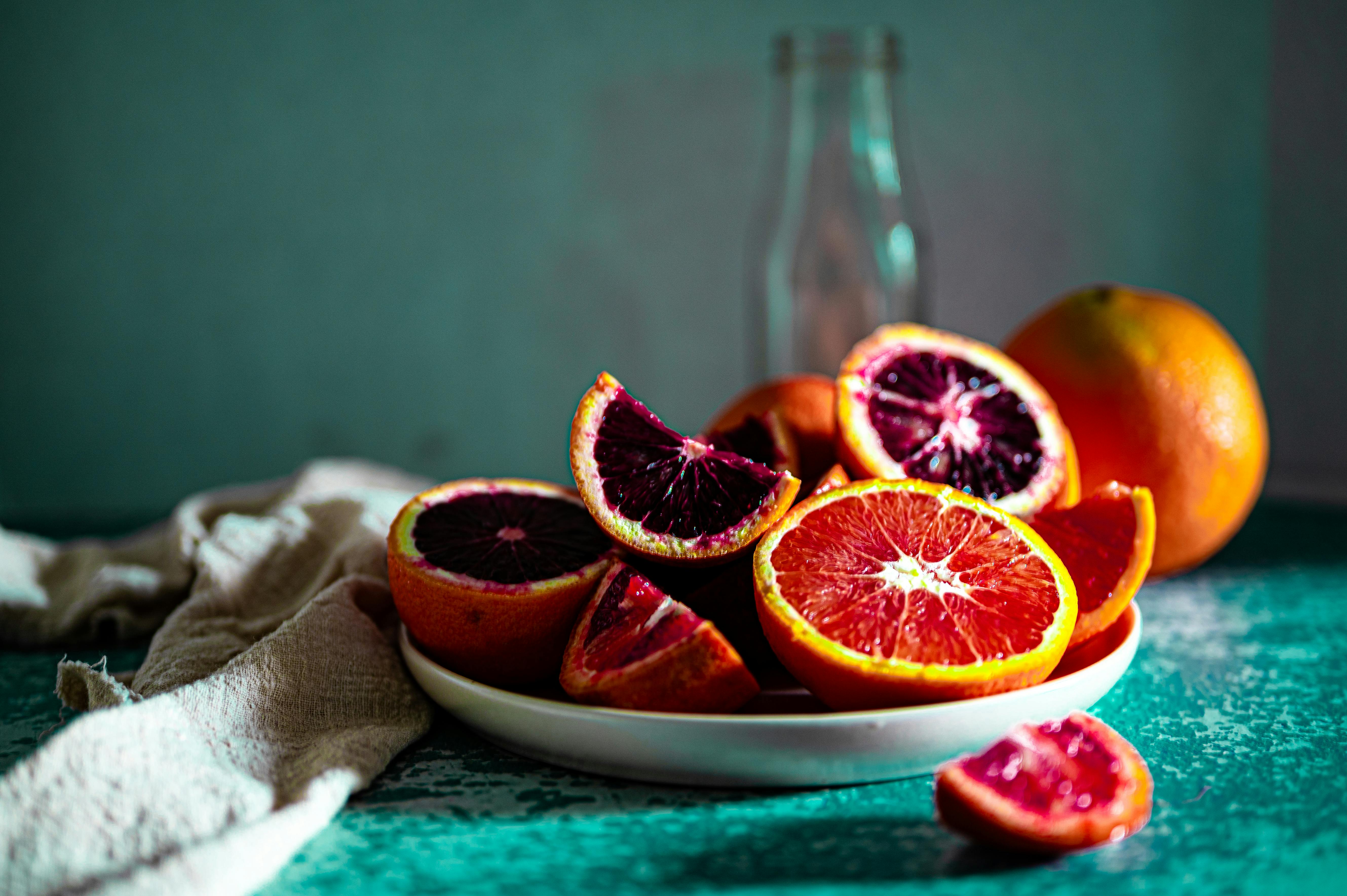
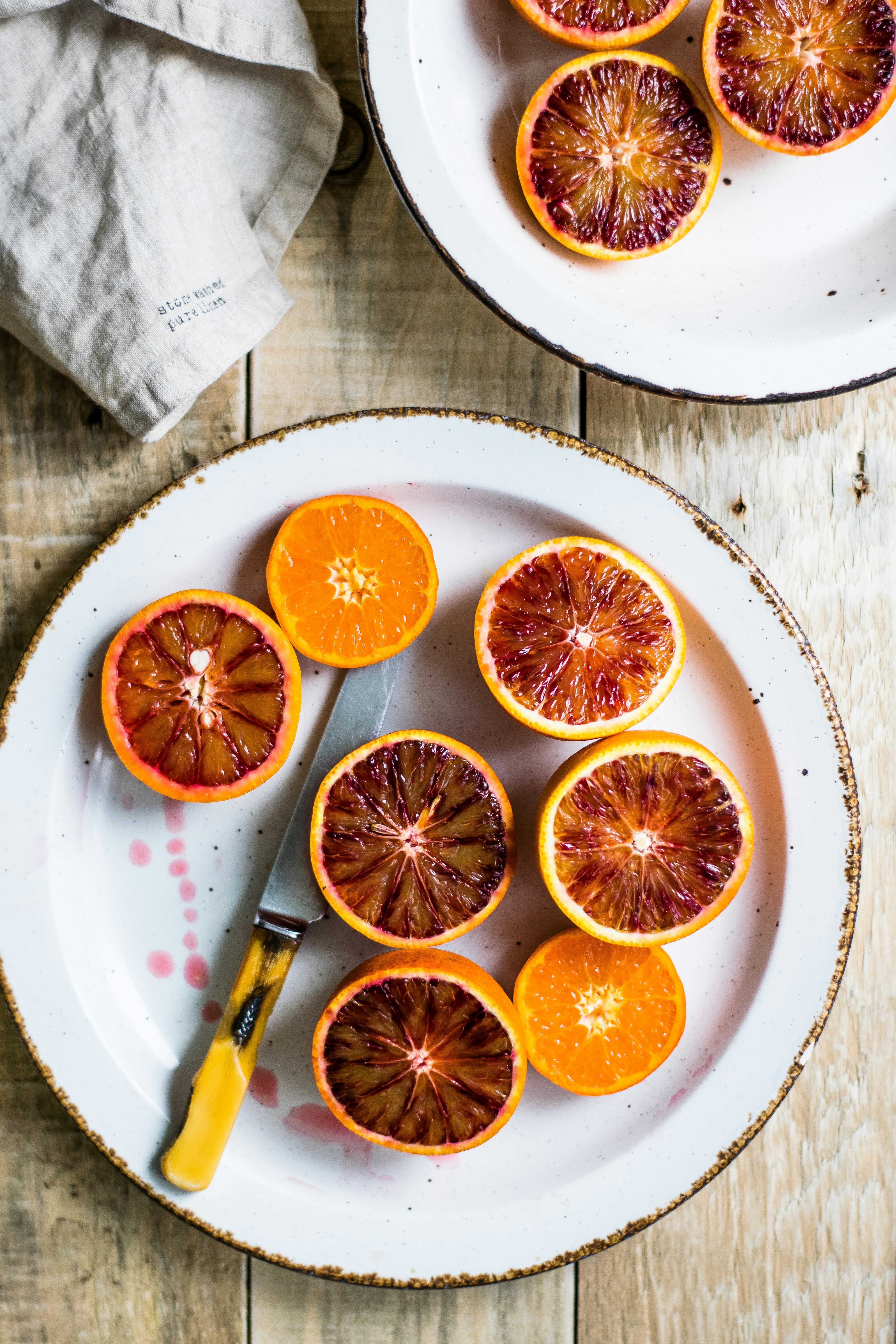
Blood oranges are a fleeting ingredient — their season short, their colour vivid, their flavour an intoxicating braid of sweet and tangy. That faint bitterness is what makes them particularly good for baking; it cuts through richness without disappearing, bringing balance where sweeter citrus can feel flat.
They also behave differently in the kitchen. Blood oranges are usually a little less sharply acidic than standard oranges but more aromatic, which means they perfume a sponge without making it harsh. The zest carries concentrated citrus oils that release as the cakes bake, while the juice softens the crumb and keeps it moist.
In these cupcakes both zest and juice are used deliberately. The zest scents the sponge and prevents it tasting overly sweet, while the juice lightens the texture. Paired with a smooth citrus icing, the result is a bake that feels bright rather than cloying — indulgent, but still fresh enough to suit late winter when heavier desserts start to lose their appeal.
A note on colour (and expectations)
“Blood orange” isn’t a colour guarantee so much as a botanical suggestion with seasonal mood swings. The flesh varies wildly depending on cultivar and growing conditions, storage, and how long the fruit has been sitting under supermarket lights wondering where it all went wrong. Some are deep, vampiric crimson; others barely blush; and some are simply oranges with aspirations.
What they share is flavour rather than hue. The ruby pigments are delicate and often fade during baking, so the sponge itself rarely stays pink. Even paler fruit still brings that distinctive bittersweet edge once baked.
For colour, let the zest, candied slices and especially the curd provide the visual drama — the citrus character will be there regardless.
How these cupcakes are different
Unlike a standard muffin, which leans into a looser, more rustic crumb, these cupcakes are built with structure in mind. Muffins rely on minimal mixing and a wetter batter; cupcakes depend on controlled aeration. Here the butter and sugar are creamed to trap air, while sour cream provides fat and acidity, keeping the crumb tender. The blood orange juice brings fragrance and lightness without making the batter thin.
That balance matters. A stable batter rises evenly and bakes flat rather than domed, allowing the cakes to be filled and iced cleanly. The sponge is fine-crumbed and supple, strong enough to hold a soft curd centre without leaking, and absorbent enough to carry a light icing without turning soggy.
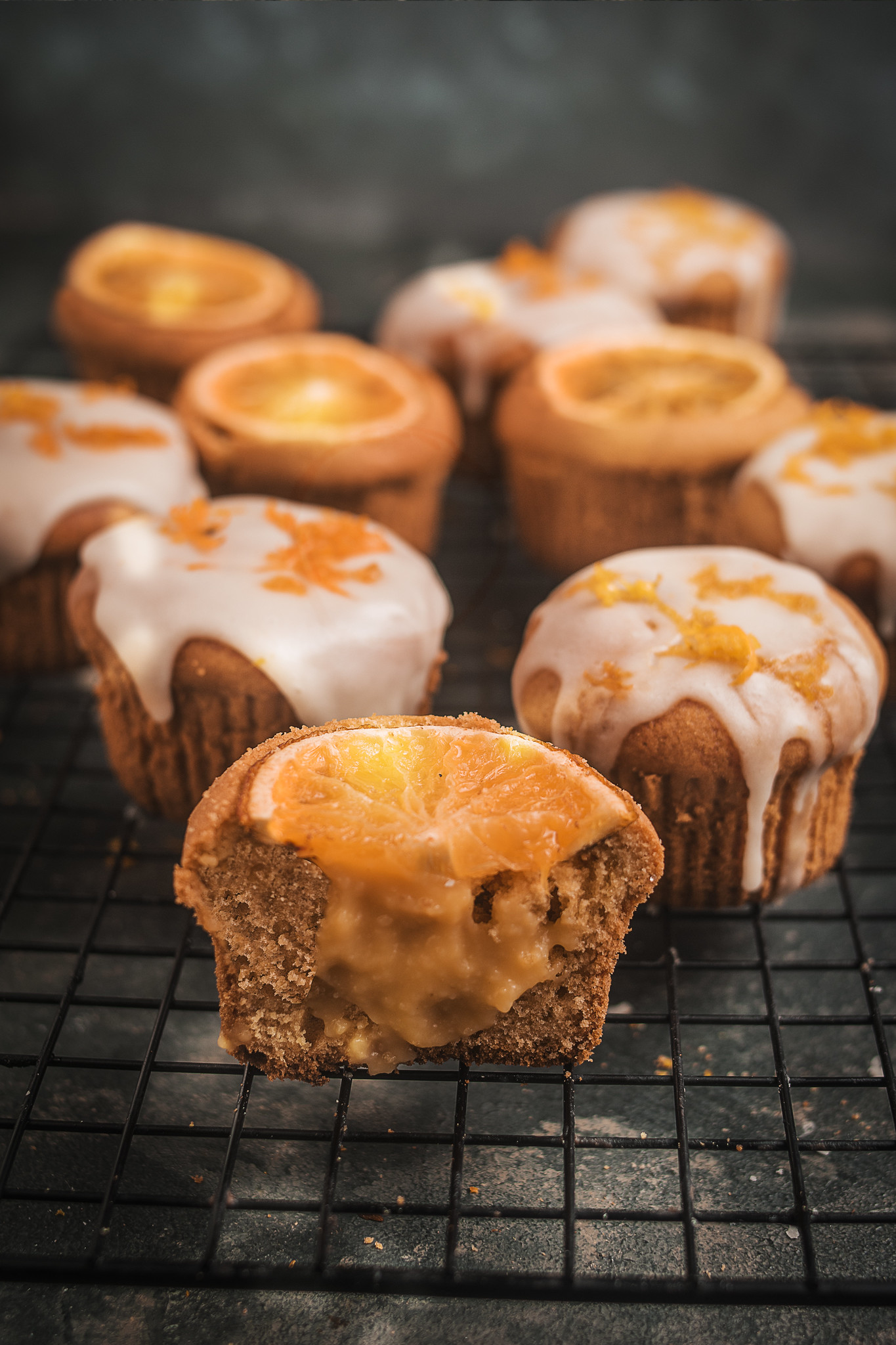
They also keep well. Fat slows staling, and the citrus oils from the zest continue to perfume the cake over time, so the flavour deepens after baking rather than fading. When cut open the interior is soft but structured — not fluffy, not dense — a result of deliberate ratios and measured mixing rather than heaviness.
When these cupcakes shine
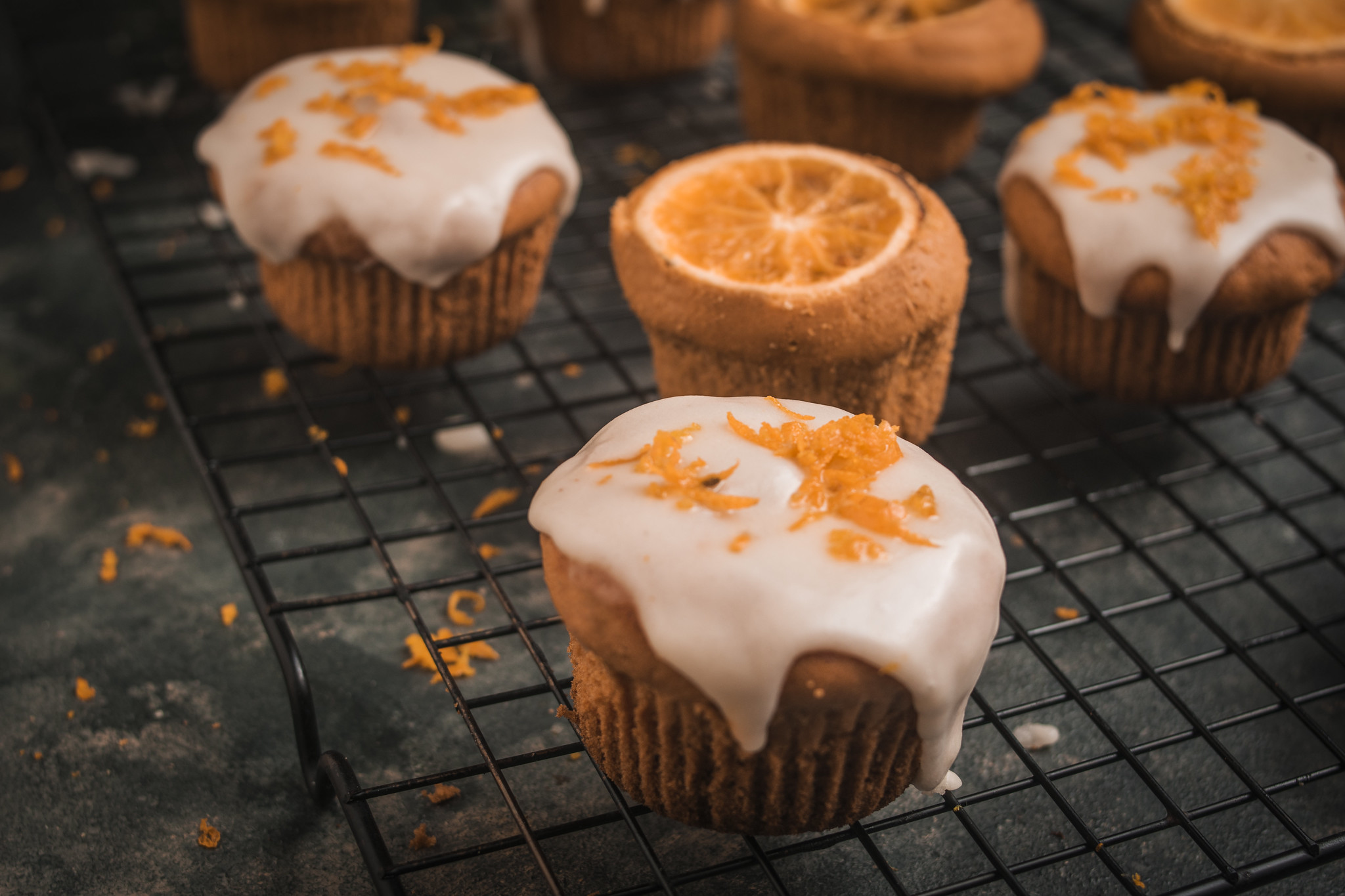
These cupcakes sit neatly between a tray bake and a layered cake: polished enough for guests, but simple enough to make in an afternoon. They work particularly well for winter gatherings, after-dinner coffee, or small celebrations where you want something elegant without the commitment of slicing and serving a large cake.
Because the crumb is fine and the citrus flavour restrained, they suit slower eating. Served slightly cool, the curd stays softly set and the icing clean rather than sticky. They can also be made a day ahead, which makes them practical for entertaining — the flavour settles and the sponge becomes even more fragrant overnight.
Ingredients at a glance
This is a simple bake structurally, which means each ingredient matters. With few components there’s nowhere for imbalances to hide — the flavour, texture and finish all depend on small details.
Blood oranges are central because both zest and juice are used. Unwaxed fruit is ideal. If you can’t find it, wash and scrub the skins under warm water, dry thoroughly, and zest only the coloured outer layer. The essential oils in the zest provide most of the citrus aroma; the white pith contributes bitterness.
Butter should be properly softened rather than melted. Soft butter creams with sugar to trap air, giving a lighter crumb; melted butter produces a denser cake.
Sour cream adds fat and gentle acidity. The fat keeps the sponge tender, while the acidity softens gluten and prevents heaviness — particularly useful when adding fruit juice to a batter.
Eggs provide structure. Bringing them to room temperature helps them emulsify smoothly into the batter and prevents curdling during mixing.
For the icing, icing sugar gives a fine, smooth finish that sets lightly without becoming brittle. The blood orange curdshould be sharp rather than overly sweet; its role is contrast, cutting through the richness rather than blending into it.
Taken together the ingredients are modest, but used carefully they produce a bake that feels precise and balanced rather than ornate.
Preparing the curd-filled centres
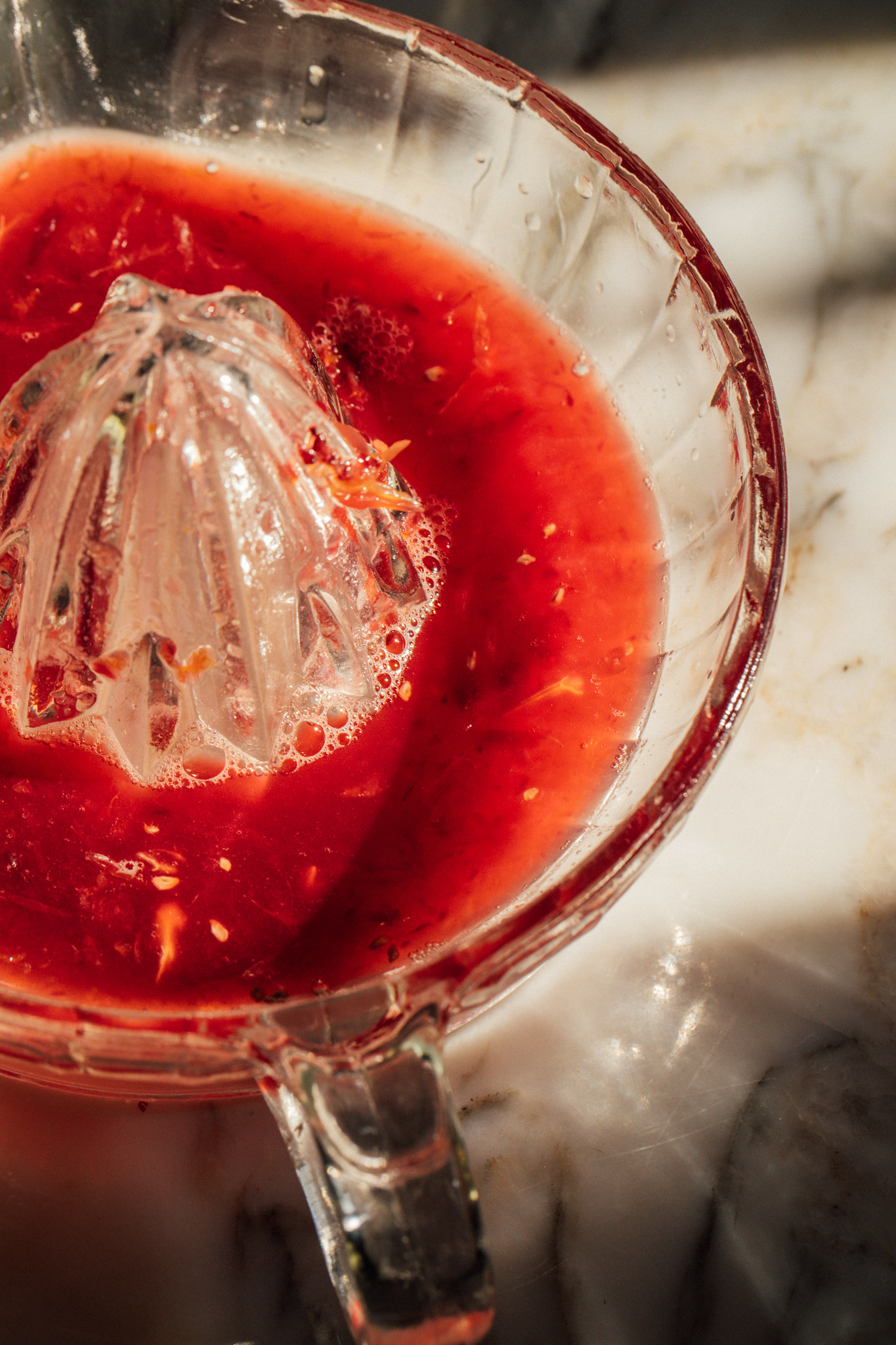
Rather than being added after baking, the blood orange curd is built into the cupcake from the start. Each case is first partially filled with batter, topped with a small spoonful of curd, then covered with a final layer of sponge before baking. Enclosing the curd this way allows it to warm gradually and settle into the centre, gently thickening and bonding with the surrounding crumb.
The quantity matters. Too much curd weighs the batter down and causes sinking; too little disappears. A rounded teaspoon is usually enough — the aim is a hidden centre rather than a liquid pocket. The batter underneath and above acts as insulation, keeping the filling in place while the cake sets around it.
The heat softens the sharpness of the curd and prevents it tasting raw, while still preserving its citrus edge. Once cooled, the filling feels integrated rather than injected, part of the cake rather than a separate layer.
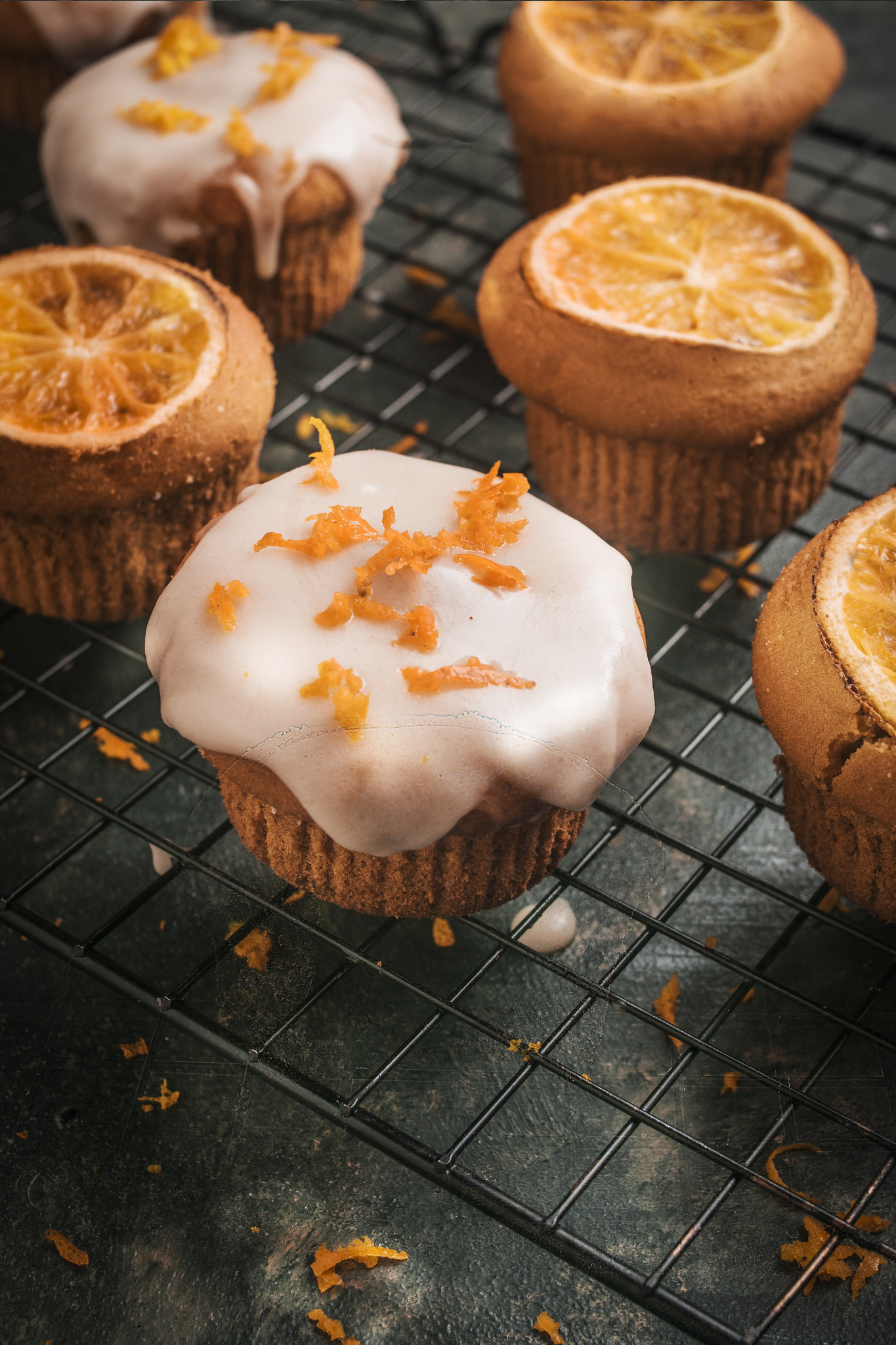
A thin slice of blood orange can be placed on top before baking, where it slowly candies in the oven’s heat. The sugars concentrate and the edges darken slightly, giving both decoration and flavour, echoing the citrus inside while adding a subtle bitterness that balances the icing.
Icing and finishing touches
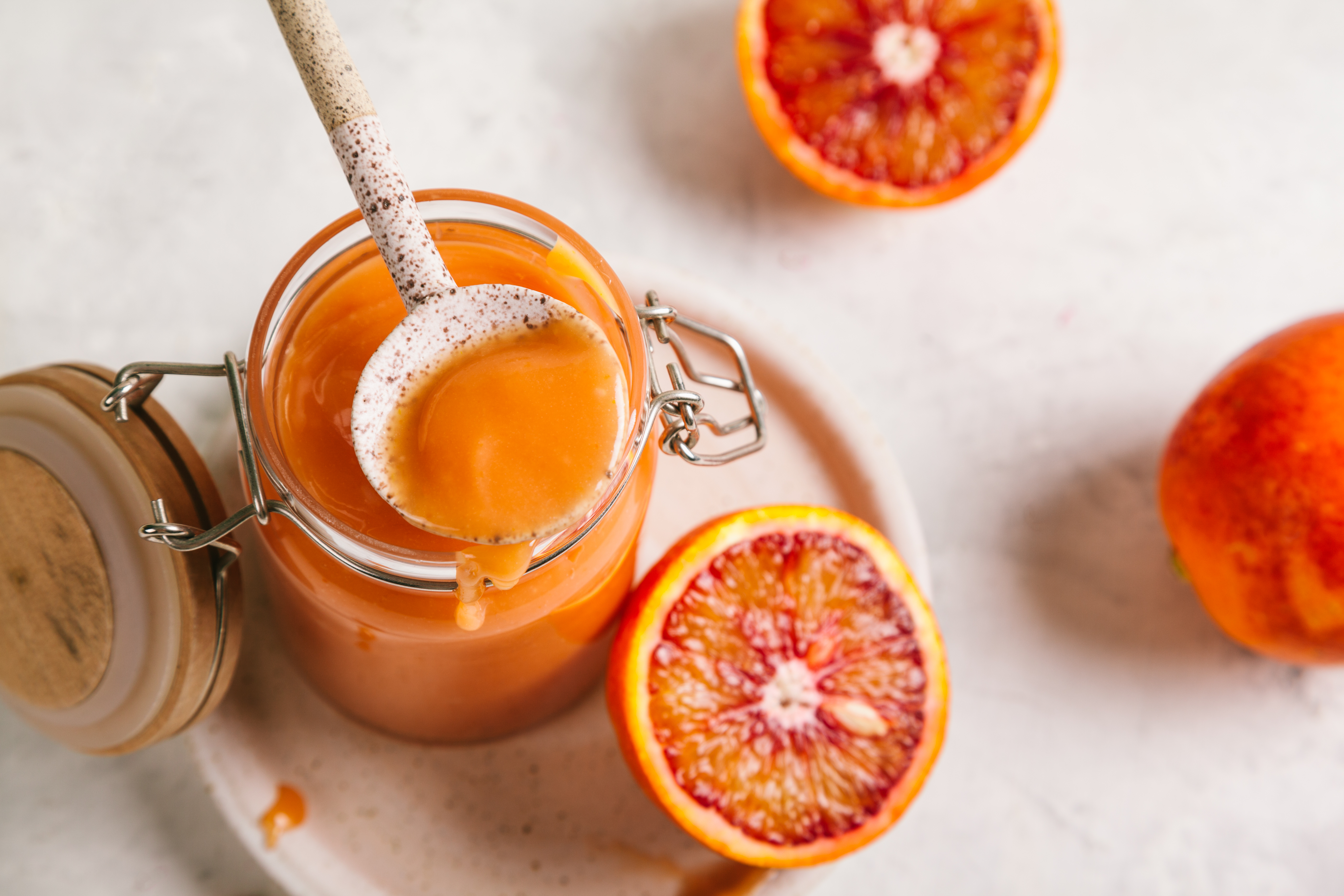
The icing is intentionally light. Rather than a thick frosting, a thin blood orange glaze is spooned over the cupcakes once they are completely cool. Cooling matters: warm cakes melt the glaze and it disappears into the crumb, while cool cakes allow it to settle into a smooth, glossy finish that complements rather than overwhelms the sponge.
The consistency should be pourable but slow. Too thin and it runs straight off; too thick and it sits dull and opaque. A brief rest after mixing helps the sugar dissolve fully, giving the glaze its shine.
A final scattering of fresh zest adds aroma and colour, echoing the citrus within. It’s a restrained finish, but an important one — enough sweetness to round the sharpness of the curd and just enough gloss to make the cupcakes feel finished rather than decorated.
Blood Orange Cupcakes with a Curd Filling
Prep: 25 minutes
Bake: 20–22 minutes
Makes: 12 cupcakes
Soft citrus cupcakes with a hidden blood orange curd centre and a light glaze. The curd sets gently inside the sponge as the cakes bake, giving a sharp, fragrant centre without needing to pipe filling afterwards.
Ingredients
125 g unsalted butter, softened
150 g caster sugar
Finely grated zest of 2 blood oranges
2 large eggs, room temperature
150 g plain flour
1½ tsp baking powder
¼ tsp fine salt
120 ml whole milk
60 ml sour cream
60 ml freshly squeezed blood orange juice
6–8 tbsp blood orange curd
1 blood orange, very thinly sliced
Glaze
150 g icing sugar, sifted
2–3 tbsp blood orange juice
Method
1. Heat the oven to 190 °C (170 °C fan). Line a 12-hole muffin tin with paper cases.
2. Cream the butter, sugar and zest together for 3–4 minutes until pale and noticeably fluffy. The mixture should look lighter in colour and soft enough to leave a ridge when the spoon is lifted.
3. Beat in the eggs one at a time, mixing well after each addition. If the mixture looks slightly curdled, don’t worry — it will smooth once the flour is added.
4. In a separate bowl whisk together the flour, baking powder and salt. In a jug combine the milk, sour cream and blood orange juice.
5. Add the flour mixture to the butter mixture in two additions, alternating with the milk mixture. Fold gently just until no dry flour remains. The batter should be soft and spoonable but not runny.
6. Spoon about 1 tablespoon of batter into each case to cover the base. Add 1 rounded teaspoon of blood orange curd to the centre of each, keeping it away from the paper sides. Cover with more batter until the cases are roughly three-quarters full.
7. Lay a thin slice of blood orange on top of each cupcake and press lightly so it sits level with the surface.
8. Bake for 20–22 minutes until risen and lightly golden. A skewer inserted into the cake (not the centre) should come out clean and the tops should spring back lightly when touched.
9. Cool in the tin for 5 minutes, then transfer to a rack and allow to cool completely.
10. For the glaze, mix the icing sugar with enough blood orange juice to form a slow-pouring consistency. Spoon over the cooled cupcakes and allow it to settle naturally. Finish with fresh zest if you like.
Serving and Storage
These cupcakes are at their best on the day they’re iced, when the glaze still catches the light and the curd centre gives its citrus-bright contrast at the first bite. Served at room temperature the sponge is soft and fragrant and the icing remains glossy rather than firm.
If you have leftovers, store them in an airtight container in the refrigerator for up to 2 days. Because the filling contains curd, chilling keeps the centre properly set. Before serving, let the cupcakes stand at room temperature for about 30–45 minutes; the butter softens and the citrus aroma returns, restoring the intended texture.
The cupcakes can also be baked a day ahead and iced shortly before serving. Uniced cakes keep well overnight in a sealed container at cool room temperature.
Freezing works best before icing: freeze the plain baked cupcakes, well wrapped, for up to 1 month. Defrost at room temperature and glaze once fully thawed.
Why this recipe works
These cupcakes work because the batter is balanced for both flavour and structure. Creamed butter and sugar trap air, giving lift, while sour cream adds fat and gentle acidity that keeps the crumb tender rather than dense. The blood orange zest provides aromatic oils and the juice contributes moisture and brightness without thinning the batter.
The curd centre is structural as well as flavourful. Enclosed between two layers of batter, it warms slowly and sets as the cake bakes, so the filling stays contained rather than leaking or creating a hollow. The slight sharpness prevents the sponge tasting overly sweet and keeps the flavour clear after baking.
Each element supports the next: the sponge rises evenly, the centre remains soft but stable, and the light glaze adds sweetness without masking the citrus. The result is a bake that feels balanced rather than heavy — fragrant, gently rich, and suited to winter citrus rather than sugar alone.
A few notes for when you bake
Will my cupcakes be red inside?
Not necessarily. Blood oranges vary widely in colour depending on cultivar, season and storage. Some bake with a ruby tint, others remain pale. The pigment is delicate and fades with heat, so colour is unreliable — flavour is the constant. The bittersweet citrus note will still be present even if the crumb stays golden.
Can I use regular oranges instead of blood oranges?
Yes. The cupcakes will be sweeter and milder. Adding a teaspoon or two of lemon juice to the batter helps restore some sharpness and balance.
Does the curd leak during baking?
Not if layered correctly. Batter below, a rounded teaspoon of curd in the centre, then batter above. The surrounding sponge insulates the filling and it thickens as it heats, so it sets softly rather than running.
Why add the curd before baking instead of after?
Baking it inside allows the filling to integrate with the crumb. The heat softens its sharpness and prevents a wet pocket forming, giving a smoother texture and a cleaner finish when cut.
Do I need unwaxed blood oranges?
Unwaxed fruit is ideal because both zest and slices are used. If unavailable, scrub the skins under warm water, dry thoroughly and zest only the coloured outer peel, avoiding the bitter white pith.
Why is my icing runny, thick, or cloudy?
Glaze consistency changes quickly.
– Too runny: add a little more icing sugar.
– Too thick: add juice a few drops at a time.
You’re aiming for a slow ribbon that sits briefly before settling.
Cloudiness usually comes from unrefined icing sugar; a well-sifted white icing sugar gives the clearest shine.
Can I make these in advance?
Yes. Bake the cupcakes a day ahead and store uniced in an airtight container. Ice shortly before serving. Once iced, keep refrigerated and bring back to room temperature before eating.
Why cupcakes rather than muffins?
Cupcakes are structured and fine-crumbed. Muffin batters are looser and rustic, which makes holding a soft centre difficult. This batter is designed to support a filling and icing without collapsing.
These blood orange cupcakes are a study in restraint: careful ratios, seasonal citrus, and a filling that reveals itself only once you cut in. They reward attention in the making and patience in the cooling, and the balance is the point — bitter and sweet, soft crumb and sharp centre, gloss and texture working together rather than competing.
Bake them while blood oranges are in season and at their most fragrant, and don’t worry about the colour. The sponge may be pale, but the flavour will be clear. This is not a showy bake but a deliberate one — something to share slowly with coffee rather than slice hurriedly — and all the better for it.

Note: Cupcake photography commissioned from Max Gagliano for Culinary Travels. Supporting imagery includes a selection of licensed stock photographs.
Stay in Touch
Culinary Travels publishes destination guides, seasonal recipes, and food-led travel features from the UK and beyond.
Follow for new articles and updated travel resources:
Facebook | Instagram | Pinterest
Newsletter
Receive new guides, recipes, and occasional travel planning notes by email: Subscribe here
Reader feedback and local recommendations are always welcome via the contact page.

©2026 Culinary Travels. Culinary Travels is written and edited by Georgina Ingham | Website designed by The Smarter Web Company
What Our Followers Say
"Oh yum!!! I could eat one or two right now!"
Sami Tamimi
"Georgina was great to work with, quick to respond, and is an excellent content writer - would highly recommend collaborating with her!"
Nick S, Get Blogged
Our list of things to do in Cork has just expanded hugely thanks to Culinary Travels.
Triskel Art Centre Cork